

My son shouted, “It’s a Stink bug! I am going to smash it!”
“Wait! Let mama look at it, it might be a good bug,” said my husband.
For a gardener, my husband has an unhealthy aversion to bugs. He lets me make the good bug or bad bug call. I put down my shovel to look at the bug. My son pointed to a leaf on the sunflower plant growing out of our compost bin and declared, “There it is!”
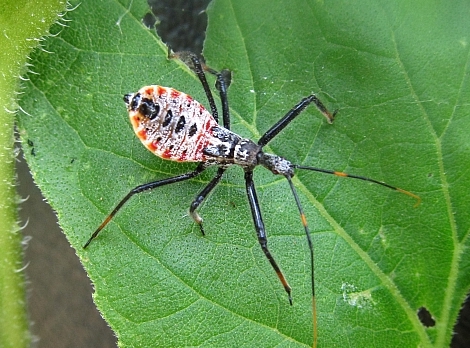
The insect had a colorful body and long antennae. It did not look like a Stink bug. Its legs were too long and graceful. It scuttled so fast around the leaves that I barely caught its image in my camera. We let it be. The next day, I sent its photo to the Home and Garden Center at the Maryland Agricultural Extension. Within a few hours, I received the bug’s identity. It is an Assassin bug nymph!
We are thrilled to have such a voracious predator in our garden plot. This bug will help rid our garden of: aphids, Colorado potato beetles, cucumber beetles, Japanese beetles, Mexican bean beetles, tomato hornworms and many more pests. I am glad we did not squash it!
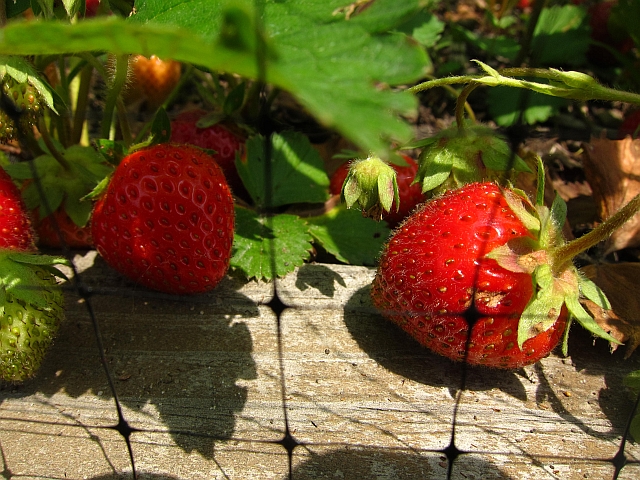
Strawberries are abundant and ripe now! We have two supply sources for fresh picked strawberries..our backyard and at our community garden plot. The strawberries in our backyard have less damage this year because we covered them with netting. Only the bugs have access to the fruit, not the birds so our yields are greater. We already picked two and a half pounds from our backyard patch. Last evening we picked another 2 and a half pounds from an abandoned plot in our community garden. A woman saw my son getting into mischief in our plot so she asked him if he wanted to pick the strawberries from the unclaimed plot next to her. The plants were rambling into her garden space and loaded with berries. We picked and picked. The strawberries in the community garden were not covered with netting and did not seem to have damage from hungry birds. Could it be because the birds have more natural food sources at the Howard County Conservancy than in our backyard?
What organic methods do you use to protect your strawberries?
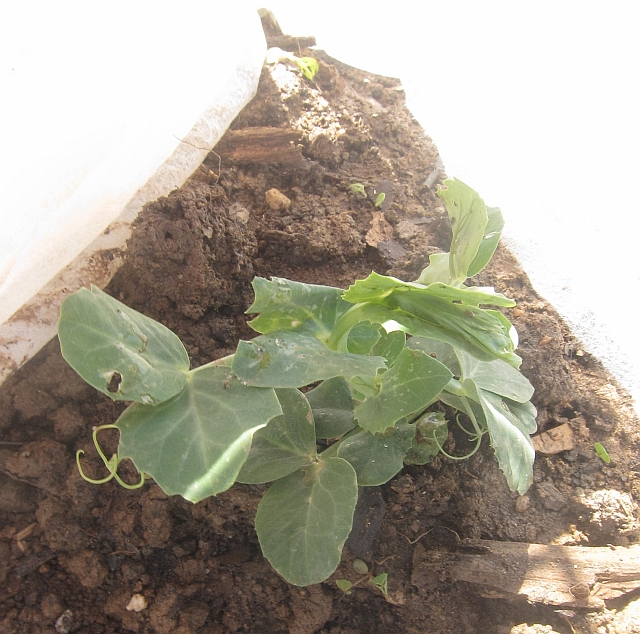
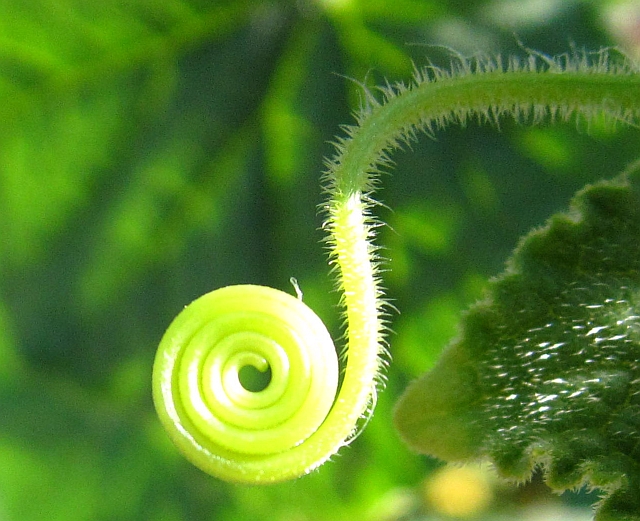
We finally have sturdy snow pea seedlings growing under row covers! Only a few seedlings emerged from the first snow pea seeds we planted in early April. Unfortunately, those fragile plants were nibbled down to the dirt by some critters. To improve seedling growth we treated the next batch of snow pea seeds with inoculant before planting and to prevent seedling damage we covered the ground with row covers. We now have thriving snow pea plants with dangling tendrils searching for something to climb. The plants need to grow bigger before the tendrils can wrap around the reinforcing wire trellis we installed two years ago. This is our first year planting snow peas. We learned another gardening lesson through trial and error.
What is inoculant? A commercially prepared source of dormant rhizobia, a naturally occurring soil bacterium. These tiny bacteria live within the bean roots and extract nitrogen from the air (which is 78% nitrogen), thus feeding the plants. Inoculant can be dusted onto moistened bean and pea seed just before planting. It’s a fully natural, simple process which takes only a moment, but will increase crop yields all season long. Inoculant can be purchased at most garden centers.
A clear blue sky, crisp cool air, warm sunshine plus adventure equals a perfect Saturday in autumn. We headed for our garden plot this afternoon but had a few diversions before arriving there. We stopped at a pet store and a fall festival. We went to the pet store to purchase biscuits for our dog and my son discovered a playful kitten. My son slipped a thin metal wire through the kitten’s cage. The cat flipped, batted, jumped and kicked at the bunch of cardboard strips hanging at the wire’s tip. My son roared in laughter. He did not want to leave the pet store. We redirected him with hope of a hayride at our community garden site. The Howard County Conservancy was full of activities for its fall festival. We bumped through rolling fields and woods on a hayride pulled by a tractor with wheels taller than my son. A master gardener at the compost demo gave my son a bunch of pink and blue balloons. My son slurped honey from a straw and chatted about bees with a woman from the Howard County Beekeepers Association. We listened to steel pounding on steel as a blacksmith hammered a hot orange metal rod into a fork after heating it in a coal fire stoked by large bellows. My son said the banging was his favorite. While my husband and son lingered and asked questions in the blacksmith shop, I finally visited our garden plot.
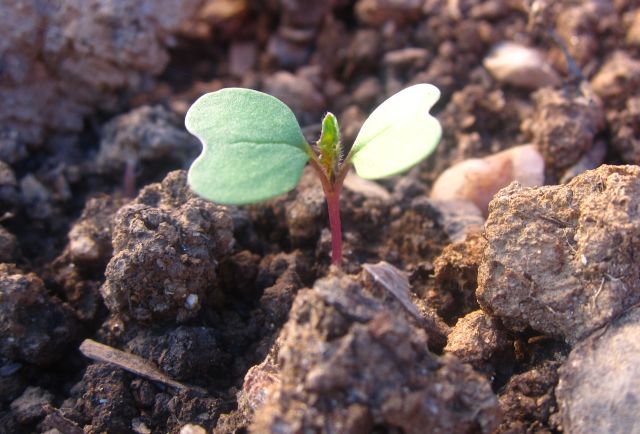
Our plot is still producing tomatoes, peppers and beans. I picked two grocery bags full of red and green tomatoes and peppers. I pulled out and composted three tomato plants that had toppled to the ground. Our fall plantings sprouted! Radish, turnip, spinach and lettuce seedlings now sprinkle the brown earth in unplanned patterns of curving rows, circles, clumps, pairs and triples. Some extra seeds must have dropped from my hand during planting. Many seedlings will need to be pulled out to allow more space for underground growth.
Those unexpected sprouts remind me of our day. Unexpected adventure and fun popped up despite my plans. Thank you God, for your goodness and for dropping some extra seeds outside my rows of plans.
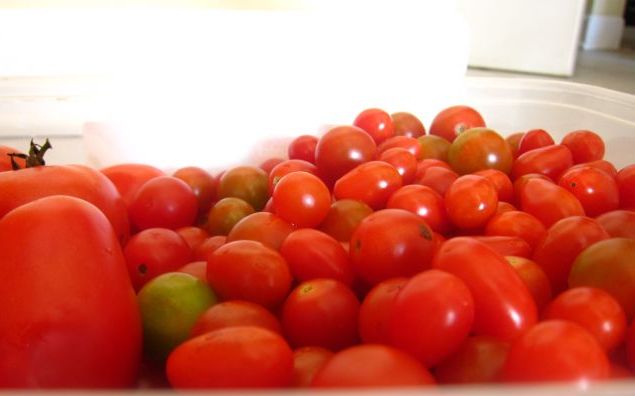
Some of our tomato plants are still producing small amounts of grape and cherry tomatoes. We planted indeterminant tomato plants this year. An indeterminate tomato variety will continue to set and ripen fruit until killed off by frost. We collected thousands of these sweeties this season. Picking them can be tedious, but tasty. My husband and son would pop them right into their mouths as they picked. I tried several ways to cook and preserve these little guys. I roasted them (at 250 degrees for 2 hours) until they became shriveled like a sun dried tomato, then froze them in little baggies. I sauteed them with garlic and olive oil and tossed in penne pasta. I gave them away to friends and family. This week, the batch in the photo traveled to the Howard County Food Bank. A much appreciative staff carried them away to a refrigerator. I am sure they will be enjoyed. I hope more produce from our garden will travel to the food bank this season and future seasons.
Welcome to the first entry on my garden blog! Just in time for fall clean up of the garden. Summer harvests are slowing down after a fabulous season. All those tiny seeds planted in March produced hundreds of cherry, olivade roma, big boy and grape tomatoes and numerous zucchini and cubanelle, bell, habanero, jalapeno and banana peppers. The wonder of this marvelous bargain, one seed planted buys a crop of nourishment. It is hard to say goodbye to my generous plants. How is your garden clean up going?
This week in our garden plot, I uprooted five brown shriveling tomato plants and sixteen huge sagging sunflower plants. The tomato plants folded and twisted nicely into my crowded compost bin. But the 10 foot sunflower plants stood rigid. Immovable posts stuck in the dry dirt. I used a shovel to chop the 4 to 5 inch thick stalks and dig around the wide root balls. When the first giant toppled to the ground, hundreds of bugs scattered. I destroyed the Sunflower Hotel for bugs! Ugh! stink bugs, wasps, bees, flies, caterpillars, butterflies, beetles and even a wolf spider evacuated in a flurry. After my skin stopped crawling, I felt appreciation towards those stubborn sunflowers. They brought VIP bugs to our garden…..wasps, bees, flies and a wolf spider! Unfortunately, the Sunflower Hotel had to be condemned because the pesky stink bugs outnumbered all the VIPs.
 Our Garden Plot
