Our Garden Plot Comes Home

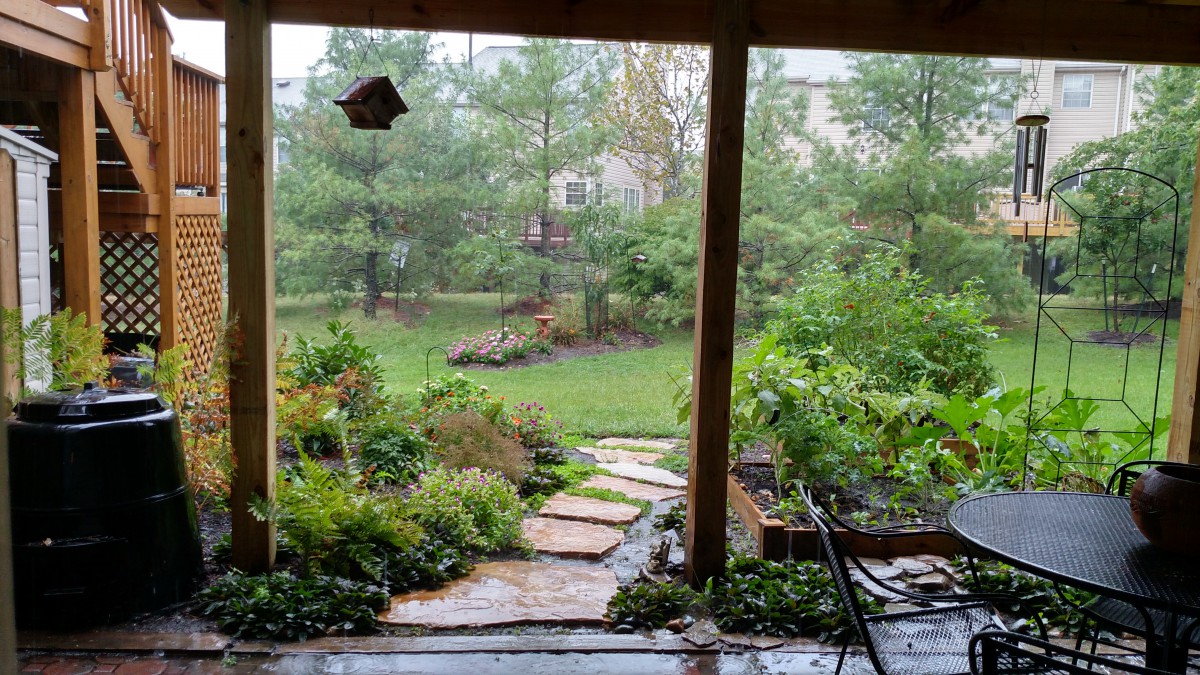
wpid-img_20150912_141352563_hdr.jpgFirst year of new backyard garden gives our family veggies, flowers, joy,  and humble pride.  My 10 year old son announced a few days ago, “We have the biggest and most beautiful garden in our neighborhood!” Next he said, “I want to sweep the stones and weed.”  Really.  My “working in the garden is boring,” son volunteers to work in our garden?

When our garden plot was in Howard County Conservancy Community garden, we produced more veggies.  Now that our garden plot is at home,  more inspiration grows.   A salad or veggie stir fry for dinner – pick some grape tomatoes, kale, zucchini and peppers.  Science project ideas – check on those kitchen scraps added to compost yesterday.  A break from stress and high tech stuff – pull some weeds, empty rain barrel water into a watering can and sprinkle the dry ground. Stillness – watch the rain soak the garden and revive its thirsty roots.  Welcome home our garden plot!

Fall plantings include:  beets, spinach, lettuce, an assortment of kale and two blueberry bushes in pots on our deck.
Composting 101

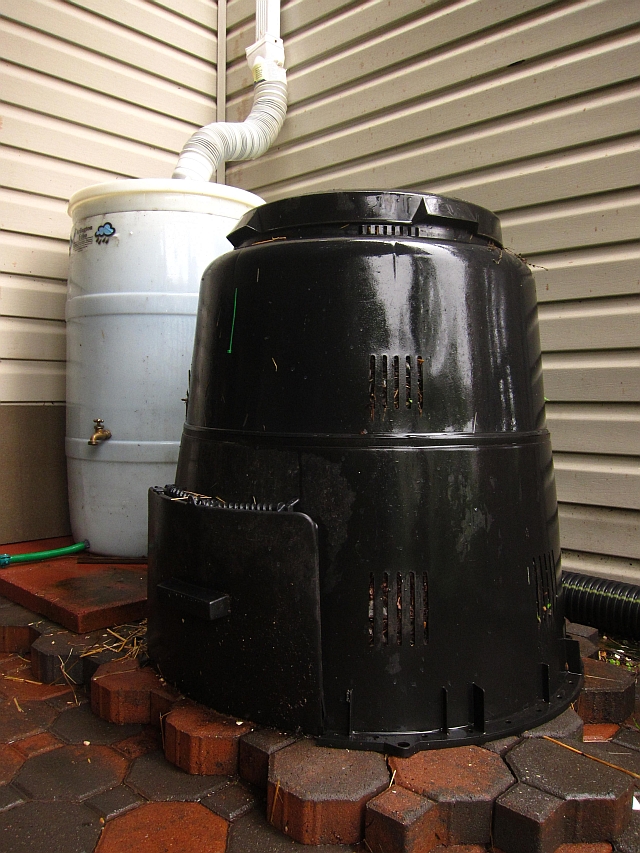
Our Earth Machine

We feed our Earth Machine composter kitchen and garden scraps daily.  The microorganisms and invertebrates do their decomposing jobs well because there is always space inside the composter for more scraps.   But lately some decomposers were doing their job TOO well.  Large balls of maggots were devouring the organic matter and overtaking the earthworms.  According to the Home and Garden Info Center at University of MD,  our compost had too much nitrogen because maggots (hatching fly larvae) are attracted to moist nitrogen-rich organic matter.  Compost needs a 30:1 ratio of carbon (“brown” organic matter such as straw or leaves) to nitrogen (“green” organic matter such as banana peels, tomato skins, grass clippings, etc.) for efficient decomposition.  Recently, a local farm gave me a bag of straw from their barn floor.  Now we add a layer of straw each time we add kitchen scraps to our compost.

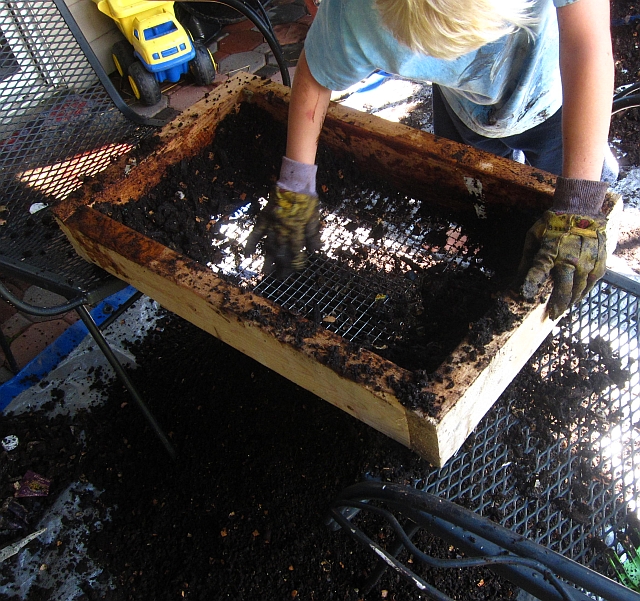
our compost sifter
My husband made a compost sifter. We separated out rocks, sticks, nutshells and even a lost metal strawberry huller from the rich compost and humus at the bottom of our Earth Machine.  He made the sifter frame from scrap 2×4 wood pieces, then stapled half inch wire mesh to the edge of the frame.  We all sifted the dirt like miners searching for gold.

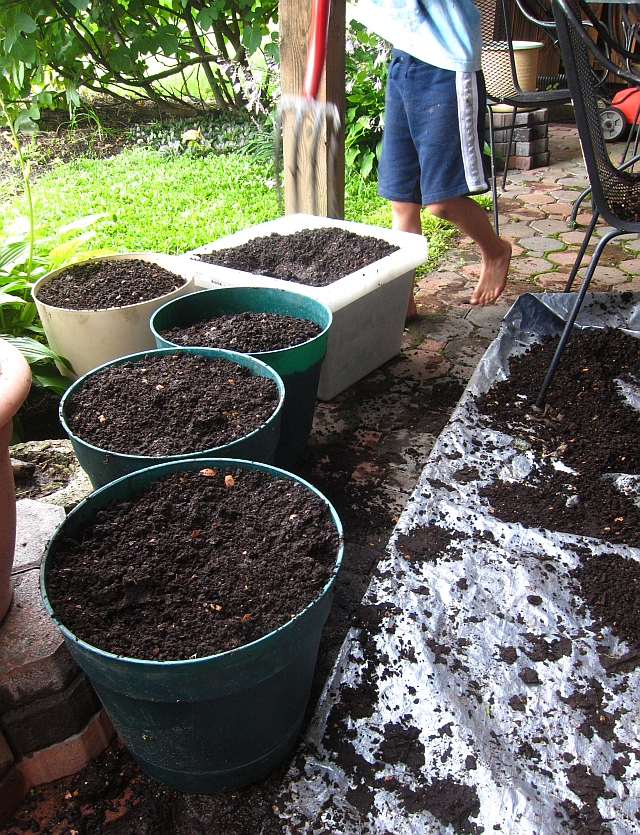
our dirt harvest
We collected 5 pots of “black gold.” The compost we sifted is crumbly, lightweight, and spongy.  There are no maggots in this bottom compost layer only a few earthworms. We spread all the “harvested” compost into beds in our community garden plot.  Next year’s garden will benefit from the nutrient rich compost. My husband turned the remaining compost in the Earth Machine to distribute oxygen and heat.  This will give the beneficial compost organisms the oxygen they need to do their work and heat up the maggots and stop them from growing.

Saving Fall Leaves for the Garden

The wind swirls and scoops up leaves from the neighborhood and dumps them into our tiny front yard.  The yard is covered with brown leaves when  the only tree in it,  a Bradford Pear, still has its green leaves.  Every fall we collect at least 4 tall bags of  these extra leaves.

We are grateful for the extra leaves because we save them for our garden plot.  We keep our compost healthy by adding the extra leaves to our compost bin. The brown carbon rich leaves balance the green nitrogen rich kitchen waste in our composter.  We add a dense layer of  minerals and nutrients to our garden plot by mulching the garden soil with the leaves.   We provide winter protection for tender plants in our garden by surrounding them with the leaves.  When our fig tree was smaller,  we protected it from the cold winter winds by covering it with  leaves and a  burlap blanket.

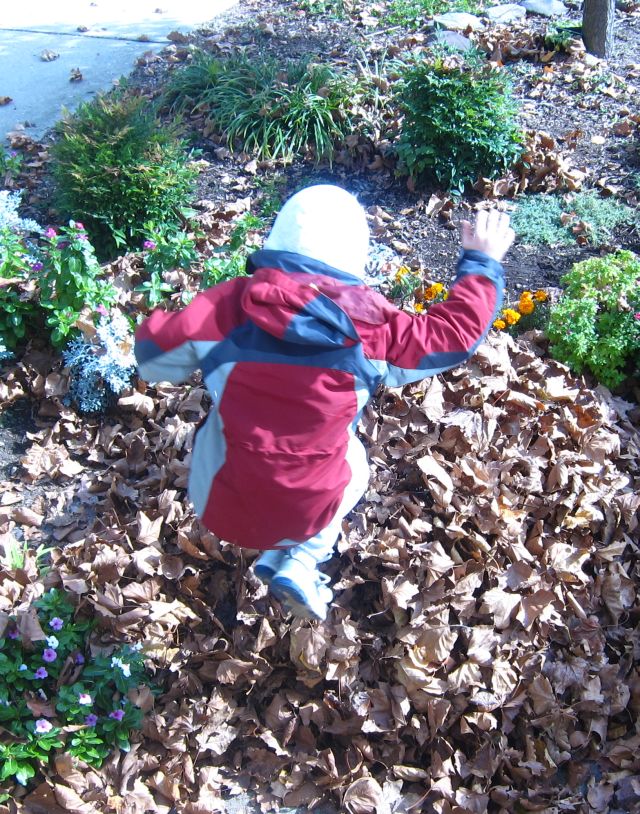
My son jumping into a pile of our extra leaves.

This fall, gathering and chopping our leaves became easier due to our new  electric leaf blowing-vacuum- mulchinator.  We do not have a grass lawn in our front yard, but perennials and bushes.  It is tedious to comb out the leaves from our Nandina, Hydrangea and Azalea bushes and flower beds.  Instead of raking the leaves into piles and chopping them with a lawn mower, we gently vacuumed up the leaves and created mulch at the same time.  Our new garden toy is gentle on our plants and saves time.  Fantastic!

We did not vacuum up all the leaves immediately.  We saved some for my son and dog.  My son likes jumping from our front door steps into a mound of leaves then pretending he is a bird sleeping  in a nest.    My dog likes to catch, in his mouth, bunches of leaves tossed up in the air.

How do you collect and use or play in your fall leaves ?