Another Gardening Season Begins

firstdayplanting2

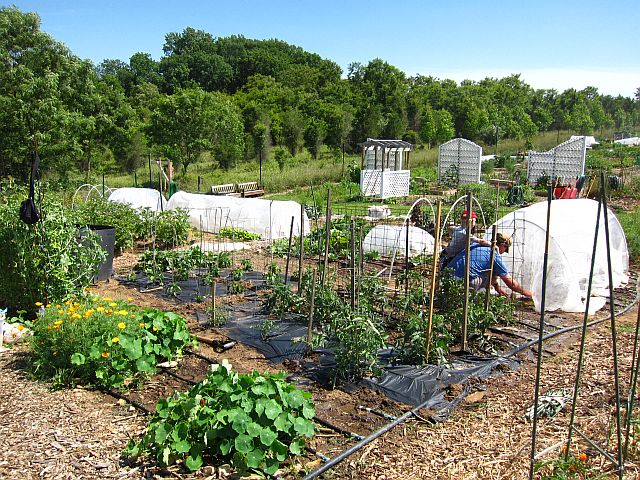
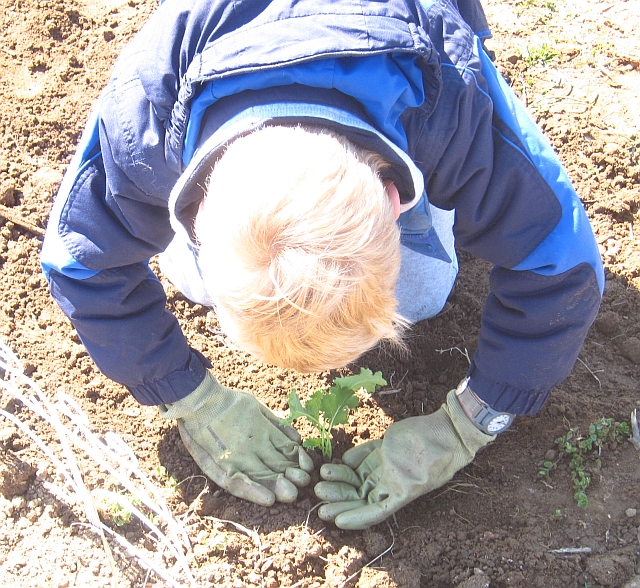
The first week in April, we started our fourth season in our community garden plot.  My son helped me break up the soil with a rake and hammer.  He likes to pound things, so he was content to whack and crush clods of dirt with a hammer.  Despite his destructive fun, this was the first year he carefully planted seedlings almost completely on his own.  He planted seedlings of kale, lettuce and brussel sprouts.openingday2
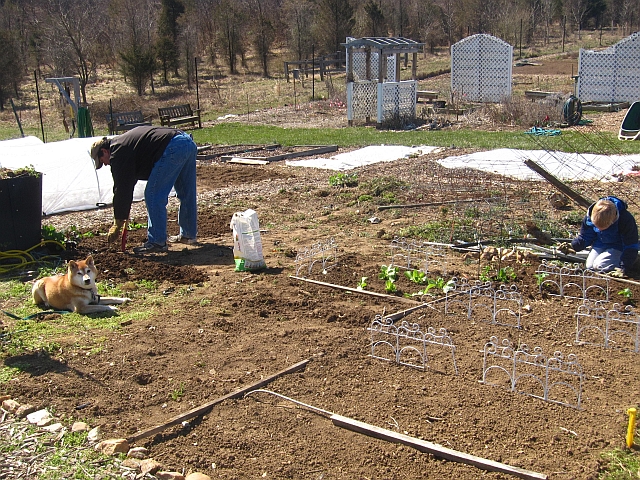
The worms and microbes were busy working in our garden plot already because the soil looks very healthy.  It is a deep rich brown and feels light and loose.  Almost every shovel full of dirt we turned had at least one fat worm.  We were careful not to over work the soil and disturb the worms.  We planted seeds of carrots, parsnip, turnips, beets and lettuce and seedlings of kale, lettuce, broccoli, cabbage (at least 12 plants of differing varieties), brussel sprouts, cauliflower and sugar snap peas.

Image

Gardening is a labor of love to produce fresh organic food for our family, friends and community and to spend time together as a family working on a common goal with others in a community.  May all our gardens thrive this season not only with food, but with joy and hope!

My son took this photo of the clouds above our garden plot on opening day of the 2013 growing season.  Use your imagination. Can you see the word “LOVE” ?
Visitors in Our Plot

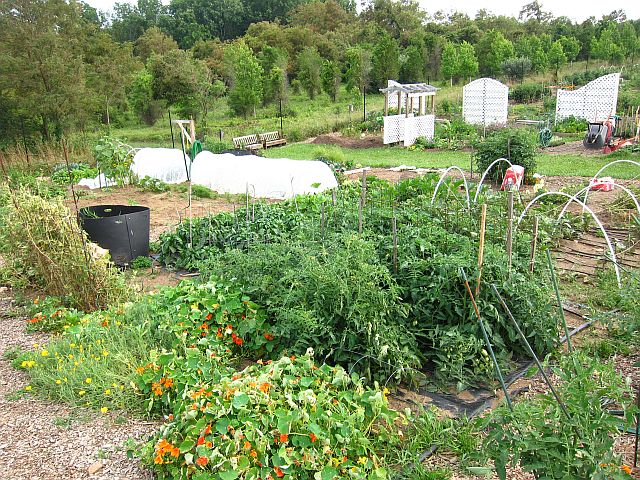
The garden grew dramatically while we were on vacation.  In less than two weeks we found new veggies and critters in our garden.  There were many overgrown zucchini logs waiting to be picked; about a dozen small butternut squashes growing on traveling vines; thick tomato vines dangling with yellow flowers and green tomatoes; yellow and red beets bursting through the ground; four large healthy cabbage heads stuck in the ground; and several small purple eggplants hanging on leaning stalks. Unfortunately, we found wilted yellow leaves on the spaghetti squash vines. Vine borer larvae were in its stalk. We picked the two medium-sized squashes then pulled out the entire plant. I will wrap the stalks of the zucchini and butternut with aluminum foil to try and prevent the vine borer from laying eggs on their stalks.

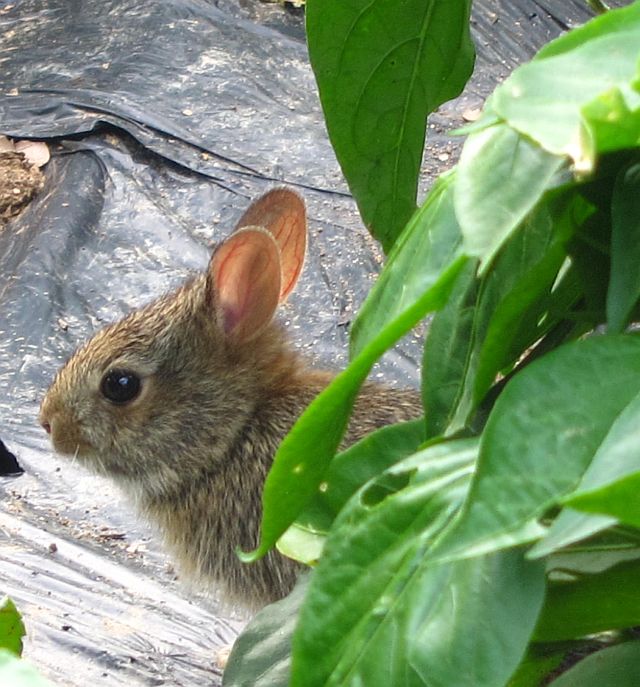
I found more critter visitors, too. Squash bugs and their egg clusters, crickets, ladybugs and a large (half-dollar size) black furry spider. When I first walked up to the plot I saw something brown dash out of the pepper patch, then another trembling furry animal under a pepper leaf. I hoped it was not a vole (others have found voles in their community garden plots). I was relieved it was only a baby bunny. At least it was a cute pest!
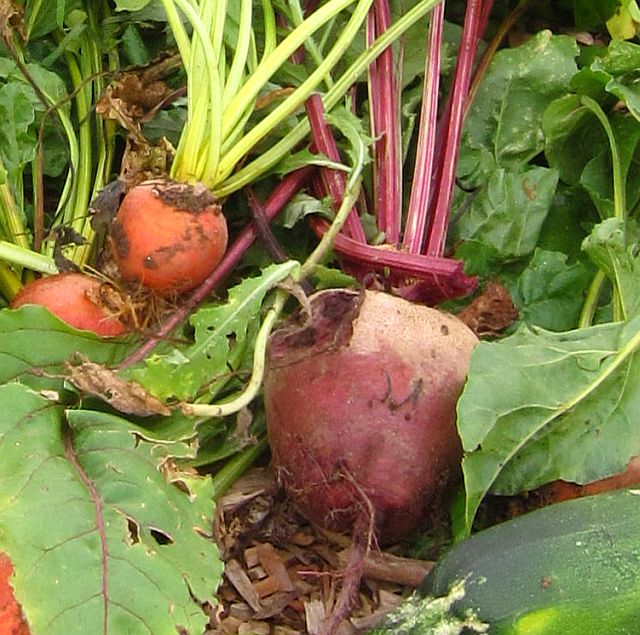
After it scurried away, I found its lunch – our golden and red beets! We pulled out several nibbled on beets. I wanted to leave the partially eaten beets for the bunnies. But, my husband protested, “we don’t want to attract more bunnies!”  We placed the nibbled beets in the community garden compost bin. I hope the baby bunnies look for their meals in the compost bin, on the other side of the garden fence!

Saturday Garden Work

We worked hard in our garden plot today, installing drip system, fertilizing plants, saving the eggplants, laying down microperforated mulch (looks like black plastic), planting cucumber seeds and picking sugar snap peas.

  • My husband installed the drip system.  He only had to purchase new drip tape and caps. All the other parts we reused from last year’s system.
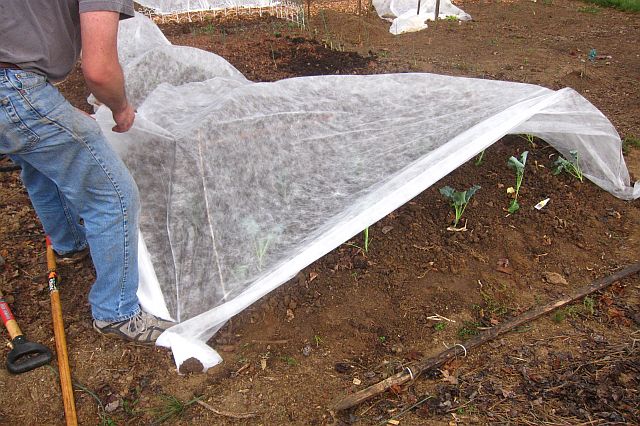
  • The eggplants needed to be saved because when we arrived at the plot, the row covers were blown off  and the eggplants were freckled with flea beetle bites.  We sprayed them with Pyrethin and gave them a boast with fish emulsion fertilizer.  We only covered half of them with the row covers, since some were already flowering.
  • I fertilized the peppers and tomatoes with Garden Tone.
  • We put down BioTelo (since our community garden does not permit black plastic to be used) around some of the tomato plants and all of the pepper plants.  BioTelo is biodegradable and compostable.  It stops weeds, warms the soil and reduces water evaporation.  Ideally, it should be place on the ground before planting.

The main garden lesson we learned today –  in March, work soybean meal fertilizer into the soil, put down the drip tape and cover it with black plastic or BioTelo.  That allows two months for the soil to warm up and kill off the flea beetles that over winter in the ground.  The ground will be ready in May and June for planting summer crops.

Holding On

It has been difficult to get to our community garden plot this spring.  More responsibilities at work, school, and home pull us away.  But we are determined to hold on to our garden plot and our family gardening hobby.

Yesterday, we arrived at our community garden plot in the late afternoon, just before the heavy rains came.  The dark rain clouds moved closer as we rushed to plant beet seeds and broccoli, eggplant and nasturtium seedings.   The wind blew strong, the rain fell fast and the row covers fluttered and flapped.  My son ran for the van, then on his own initiative returned to help me carry supplies back to the van.  I gathered rocks to help my husband secure our row covers over the broccoli and eggplants and anchor our neighbor’s row cover that almost flew away.

sugar snap peas hold on

It didn’t matter that we got wet.  We felt the simplicity in physical work and nature.  My husband and son pounded the hard clods of dirt to aerate the soil for the plants.  I gently unraveled tendrils on the sugar snap peas and led them toward the trellis.   We felt a storm unfold around us.  We worked together with our hands and helped protect our garden neighbor’s plants.   We completed our garden work and picked a bunch of lettuce.  We slowed down.

Our garden plot holds us so we are not blown away by the frenetic life in Howard Co. Maryland.

Surprises in Our Community Garden Plot

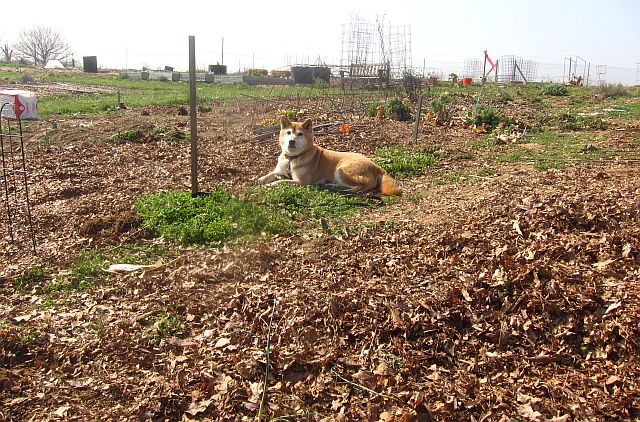
Our Shiba Inu
The first visit of 2012 to our community garden plot at Howard Co. Conservancy on Saturday was inspiring. My husband phoned to tell me, “bring your camera we have broccoli and brussel sprouts growing!” The brussel sprouts were pea size at mid-fall and grew to edible size through the warm winter. I hope they taste good.
Brussel Sprouts
I also found parsley and lettuce sprouting at the edge of our plot. The soil was loose and easy to weed and turn. We planted sugar snap peas, turnips and beets. A community garden friend visited and shared some gardening tips. He told us about a less earthy tasting beet, the Touchstone Gold. Even our Shiba Inu dog reveled in the garden, digging his nose and wiggling his back into the fresh soil.

Donating to Local Food Bank

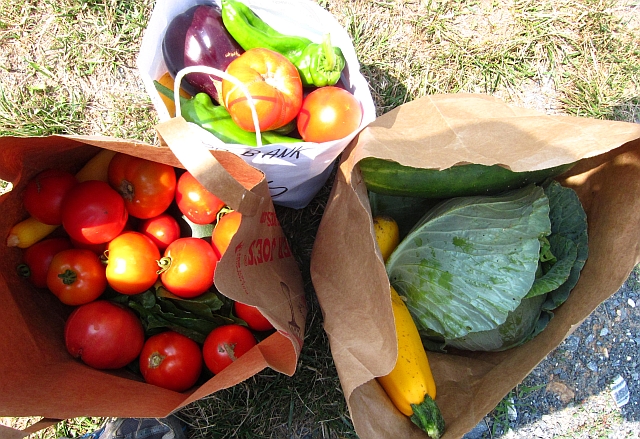
The Howard County Community Garden food bank donation for July 21st

The Howard County Conservancy Community Garden donates a portion of its produce to the Howard County Food Bank every Tuesday and Thursday.  Volunteers pick the produce contributions from a plot solely dedicated to the food bank and from individuals’ gardens with portions marked for the food bank.  Often a gardener will mark their plot for the food bank when they are out of town for  an extended period of time.  The goal is to prevent waste in our gardens.

Yesterday, my son and I joined another gardener to pick the produce for donation.    It was fun and I learned how to harvest cabbage.  The cabbage head is cut from the thick stalk because a new cabbage head may grow from the old stalk.   I will look for cabbage regrowth in the food bank plot.

We collected three bags of produce including tomatoes, cabbage, peppers, Malabar spinach, zucchini, and eggplant.   It weighed in at 29 pounds at the food bank!   The fresh organic produce was greatly appreciated.

Over 36 million Americans are hungry and rely on local food pantries to help sustain their families.  For more information about how other gardeners are giving to food banks across Maryland and the United States visit Grow It Give It.

Strawberries

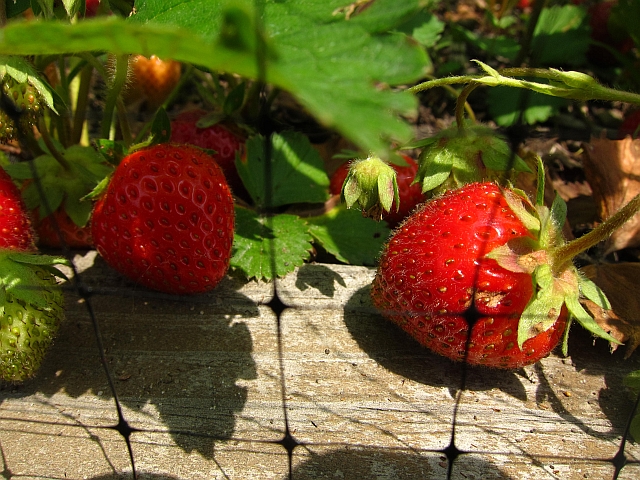
strawberries under netting

Strawberries are abundant and ripe now!  We have two supply sources for fresh picked strawberries..our backyard and at our community garden plot. The strawberries in our backyard have less damage this year because we covered them with netting.  Only the bugs have access to the fruit, not the birds so our yields are greater.  We already picked two and a half pounds from our backyard patch.   Last evening we picked another 2 and a half pounds from an abandoned plot in our community garden. A woman saw my son getting into mischief in our plot so she asked him if he wanted to pick the strawberries from the unclaimed plot next to her. The plants were rambling into her garden space and loaded with berries.  We picked and picked.  The strawberries in the community garden were not covered with netting and did not seem to have damage from hungry birds.   Could it be because the birds  have more natural food sources at the Howard County Conservancy than in our backyard?

What organic methods do you use to protect your strawberries?

Sweet Potato Planting

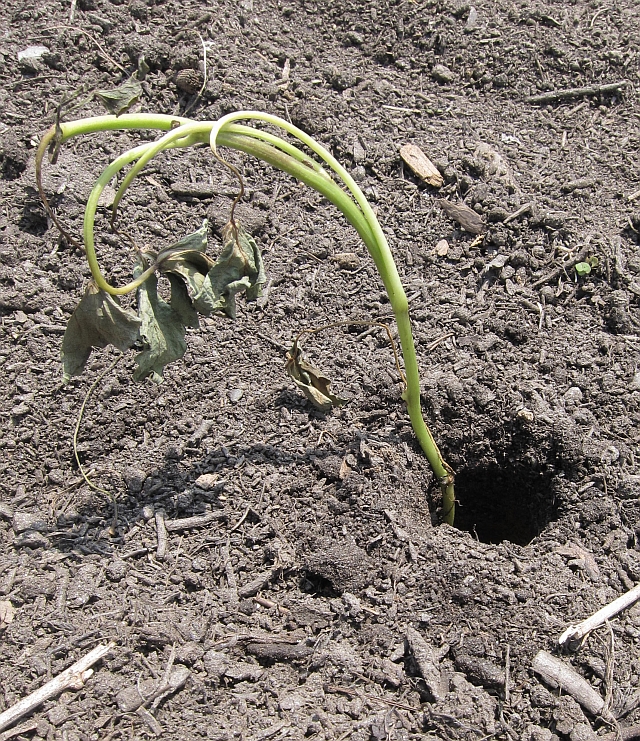
one sweet potato slip

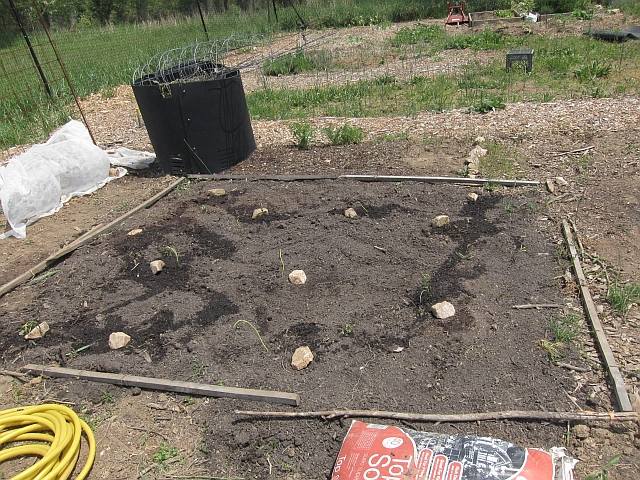
Last week I planted 12 sweet potato slips.  They look straggly now, but just wait, they will produce a hearty vine and a hidden treasure of potatoes.  Last year we planted 2 slips and dug up about 50 pounds of rugged sweet potatoes (bright orange and creamy when cooked) at harvest time.   Once the vines start growing, we will surround them with a low border fencing to prevent them from spreading into our other vegetable beds or community garden walking paths.  This year we planted the slips in a corner that is not adjacent to a neighbor’s plot.  These plants can get a bit too gregarious!  I marked each slip with a rock because it will help us find where to begin digging at harvest when there is a sea of vines.  I have high hopes for these slips.  If all twelve of these newly planted slips take off and produce we could have 300 pounds of sweet potatoes!

our sweet potato patch

(We may have more….I noticed sweet potato vines growing in last year’s sweet potato bed.  I wish I did not have to pull out these unexpected guests, but they will take over our tomato and pepper patch if I don’t).

Do you have any sweet potato recipes to share with me?

Moving Day for Tadpoles

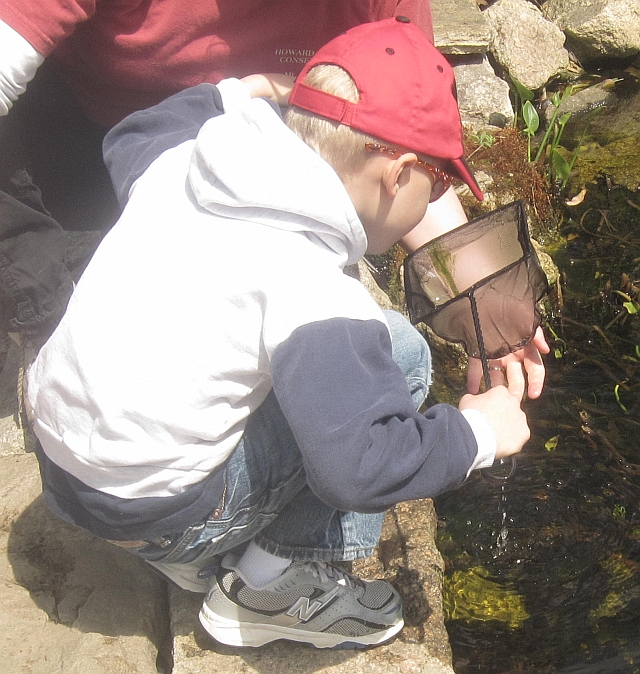
scooping up the tadpoles

Howard County Conservancy gives my son a big backyard where he can freely explore a creek, run in a field, study wildlife, feed a goat, grow a garden, hold a wiggling tadpole and observe its eyes under a magnifying glass and simply learn to value our beautiful natural world.

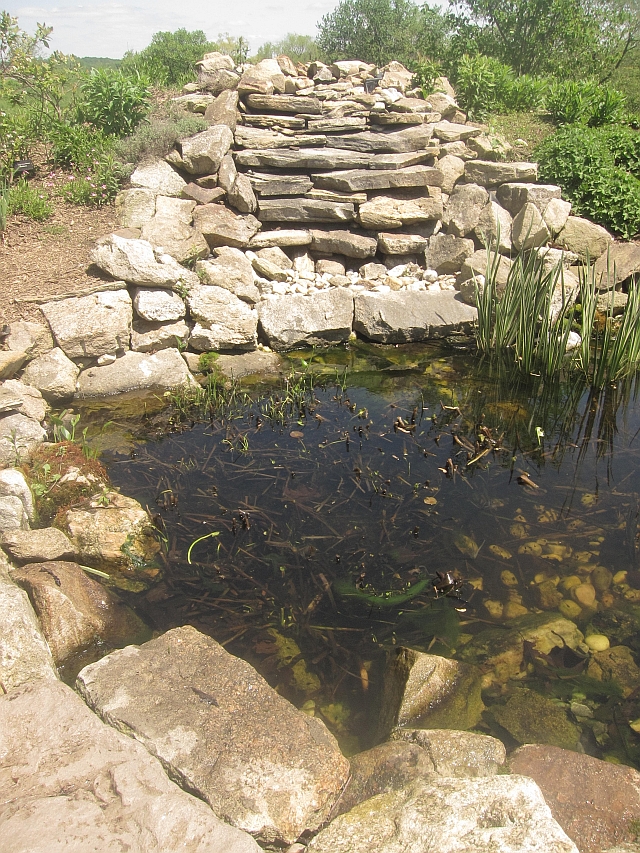
tadpoles' crowded home in stone pond

Last weekend, our family worked at the Howard County Conservancy. While my husband mowed the grass between the plots in the  community garden,  my son and I assisted with an Earth Day project.  The stone waterfall in the Honors Garden was temporarily turned off because thousands of tadpoles were living in it.

Our assignment, help relocate the tadpoles to a nearby creek in the Conservancy. A patient and knowledgeable Conservancy volunteer guided my son.  She helped him gather tadpoles in a net and place them in a container with water.  Then he carried the little oval-body-tailed swimmers about a 10 minute walk to the creek. We stepped through mud, rocks and weeds to get to the edge of the creek. My son slowly poured hundreds of tadpoles into the quiet creek.

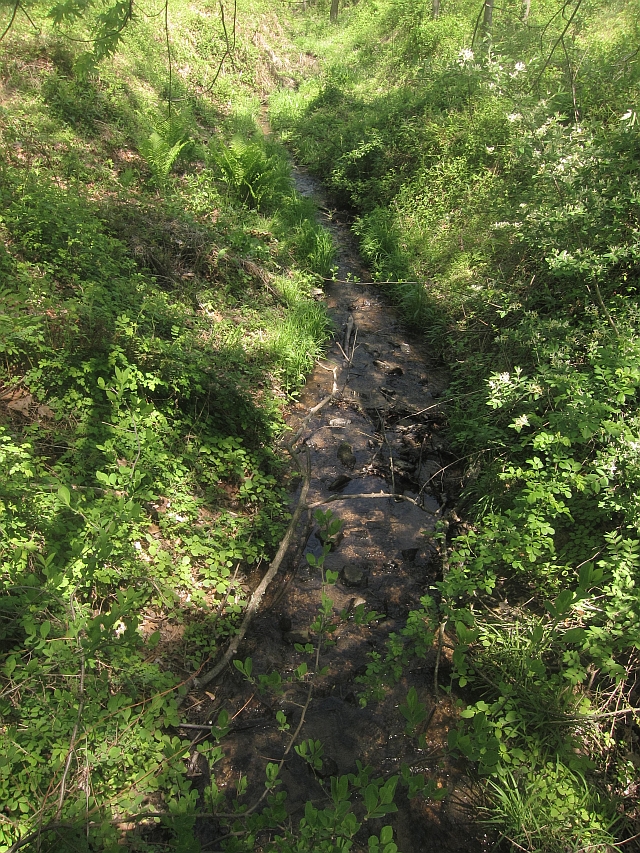
tadpoles' new home

We watched the tadpoles adjust to their new home. The strong swimmers tried to swim upstream until they found a pocket of still water between some rocks. Others just let the stream carry them to the calm water.  We imagined the creek filled with frogs this summer.  We will look for them in June.   The meandering creek gives them plenty of space to thrive.

The frog population in urban communities is threatened by the commercial use of pesticides to maintain lawns.  We want to help frogs and toads thrive. They are good because they eat garden pests and insects that can harm plants and vegetables. How are you helping frogs and toads thrive in your garden?

Goodbye October

The month of October ends with a photo-free post.   It is the start of a new tradition at Our Garden Plot.   A  Photo-Free Finish on the last day of each month.  It is a chance to practice creating vivid word pictures about our garden plot.

October garden highlights:

1.  We pulled out our last row of tired tomato plants.
2.  We pulled out big round radishes and long crunchy carrots from the ground.
3.  I made bean and noodle soups from fresh picked escarole and endive.
4.  We dug out football-size sweet potatoes from the soil below shriveled vines.
5.  Our glorious fig tree shed its leaves.
6.  Our turnip, lettuce, radish and spinach seeds sprouted leaves.
7.  We harvested a grocery bag of thick crisp string beans.
8.   We conquered the greedy Mexican bean beetles.
9.   We picked pounds and pounds of pungent, plump and pointed peppers.
10.  We roasted and froze our habanero peppers for the first time.
11.  We dumped a manure and compost mix onto our plot.
12.  We prepared the soil for next year’s garden.

What are your October garden highlights?