Garden Info Center Helps My Semi-Dwarf Meyer Lemon Tree

Thanks to the Garden Information Center at the University of Maryland!

I emailed them my questions and in less than a week they replied with some solutions for my winter weary lemon tree.

My question:
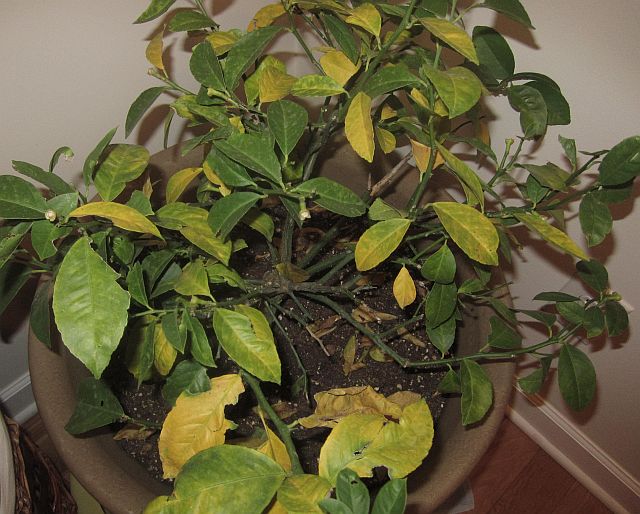
I have a dwarf Meyer Lemon Tree. It produced over 15 lemons this fall. We brought the plant indoors and recently we noticed that the leaves started to turn yellow. Prior to that, some of the green leaves looked puckered and munched on. Do you know what causes this?

———————————————————————————————–
The Garden Information Center’s answer :

The yellowing may be due to low light levels, nutrient deficiencies, and possible insect problems. During the winter the plant is dealing with low light levels and not actively growing. It is going through a rest period and older leaves may yellow and fall. You should also check for spider mites and scale insects(sucking insects) .

You should also check the root system and make sure the plant is not pot bound. You may see surface roots or roots coming from the bottom of the container hole. Repot with new potting mixture or top dress the mixture with fresh potting soil.

Do not feed the plant until the lighting improves in the late winter-spring (usually sometime in March). Provide at least four hours a day of direct sunlight. Place outdoors in bright light during the summer. Give an actively growing citrus a high potash, tomato type fertilizer every two weeks. Shorten overlong shoots of citruses by two thirds in early spring.

Looks like I need to let it rest in a sunny spot, spray it with Captain Jack organic insecticide, top dress it with more potting soil and feed it at the end of winter.
Thanks University of Maryland Agriculture Extension!

Seed Catalogs and Snow

Some seed catalogs have already started to come in the mail…… Johnny’s Seed Company and Territorila Seed Company. January is the time to start planning for the spring garden, but I have only glanced through the catalogs because something is missing…snow in our garden plot!

This week there was a light snow fall as I picked up my son from school. I sat in the car pool line watching the kids turn their faces to the sky with mouths wide open. Faces of joy, standing still, waiting for the cold, soft flakes to drop onto their tongues. Powdered sugar falling from the sky. The flakes tickled my son’s eye lashes and he laughed. He shouted, “Look Mama! A blizzard!” Snow creates a dreamland. We only had a dusting, not enough to dream of our spring and summer garden. I am waiting to be snowed-in with my family and our seed catalogs!

Last year's snow

Paperwhites

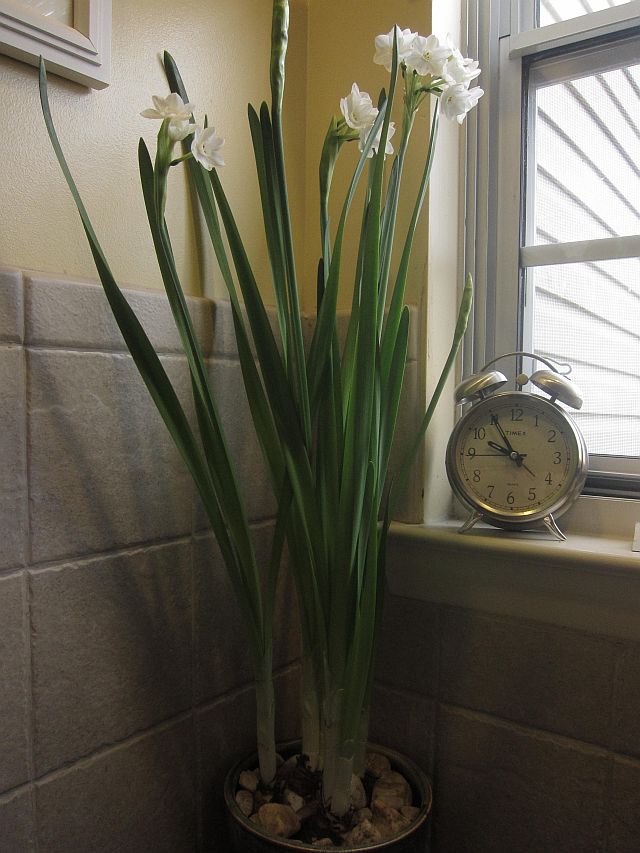
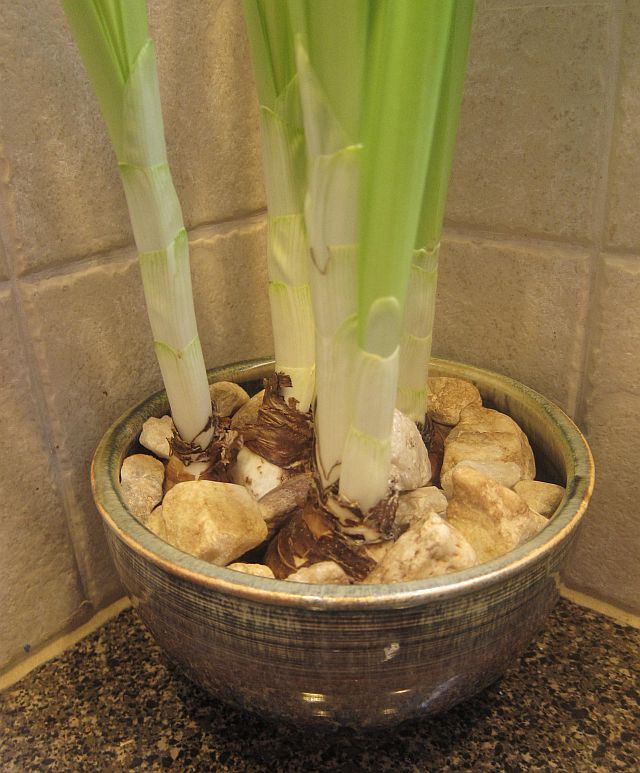
After Thanksgiving, I filled a ceramic bowl with rocks and three paperwhite flower bulbs.  Since rocks do not retain water like soil, the bulbs needed to be watered often. In about a week, green shoots pierced through the brown bulbs and grew straight up.  A week before Christmas, there were green buds atop tall green stalks.  As the buds opened, they looked like small unzipped purses filled with tissue.  By Christmas, small clusters of white flowers waved above the rocks and bulbs.
Their pleasant fragrance quickly turned pungent in our small kitchen.  The scent became less intense after I cut the flowers and placed them in a vase of water.  I plan to grow more flowering bulbs in rocks throughout the winter.

Bulbs – packed with potential, given a little warmth, water and time, their true beauty revealed.

May the New Year 2012, be filled with warmth, refreshment and all that inspires you to grow!

How to Make a Pine Cone Wreath

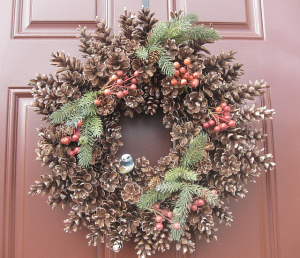
Several years ago, my mom and aunt started a small business called Joyanne Wreaths to sell their homemade pine cone wreaths.  This year, they finally showed me their secrets to making these gorgeous long lasting wreaths. I made my first pine cone wreath this year. Here is an early Christmas present from Our Garden Plot to you –

Mom’s Pine Cone Wreath Making Lesson

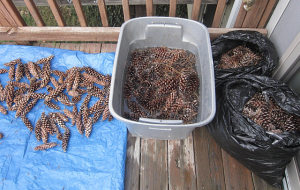
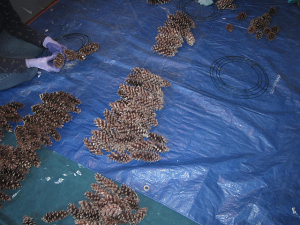
First, gather the pine cones from the ground in your yard, neighborhood and parks.  The long thin pine cones work best.  Next, wash the pine cones by swishing them around for a few minutes in a large bin of water mixed with a quarter cup of bleach

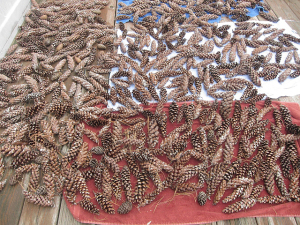
Drop the washed pine cones on a tarp, shake them a bit then place them on a towel to dry. Let the pine cones dry outside for one to two days.  The pine cones close when they are wet. They are ready for wreath making when they start to open.

Place a large tarp on your floor work space.  Sort the pine cones by size: small, medium and large (wear gloves and old clothes since there is still sticky sap on the pine cones).  Pinch off the small stems at the base of the pine cones.  The pine cones are ready to go into your 12 or 16 inch metal wreath form.

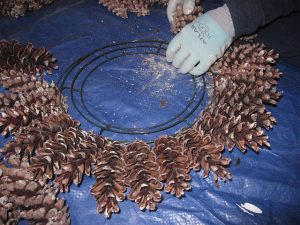
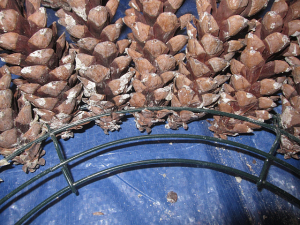
Insert the pine cones into the metal form by pinching and pushing the base of the pine cone through the outer rim of the form. Four to Five pine cones will fit in each section.  Fill the outer rim completely around.   You will have one circle of pine cones. Dipping the base of the pine cones in water makes them close and slide easily into the frame.  When the pine cones dry, they will open and fit in tight and more secure.

There are five pine cones in this section.  You will need 100 to 125 pine cones to make one wreath on a 12 inch frame.

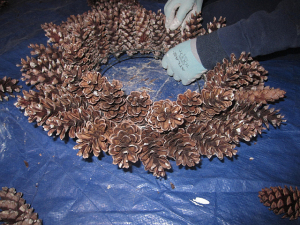
Insert the large pine cones in the outer sections, the medium pine cones in the middle sections and the small pine cones in the inner sections.

There will be three concentric circles of pine cones.  Make a hook with florist wire wrapped with floral tape.  Secure the hook to the frame on the back of the wreath.The wreath looks beautiful plain or decorated with natural objects – berries, leaves, small pine cones, or evergreen pieces.

The wreath becomes fuller as the pine cones dry.  Enjoy your homemade wreath.  It will last a long time!

My mom spent many years perfecting her craft while running her small business, Joyanne Wreaths. She no longer sells her work, but if you found this tutorial helpful would you consider making a donation? Thank your for your consideration.

Harvest Monday – November 28

broccoli

We were delighted to see the broccoli we planted in late summer finally growing crowns of broccoli florets. My first broccoli harvest! After I cut off four broccoli bunches, my son stopped my harvesting. “Let’s do an experiment and see if the florets really turn into tiny flowers”, he said. For science, I left a few of the small bunches on the stalk.

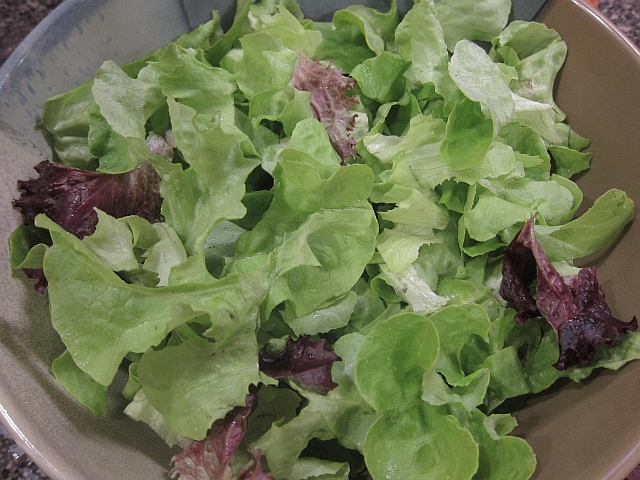
arugula and red and green leaf lettuce

We also harvested lettuce, arugula, radishes, beets and turnips (4.5 pounds) from our garden plot this week. The brussel sprouts are not ready to harvest. We planted them late. We may not get a mature sprout. Anyway, I am thankful my family likes salads and our garden plot is still producing!

To see other gardener’s harvests visit Daphnes Dandelions blog.

Harvest Monday – November 14

Turnips

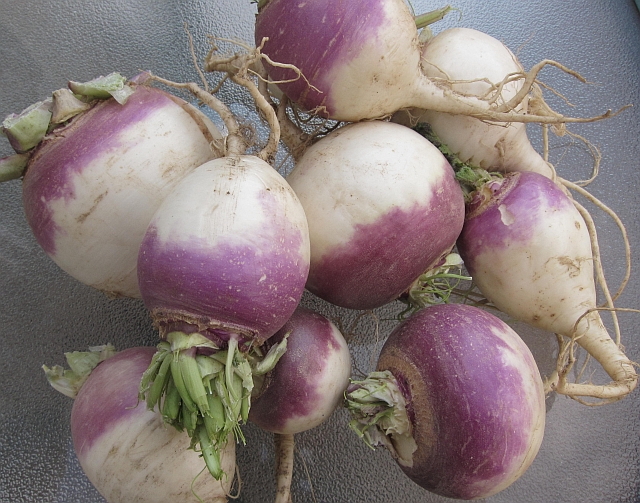
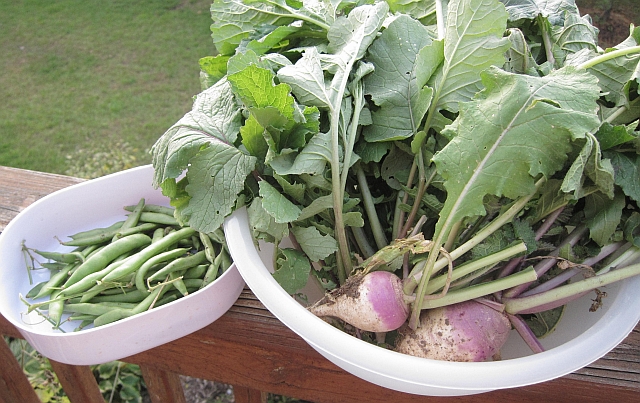
We are getting our garden plot ready for winter. We pulled out the last of the pepper plants and covered two beds with three tall bagfuls of mulched leaves collected from our yard and my mother’s yard. Some cold hardy plants are not ready for the winter “tuck-in” yet. Broccoli, brussel sprouts, turnips, lettuce and parsley are still growing in our plot. I harvested over three pounds of turnips, a handful of cherry bomb peppers and a large bunch of parsley this week.

We had our largest turnip harvest this season. This is the first year the turnips were larger than golf balls. I had enough turnips to fill up a casserole dish. I made a delicious Turnip gratin by adapting a recipe I found at Simply Recipes.  I peeled, then cut the turnips into thin slices with my mandolin slicer, blanched the slices for 3 minutes in boiling water.  I double layered the casserole with turnips, bread slices, onions, goat cheese and a drizzle of extra virgin olive oil. I baked the gratin at 375 for 30 minutes. The pungent flavor of the turnip decreased after baking.  My husband and son even enjoyed this not-so-popular root vegetable.     I am glad since it is loaded with vitamin C.

Candied Lemon Peel

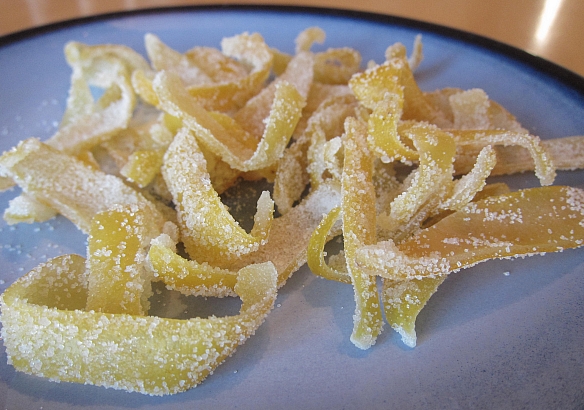
Don’t throw away your lemon, orange or grapefruit peels! They are packed with intense citrus flavor perfect for a homemade sweet, crisp and chewy fruit candy. I followed an easy recipe for candied lemon peels on the LunaCafe blog. Her stunning bright yellow lemon photos inspired me to try her recipe.  I made a half pint of delicious lemon candy from four of our homegrown lemons. The candied lemon peels taste like a natural lemon gum drop.  They are not sour or bitter.  The candy will stay fresh for several weeks in an airtight container in the refrigerator.

Enjoy!

A Fall Harvest

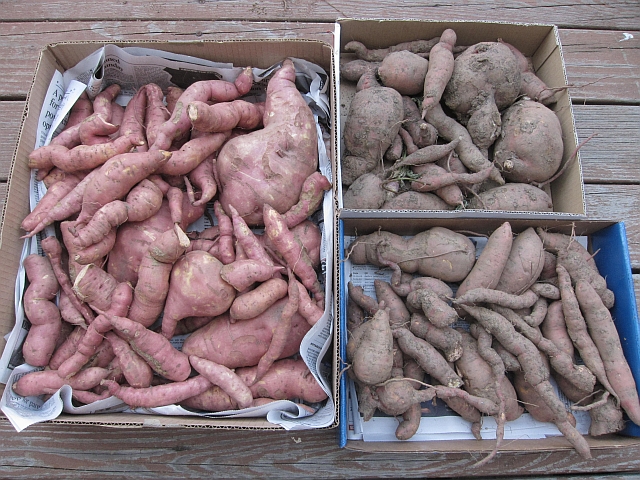
We dug out 30 pounds of sweet potatoes last Sunday. They were smaller than last year’s crop. We wonder if its because we did not cover the ground with black plastic this year. The plastic keeps the soil warmer and prevents over-watering from flooding rains. We will use the black plastic next year.
We had a surprise harvest of beans this fall. In August, Mexican bean beetles almost destroyed the young bean plants. Now it is too cold for the beetles to stick around to eat the hanging beans. More turnips, radishes and beets are ready to harvest.

I sauteed a bunch of turnip greens with garlic in olive oil, but they were too bitter to eat alone. The greens tasted better in chicken pasta soup. I am certain I can get my husband to try the greens again if I combine them with bacon. We’ll see on the next fall harvest.

My Lemon Tree

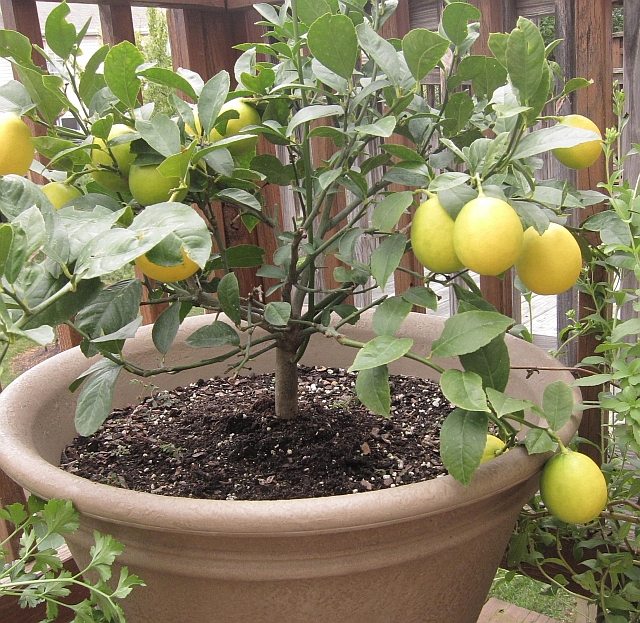
The weather is getting cooler so I will need to bring my Semi-Dwarf Meyer Lemon tree into the house soon.  Its lemons have finally turned completely yellow after being green and the same size for over 3 months.  Sometimes I wondered if the tree was actually a lime tree.  But my husband knew it was a lemon tree.  He gave it to me this year for Mother’s Day.

This past weekend, I picked 5 lemons from the tree.  I squeezed one lemon.  Its juice was sweeter and its peel was thinner and more tender than store bought lemons.  I mixed the juice from one lemon with hot water and a few drops of Stevia to make a soothing vitamin C rich drink for my husband who was sick with a cold.

I discovered that lemon zest can be frozen and lemon peels can be made into candy!  I plan to try this recipe for candied lemon peel.  I will let you know if it tastes as good as it looks.

The lemons took awhile to ripen, but they are ready at just the right time for cold and flu season and holiday baking and candy making!

Making Apple Sauce

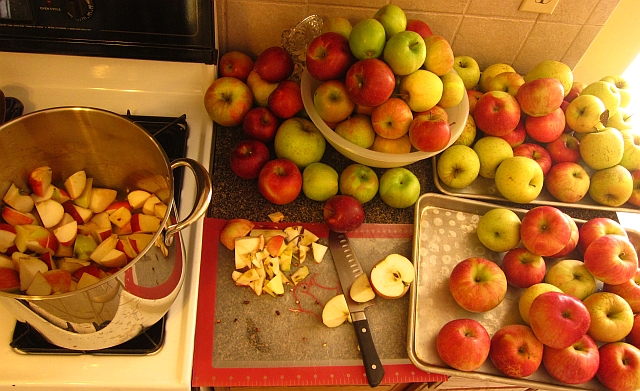
Last weekend we went to an apple farm in Biglersville, PA. It was apple heaven.   There were over 20 large bins at least 3 feet tall on pallets filled with many varieties of apples.  We only paid $10 for 2 overstuffed plastic grocery bags of apples (about  50 pounds of apples).   The Courtland and Golden Delicious apples were recommended for making applesauce so we filled one bag with only those two varieties.  We filled the other bag with Fuji, Red Delicious, Granny Smith, Rome and Jonagold.

We canned 8 and 1/2 quarts of sugar-free homemade applesauce this week!   Our Kitchen Aid Fruit and Vegetable Strainer practically made the applesauce for us.  We cut the apples into chunks and cooked them in a 12 quart pot without removing the skin or seeds.   Once the apples were cooked down into a soft mush we strained them through our Kitchenaid Strainer and poof… applesauce without any skin or seeds! We still have lots of apples left for baking, snacking and making caramel candy apples on a stick.

My son reminded me that apples have a star inside.  He asked, “Mommy, which way do you cut an apple to get the star?”  Horizontally.  While I chopped the apples, my son learned the meaning of horizontal and vertical and I marveled at God’s beautiful design work.  Apples are an autumn star.