Spinach Pesto

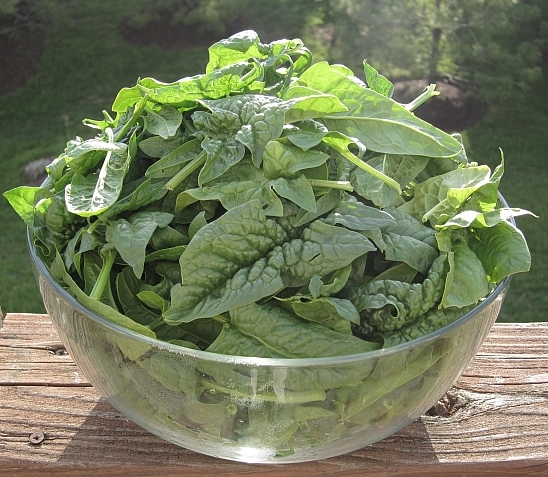
spinach picked from our plot

The spinach in our garden plot is starting to flower so I picked a grocery bag full of spinach this week.  Slugs like green leafy vegetables so I always clean greens by putting them into our kitchen sink filled with water.   If there are slugs hidden in the greens they will float to the water surface in several minutes.   Before I cleaned our huge batch of spinach, I soaked a batch of fresh picked green leaf lettuce and found two small slugs!  Spinach leaves are tough so I put them through a soak and rinse cycle three times.  We ate the squeaky clean spinach in salads all week!

Today I made spinach pesto, mixed it with ricotta cheese and created a white pizza topping. Yummy!

Spinach Pesto is easy to make by pulsing the following ingredients together in a food processor.
Ingredients:
2 cups fresh spinach leaves, well-washed and stemmed
1/2 cup walnuts
1/4 cup parmesan cheese, freshly grated, not canned
2 garlic cloves
2 tablespoons extra virgin olive oil
1/4 teaspoon sea salt
1/8 teaspoon fresh ground black pepper

Do you have any surprising spinach recipes?
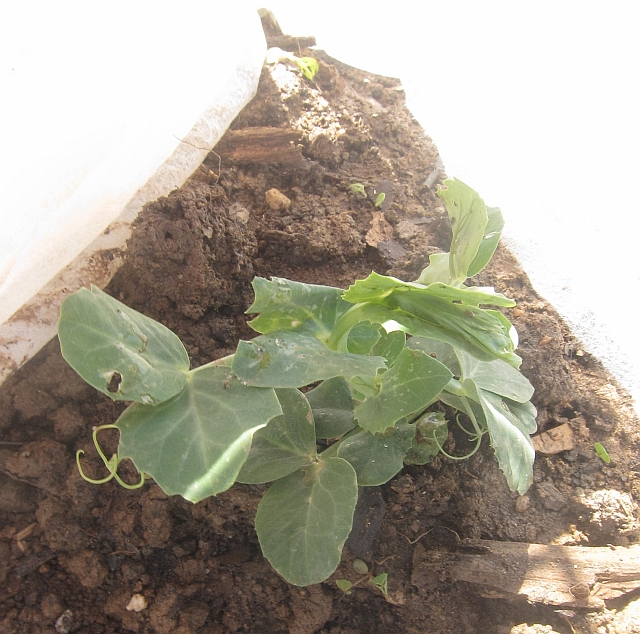
Our First Snow Peas

Snow peas

We finally have sturdy snow pea seedlings growing under row covers! Only a few seedlings emerged from the first snow pea seeds we planted in early April. Unfortunately, those fragile plants were nibbled down to the dirt by some critters. To improve seedling growth we treated the next batch of snow pea seeds with inoculant before planting and to prevent seedling damage we covered the ground with row covers. We now have thriving snow pea plants with dangling tendrils searching for something to climb. The plants need to grow bigger before the tendrils can wrap around the reinforcing wire trellis we installed two years ago. This is our first year planting snow peas. We learned another gardening lesson through trial and error.

What is inoculant? A commercially prepared source of dormant rhizobia, a naturally occurring soil bacterium. These tiny bacteria live within the bean roots and extract nitrogen from the air (which is 78% nitrogen), thus feeding the plants. Inoculant can be dusted onto moistened bean and pea seed just before planting. It’s a fully natural, simple process which takes only a moment, but will increase crop yields all season long. Inoculant can be purchased at most garden centers.

Moving Day for Tadpoles

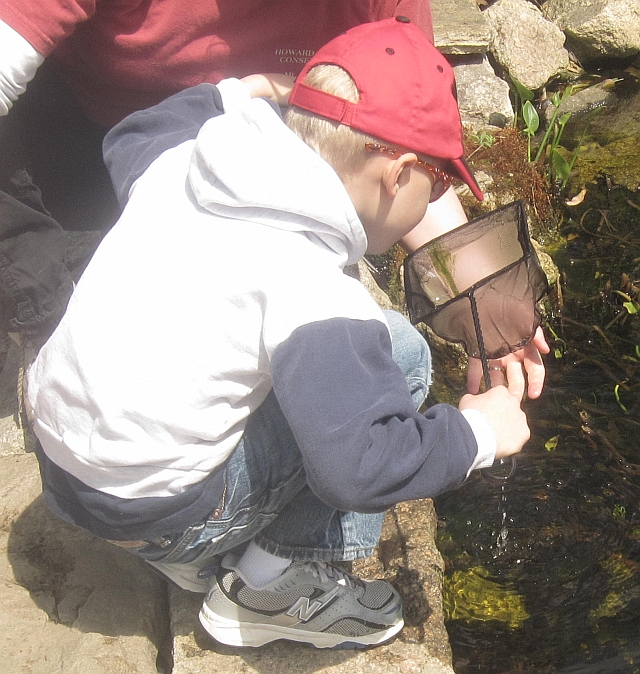
scooping up the tadpoles

Howard County Conservancy gives my son a big backyard where he can freely explore a creek, run in a field, study wildlife, feed a goat, grow a garden, hold a wiggling tadpole and observe its eyes under a magnifying glass and simply learn to value our beautiful natural world.

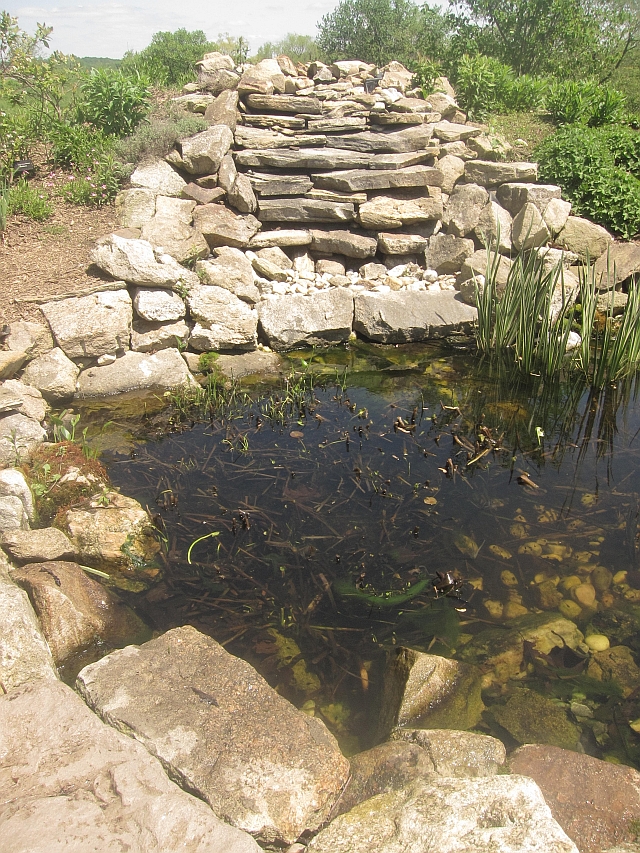
tadpoles' crowded home in stone pond

Last weekend, our family worked at the Howard County Conservancy. While my husband mowed the grass between the plots in the  community garden,  my son and I assisted with an Earth Day project.  The stone waterfall in the Honors Garden was temporarily turned off because thousands of tadpoles were living in it.

Our assignment, help relocate the tadpoles to a nearby creek in the Conservancy. A patient and knowledgeable Conservancy volunteer guided my son.  She helped him gather tadpoles in a net and place them in a container with water.  Then he carried the little oval-body-tailed swimmers about a 10 minute walk to the creek. We stepped through mud, rocks and weeds to get to the edge of the creek. My son slowly poured hundreds of tadpoles into the quiet creek.

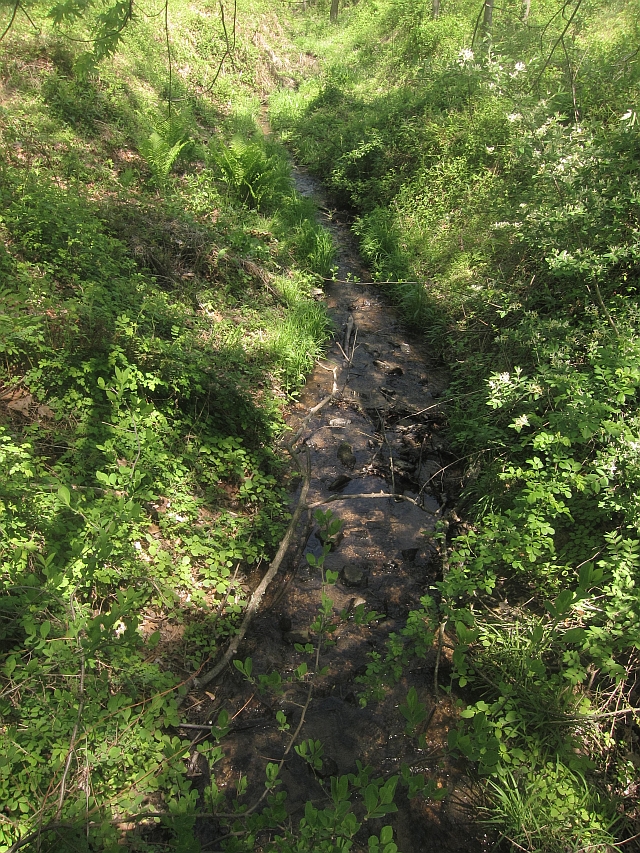
tadpoles' new home

We watched the tadpoles adjust to their new home. The strong swimmers tried to swim upstream until they found a pocket of still water between some rocks. Others just let the stream carry them to the calm water.  We imagined the creek filled with frogs this summer.  We will look for them in June.   The meandering creek gives them plenty of space to thrive.

The frog population in urban communities is threatened by the commercial use of pesticides to maintain lawns.  We want to help frogs and toads thrive. They are good because they eat garden pests and insects that can harm plants and vegetables. How are you helping frogs and toads thrive in your garden?

A Flower Quiz and Haiku

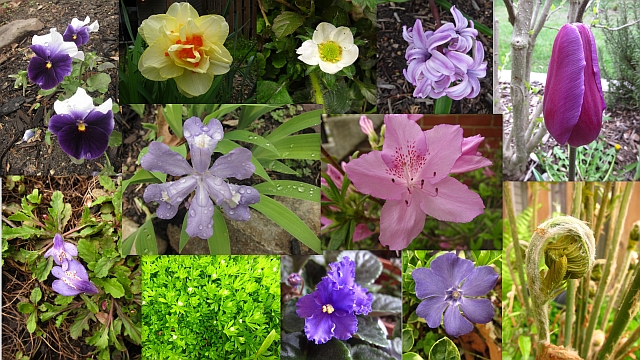
April flowers in our gardens

Can you name the April flowers (one is not a flower) blooming in our gardens?

You will find the answers below my April Flowers Haiku.

Tissue paper shapes.

Colors unfold from cold earth,

fragile, hardy hope.

Answers: (left to right, top: pansy, double blooming daffodil, strawberry blossom, hyacinth, tulip; middle:  miniature iris, azalea; bottom: alba reptans ground cover, sweet woodruff,  African violet,  vinca ground cover and royal fern)

Sunflowers Protect Garden

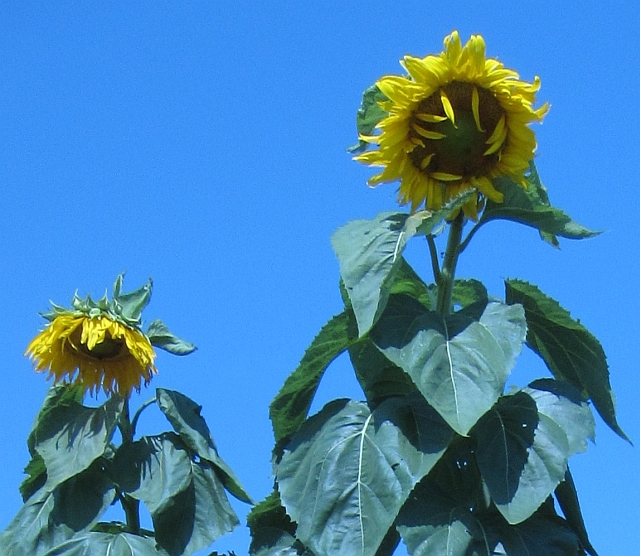
sunflowers from 2010 garden

Last week in our community garden we turned the soil, picked spinach, pulled weeds, planted sugar snap peas, leeks and shallots and discussed last years’ stink bug invasion with a new garden neighbor.   She feared the stink bugs might cause damage to her new garden this summer.  She heard other community gardeners’ stories of tomatoes, squash and other crops ruined by the pesky bugs.  I reassured her that the stink bugs did not damage our crops.  We had an abundance of tomatoes, peppers, eggplants and squash, but by the end of summer our sunflowers were infested with the bugs.  We had a stink bug hotel towering above our garden (see Fall Clean Up and Demolition blog post).   We did not plan to grow sunflowers in our garden this year, but after talking to our new garden neighbor,  I realize the sunflowers probably saved our crops last year!   We will plant sunflowers again to divert the stink bugs.

How will you protect your garden from the stink bugs this year?

Our Hyacinths Give a Fragrant Welcome

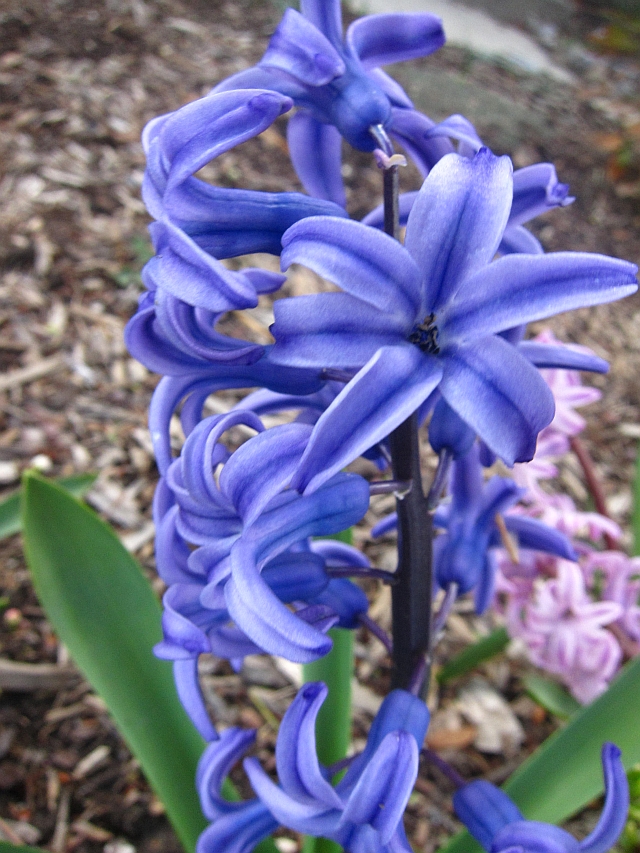
hyacinth

Blue, peach, white and purple hyacinths are in full bloom again under our Bradford Pear tree in the front yard.   They give a fragrant greeting to everyone who comes to our home.  The hardy clusters of waxy star-like flowers stay through April.  Even their long green leaves brighten up our lawn-free front yard in May, after the hyacinth flower is gone and before the ground covers spread.  I don’t clip the green leaves until they turn brown because the leaves absorb the sunlight, giving the underground hyacinth bulbs nourishing sunshine to store up for next years’ flowers.   Hyacinth bulbs typically only bloom for a couple of seasons then need to be replaced.  This is our hyacinths’ fourth spring season!

Our Spring and Summer Garden Diagram for 2011

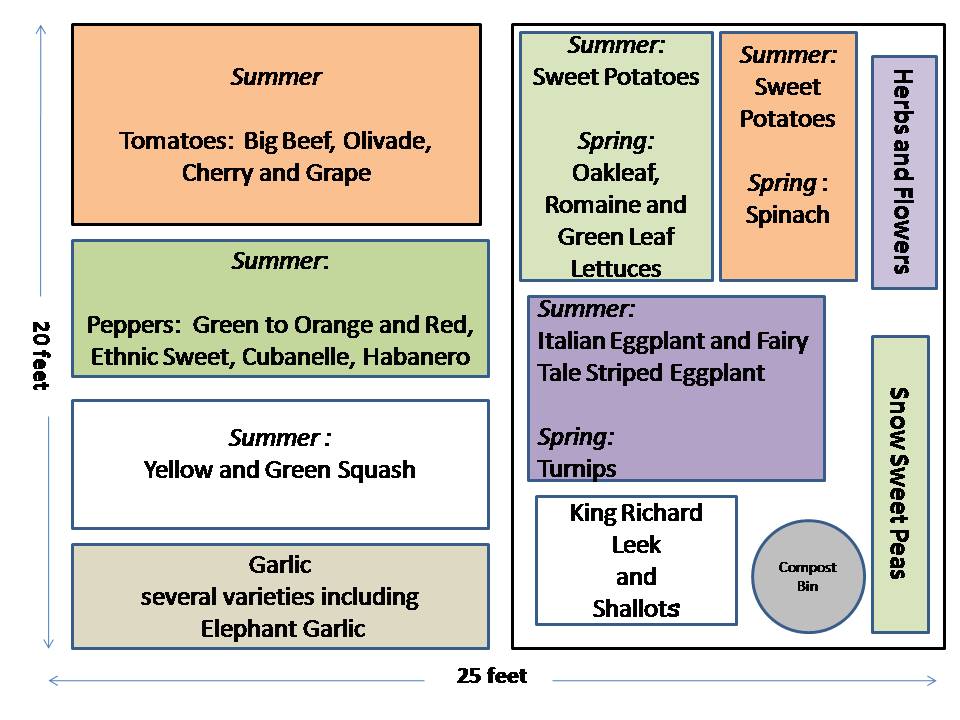
our 2011 garden plot for spring and summer

This is the 2011 spring and summer plan for our community garden plot. We planted the tomatoes, peppers and eggplants indoors last weekend. We are waiting for the seedlings to emerge soon. The leeks, shallots and herbs were planted several weeks ago and are now sturdy seedlings. The leeks and shallots look like tall thin blades of grass and will soon touch the grow lights. They tower over the other seedlings and need to be planted in our garden soon. Spinach, green leaf lettuce, turnips and garlic are currently growing in our garden plot. We planted seeds of Romaine, Oakleaf Lettuce and Snow Peas directly in our garden plot last weekend. The sweet potato plant slips will be coming from Johnny’s Seed Company in late spring. We hope to get a drip system installed by June.   We harvested some spinach and turnips.  The turnips are especially sweet after being roasted.  We are eager to get more plants growing in our garden plot!

Ornamental Grass Blooming

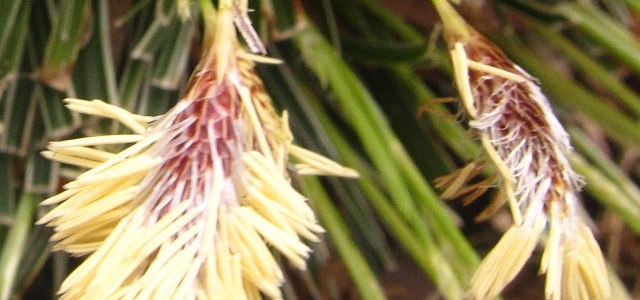
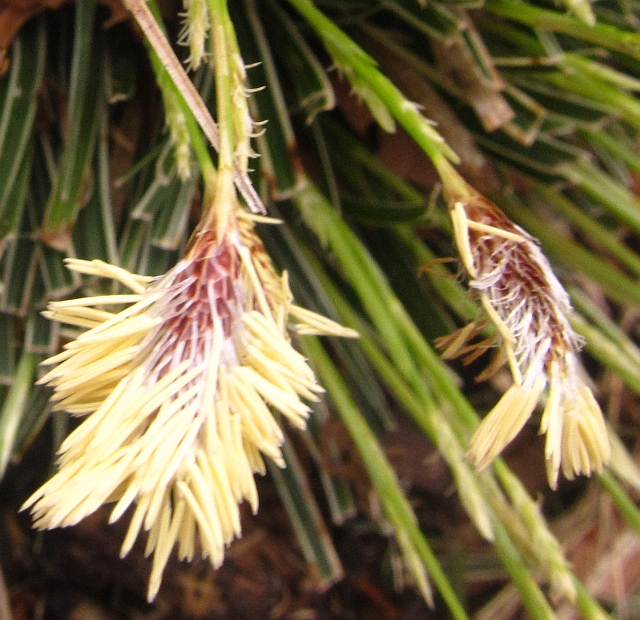
even grass is in bloom!

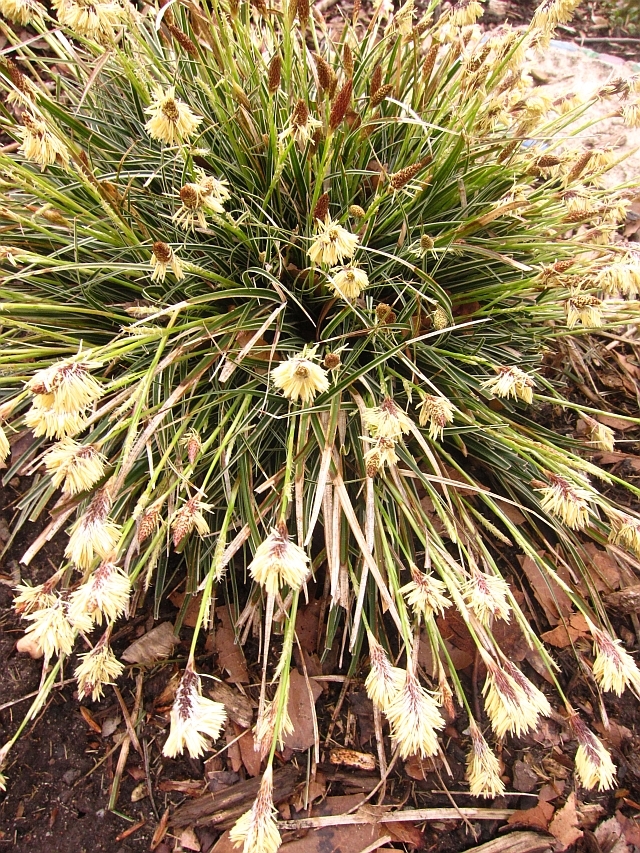
Our front yard clean up began a few days ago. It is thrilling to trim off the brown foliage and find little buds sitting on branches and green shoots pushing through the dirt. In my enthusiasm, I started to clip a small ornamental grass before I saw brown conical buds on top of new green stems between the blades of grass. Despite clipping a few of the buds, the small mound of grass still exploded with fluffy blossoms a few days later.

our grass firework

I planted this tuft of ornamental grass several years ago and I do not remember its name. I can not recall it blooming in the past. My husband says it looks like a firework. Nevertheless, this year it joined the rank of early spring bloomer, along with the mini purple Irises, Crocuses and Hyacinths in our front yard.

Does anyone know the name for this cheerful ornamental grass?

Our Polite Mourning Doves

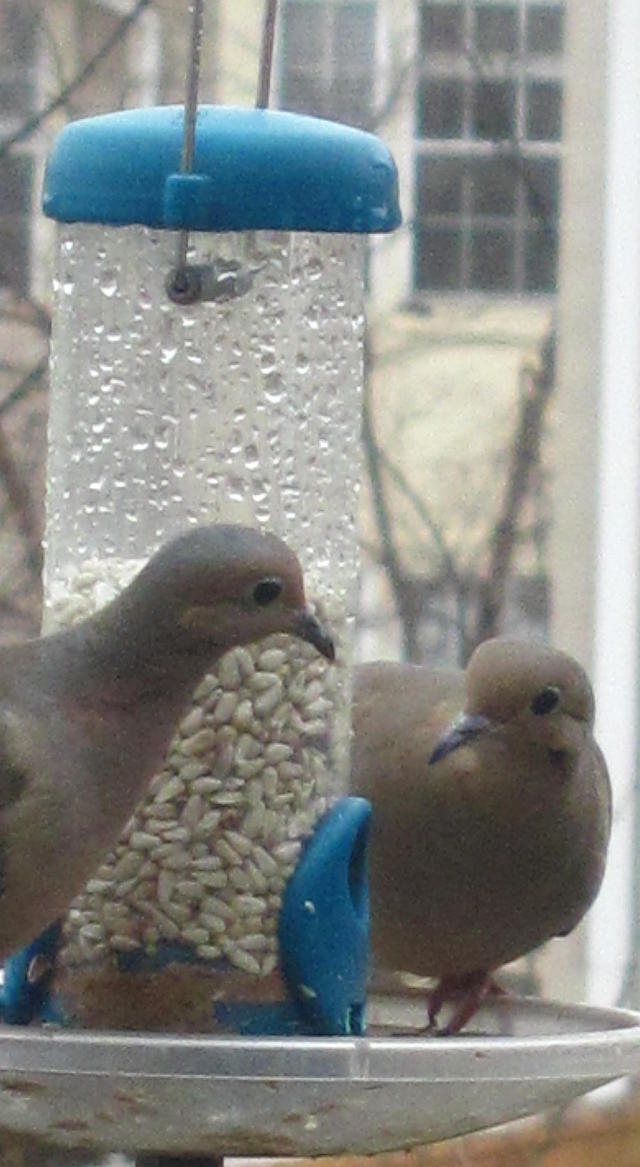
PLEASE, YOU eat first.
This pair of doves visit our feeder regularly early in the morning or afternoon. They are a gracious couple. They seem to wait their turn at the feeder. House and purple finches, chickadees, starlings, woodpeckers and tufted titmice come to our feeder for a frenzied quick nibble then they disappear. The mourning doves don’t eat and fly away, instead they hang out for awhile before and after they eat. Sometimes they will even sit on the feeder tray or on our deck railing, tuck their heads between their shoulders and take a nap. Their soft song of cooOOoo-woo-woo-woooo, reminds us to check if our feeder needs more safflower seeds. There are benefits to being present, patient and polite!

(Note: we use safflower seeds because squirrels do not like its bitter taste)