Harvest Monday – August 22

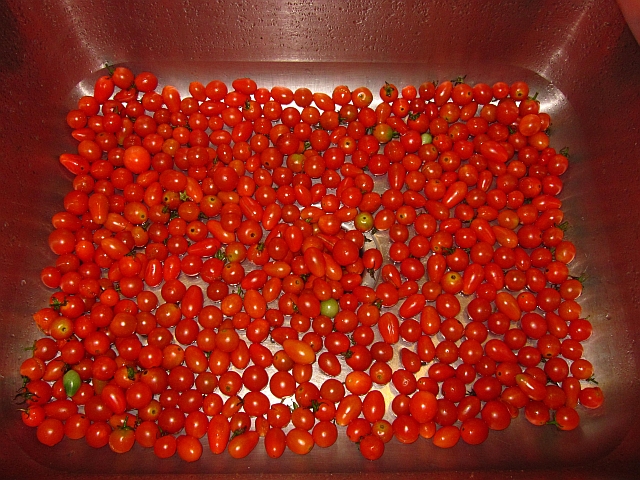
Cherry and grape tomatoes getting a bath.

Thanks to Daphne’s Dandelions, the host of Harvest Monday!

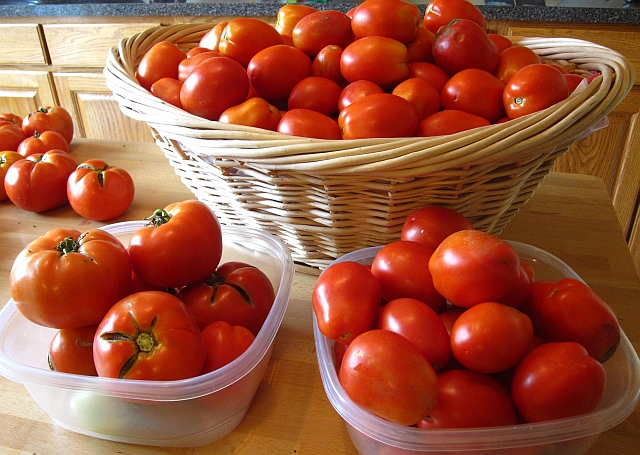
Tomatoes were our harvest winners again!  We picked over 40 pounds of tomatoes from our weary tomato plants this week.  On Saturday, my husband and I got a lot of work done at the garden plot while our son stayed at his grandma’s house.   I turned over the soil and planted fall crops. My patient husband picked the cherry and grape tomatoes.   He had the most arduous job of picking and holding the small fruit while crawling and twisting through a jungle of 6 feet high tomato plants and dirt peppered with smashed, split and slimy dropped tomatoes.  We learned two lessons….use black plastic and do not plant tomatoes only 18 inches apart!   The tomato plants with black plastic on the ground around them had less split tomatoes than the plants that did not have it.  The black plastic prevented the plants from getting too much water from recent heavy storms.

Harvest Totals:
Beefsteak and Plum Tomatoes 36.5 pounds
Cherry and Grape Tomatoes 7.75 pounds
Cherry Bomb Peppers .25 pound
Hot Banana Peppers .75 pound
Bell Pepper 2 pounds
Yellow Squash 1 pound
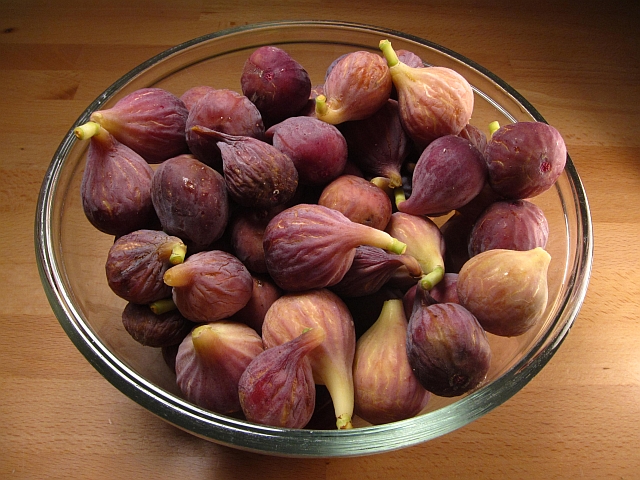
Figs 3 pounds
Cucumber 1 pound
Eggplant 1 pound
Leeks 2 pounds
Shallots .5 pounds

Harvest Preservation:
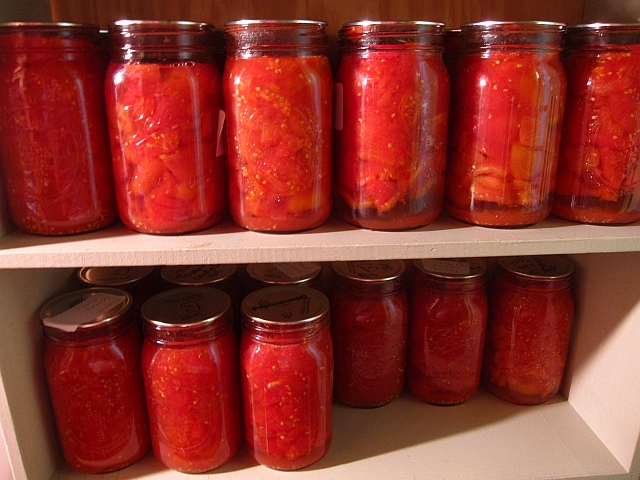
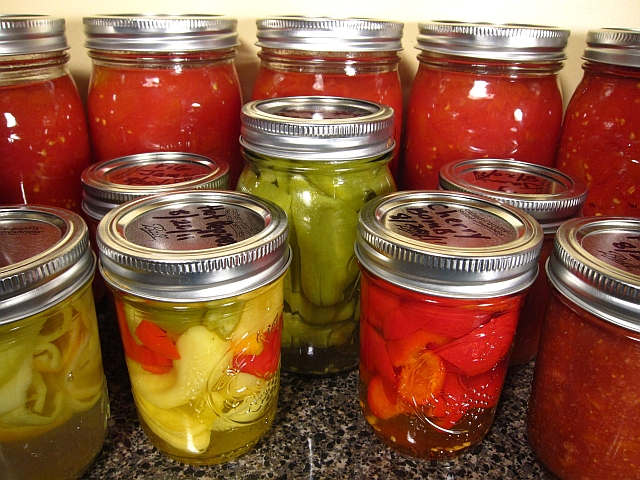
8 quarts of Tomatoes
3 pints of  Pickled Peppers
2 pints of Fig Jam
2 quart bags of frozen oven-dried cherry and grape tomatoes
Catching Figs

Figs

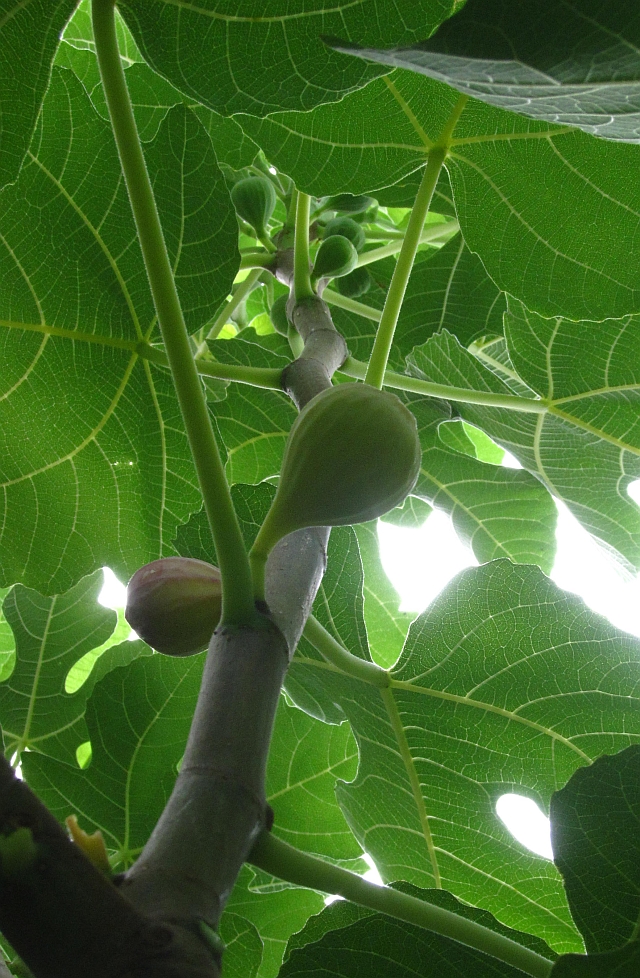
Our fig tree’s branches grew over 18 inches this summer! Their smooth charcoal-colored branches extend further than they did prior to our late winter pruning.  The tree’s leaves reach over a foot beyond our 10 foot high deck.  Figs grow only on new growth so there are figs dangling high out of reach.  They remind me of my son in a game of chase saying, “You can’t catch me!” Yesterday, I carried a step stool outside to pick the high ripe figs.   But, I did not need the stool because the fig tree’s branches are supple and could be gently lowered. Those faraway figs, got ’em!

I picked 2 pounds of the Brown Turkey figs. Last night, I used all the figs and two packages of low-sugar fruit pectin to make 4 half pint jars of fig jam. The mildly sweet jam tasted great on warm toast this morning. We will have more figs soon. Last summer we had figs into October. In Our Fig Tree, I describe more adventurous ways to enjoy fresh figs.

Harvest Monday – August 15th

The tomatoes were the star of our garden this week. Despite several rain storms, we picked 97 pounds of tomatoes this week! On Saturday, our plum tomato plants dripped loads of bright red fruit so I continued to pick as the sky darkened and dumped a heavy rain.  My six year old son watched from the car in amazement as his soggy mommy stomped barefoot through puddles and wet spongy grass carrying bags of tomatoes.  After the harvest, my son and I splashed our bare feet in the little waterfalls flowing around the trees and down the hills in the parking lot of our community garden. Harvesting in a summer rain can be fun.

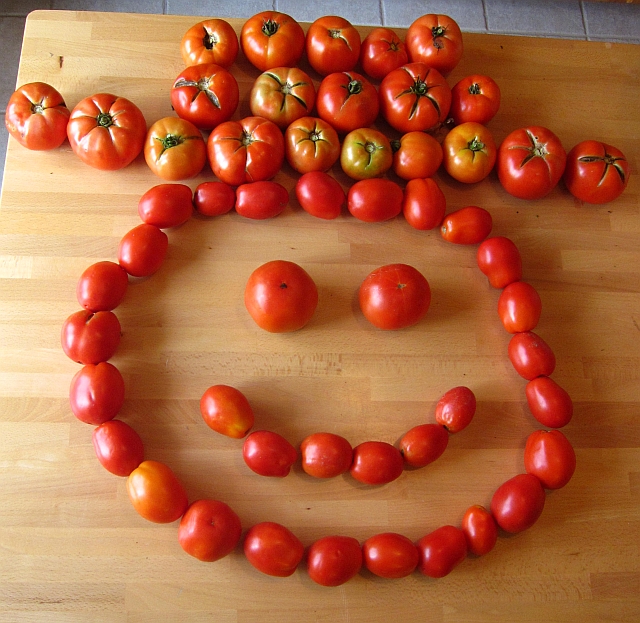
My son's contribution to the tomato harvest

Here are our harvest totals for this week:

Plum and Beefsteak Tomatoes combined
70 pounds

Cherry Tomatoes
27 pounds

Eggplant  5.25 pounds

Peppers  5.0 pounds

Cucumbers  6 pounds

Sweet potato leaves  3 bags

21 Quarts of Tomatoes

Preserved the following produce this week:

21 Quarts of tomatoes
3 Quarts of pickled cucumbers
froze bags of bell and cubanelle peppers, oven-dried cherry tomatoes, and cooked sweet potato leaves

To see amazing harvests from gardens around the world, stop by Daphne’s Dandelions, the host of Harvest Monday.

Zucchini Tribute

Our zucchini plants produced over 22 pounds of zucchini!   We could not pick them fast enough so some zucchini grew into a size worthy of the county fair.  My kitchen counters were covered with green logs a few weeks ago.  I chopped and my son shredded (using the food processor) until we filled over 15  cups with zucchini meat.  Here is our zucchini resume…

  • Traditional zucchini bread
  • Oatmeal cookies containing shredded zucchini (squeezed dry).
  • Appetizers of breaded then broiled zucchini slices (can be used in Lasagna in place of noodles).
  • Pasta with sauted zucchini, tomatoes, garlic and onion.
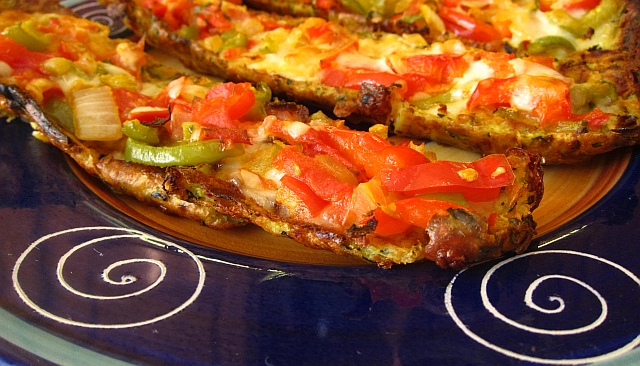
  • Pizza with a crust made from shredded zucchini, eggs, flour, olive oil and cheese.  My son’s culinary review, “It does not look like pizza, but it tastes like pizza.  It is yummy!”

    pizza with a zucchini crust

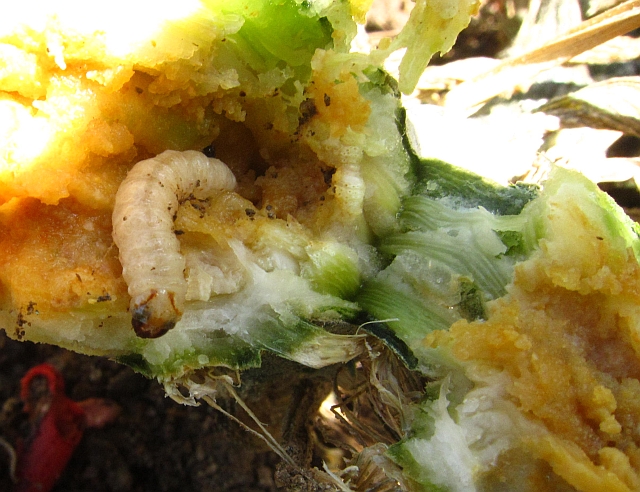
Unfortunately, we had to say goodbye to our zucchini plants this week.   I found a squash vine borer larva inside the stem of one of our plants.  Moist sawdust-like debris around each stem and wilted leaves were signs of this devastating pest.  I cut open one stem and found the larva.  Sometimes the plant can be saved by digging out the larva and covering the stem with dirt.  Our plants had too much damage to be saved.  But our zucchini legacy will continue despite the vine borers……there is more shredded zucchini frozen in a bag inside our freezer!

Squash Vine Borer

All curcurbits: gourds, pumpkins, summer squash, winter squash and occasionally cucumbers and melons are hosts to the squash vine borer.

I used row covers before the squash plants flowered to prevent pests, but the following actions described in the book, Good Bug, Bad Bug by Jessica Walliser may have prevented  my recent vine borer attack:

    •  Mound soil over the stem up to the lower-most flower to eliminate egg laying surface area and encourage root development.
    •  Wrap a strip of aluminum foil around the plant base early in the season, to prevent adults from laying eggs on the stem.  Nestle the foil just below the  soil surface, reaching up to the lowermost leaf.
squash vine borer in one of our squash stems

We could try and save the plants by cutting the stem and digging out the vine borer larva, then covering the cut stem with dirt.  But,  I learned my lesson, next summer I will remember, “mound and wrap.”

Sweet Potato Leaves

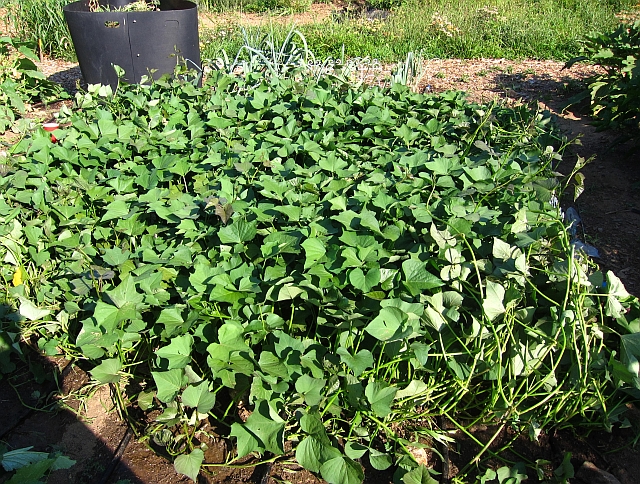
our sweet potato vine explosion

We discovered greens that grow well in hot weather – sweet potato leaves (also called sweet potato tops).  A Chinese gardener from our community garden told us that sweet potato leaves are edible.  They are rich in vitamins A, C, and B2 (Riboflavin).

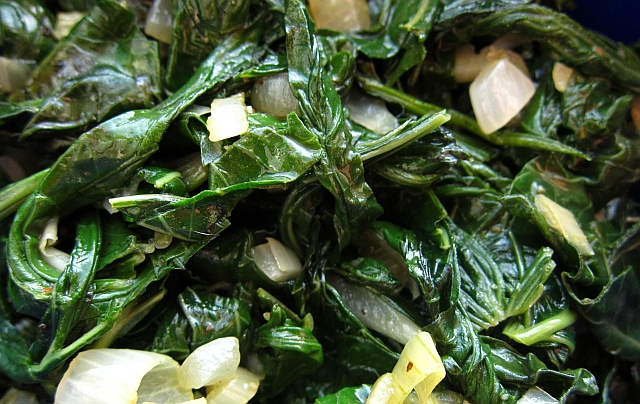
cooked sweet potato leaves

We have an abundance of sweet potato leaves growing in our community garden plot!  The leafy vines are taking over our leek bed and walking path so I picked a couple bagfuls for my cooking experiments.

1.  I sauted the leaves in olive oil with shallots then simmered them in chicken stock.  I served the cooked leaves with quinoa.   It was yummy.

2.  I sauted  the leaves  in vegetable oil with chopped ginger, then simmered the leaves in chicken stock. I served it as a side dish.  It tasted delicious.

I discovered that  sweet potato tops are strong and hearty, will hold up to cooking, are similar to spinach and have a mild, non-bitter taste.

Donating to Local Food Bank

The Howard County Community Garden food bank donation for July 21st

The Howard County Conservancy Community Garden donates a portion of its produce to the Howard County Food Bank every Tuesday and Thursday.  Volunteers pick the produce contributions from a plot solely dedicated to the food bank and from individuals’ gardens with portions marked for the food bank.  Often a gardener will mark their plot for the food bank when they are out of town for  an extended period of time.  The goal is to prevent waste in our gardens.

Yesterday, my son and I joined another gardener to pick the produce for donation.    It was fun and I learned how to harvest cabbage.  The cabbage head is cut from the thick stalk because a new cabbage head may grow from the old stalk.   I will look for cabbage regrowth in the food bank plot.

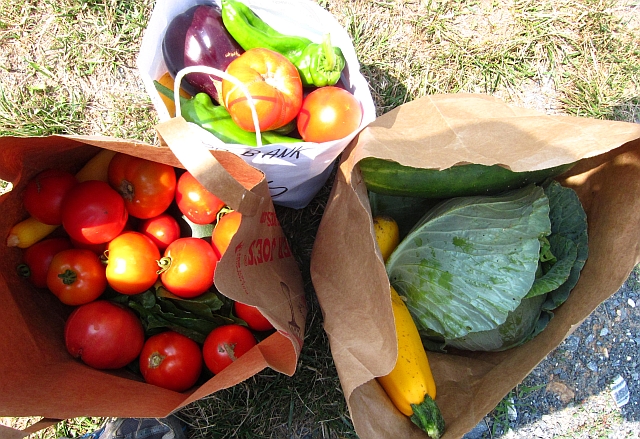
We collected three bags of produce including tomatoes, cabbage, peppers, Malabar spinach, zucchini, and eggplant.   It weighed in at 29 pounds at the food bank!   The fresh organic produce was greatly appreciated.

Over 36 million Americans are hungry and rely on local food pantries to help sustain their families.  For more information about how other gardeners are giving to food banks across Maryland and the United States visit Grow It Give It.

Toad in Our Tomato Bed

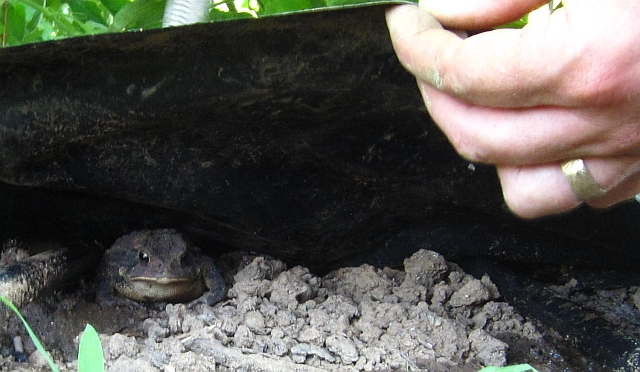
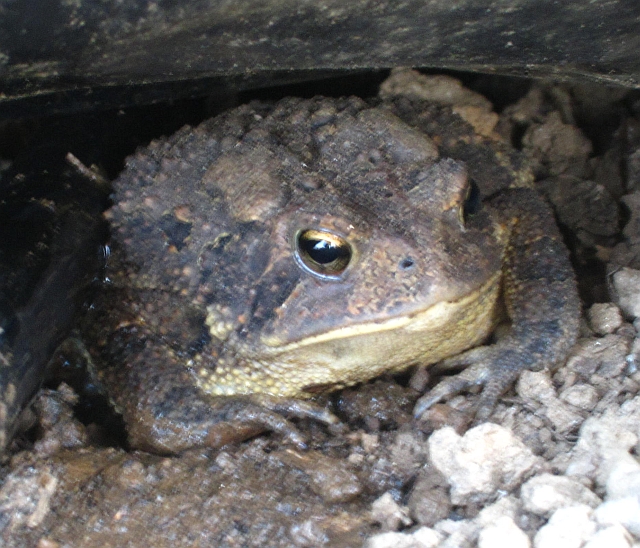
Saturday, while we worked in the garden fertilizing, weeding and securing our unruly tomato plants, we met a new garden friend.  My husband met him first when he crawled underneath the tomato plants to clip off the discolored tomato sucker branches.    He rested his hand on the black plastic below one tomato plant and felt the cool cover beat against his palm.   Startled, he lifted one edge of the plastic and saw two eyes staring back at him. “We got a toad,” he announced.


My son and I rushed over to greet our critter friend.   He did not move at all while I photographed him.  His body looked moist and well fed.   He had the perfect toad hideout in our garden – a shelter with water from the drip system and plenty of insects.   We welcomed him to our garden plot, told him to bring friends, promised him we’d watch our step around the tomatoes, then covered him back up with the plastic. My son named him “Toady.”

Toads help rid the garden of pests, including insects, slugs and snails. They can eat over 10,000 insects in one summer! Have a feast in our garden, Toady!

Unexpected Sunflowers

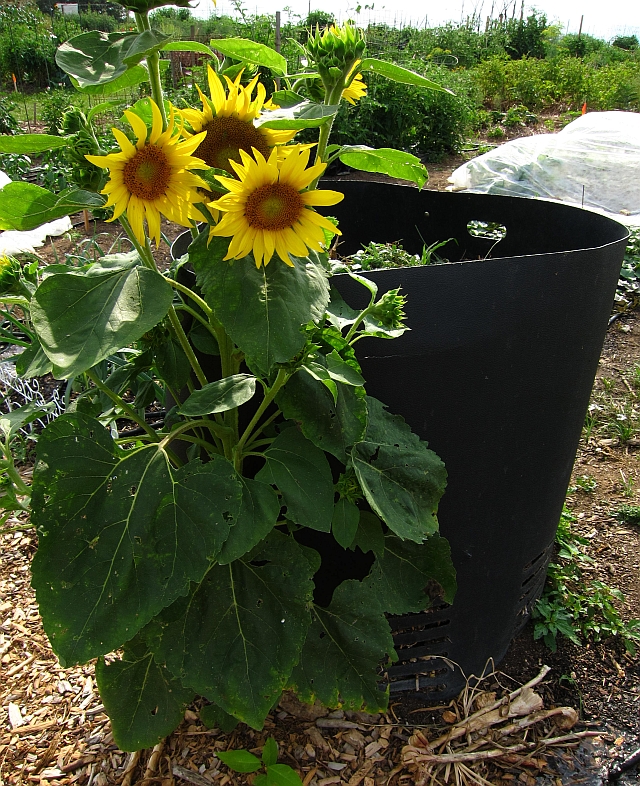
our compost bin

Our compost bin sprouted a short and compact sunflower plant with small (for a sunflower) bright blooms. Those blooms attract a diverse group of bugs to our garden. Unlike the tall sunflowers we usually grow, these sunflowers are at eye level.   We can see the bees, ants, beetles, stink bugs and assassin bugs inside each floret filled center.

Sunflowers are great in a vegetable garden because they attract beneficial bugs to the garden and divert pest bugs from vegetable crops.

Do you have any surprise plants growing out of your compost bin?