Garden Info Center Helps My Semi-Dwarf Meyer Lemon Tree

Thanks to the Garden Information Center at the University of Maryland!

I emailed them my questions and in less than a week they replied with some solutions for my winter weary lemon tree.

My question:
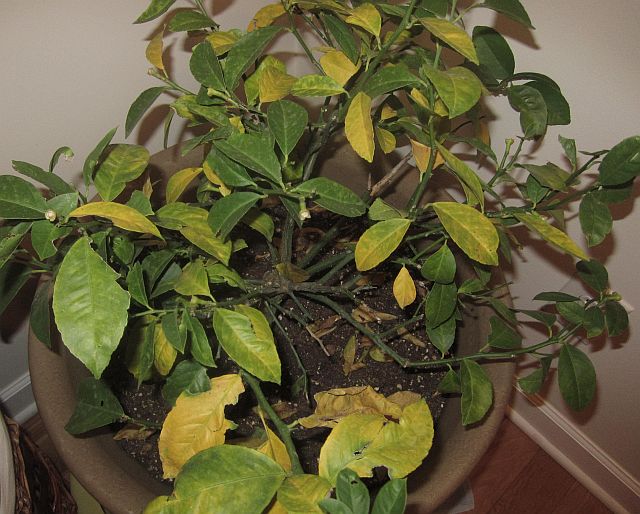
I have a dwarf Meyer Lemon Tree. It produced over 15 lemons this fall. We brought the plant indoors and recently we noticed that the leaves started to turn yellow. Prior to that, some of the green leaves looked puckered and munched on. Do you know what causes this?

———————————————————————————————–
The Garden Information Center’s answer :

The yellowing may be due to low light levels, nutrient deficiencies, and possible insect problems. During the winter the plant is dealing with low light levels and not actively growing. It is going through a rest period and older leaves may yellow and fall. You should also check for spider mites and scale insects(sucking insects) .

You should also check the root system and make sure the plant is not pot bound. You may see surface roots or roots coming from the bottom of the container hole. Repot with new potting mixture or top dress the mixture with fresh potting soil.

Do not feed the plant until the lighting improves in the late winter-spring (usually sometime in March). Provide at least four hours a day of direct sunlight. Place outdoors in bright light during the summer. Give an actively growing citrus a high potash, tomato type fertilizer every two weeks. Shorten overlong shoots of citruses by two thirds in early spring.

Looks like I need to let it rest in a sunny spot, spray it with Captain Jack organic insecticide, top dress it with more potting soil and feed it at the end of winter.
Thanks University of Maryland Agriculture Extension!

How to Make a Pine Cone Wreath

Several years ago, my mom and aunt started a small business called Joyanne Wreaths to sell their homemade pine cone wreaths.  This year, they finally showed me their secrets to making these gorgeous long lasting wreaths. I made my first pine cone wreath this year. Here is an early Christmas present from Our Garden Plot to you –

Mom’s Pine Cone Wreath Making Lesson

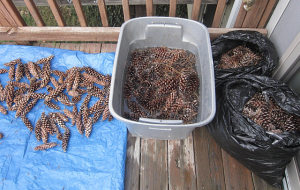
First, gather the pine cones from the ground in your yard, neighborhood and parks.  The long thin pine cones work best.  Next, wash the pine cones by swishing them around for a few minutes in a large bin of water mixed with a quarter cup of bleach

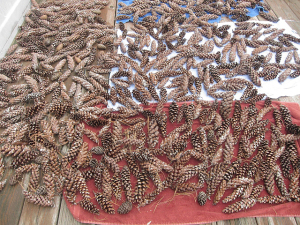
Drop the washed pine cones on a tarp, shake them a bit then place them on a towel to dry. Let the pine cones dry outside for one to two days.  The pine cones close when they are wet. They are ready for wreath making when they start to open.

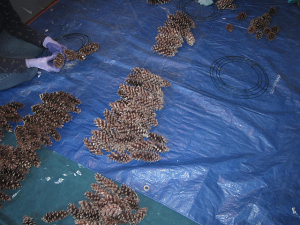
Place a large tarp on your floor work space.  Sort the pine cones by size: small, medium and large (wear gloves and old clothes since there is still sticky sap on the pine cones).  Pinch off the small stems at the base of the pine cones.  The pine cones are ready to go into your 12 or 16 inch metal wreath form.

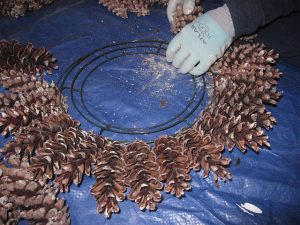
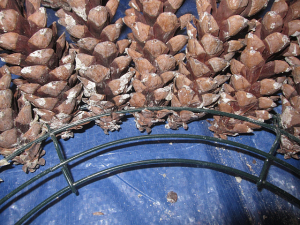
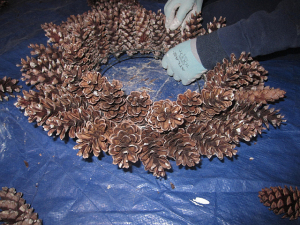
Insert the pine cones into the metal form by pinching and pushing the base of the pine cone through the outer rim of the form. Four to Five pine cones will fit in each section.  Fill the outer rim completely around.   You will have one circle of pine cones. Dipping the base of the pine cones in water makes them close and slide easily into the frame.  When the pine cones dry, they will open and fit in tight and more secure.

There are five pine cones in this section.  You will need 100 to 125 pine cones to make one wreath on a 12 inch frame.

Insert the large pine cones in the outer sections, the medium pine cones in the middle sections and the small pine cones in the inner sections.

There will be three concentric circles of pine cones.  Make a hook with florist wire wrapped with floral tape.  Secure the hook to the frame on the back of the wreath.The wreath looks beautiful plain or decorated with natural objects – berries, leaves, small pine cones, or evergreen pieces.

The wreath becomes fuller as the pine cones dry.  Enjoy your homemade wreath.  It will last a long time!

My mom spent many years perfecting her craft while running her small business, Joyanne Wreaths. She no longer sells her work, but if you found this tutorial helpful would you consider making a donation? Thank your for your consideration.

Harvest Monday – September 5th

hot peppers, sweet potato leaves and eggplant
This week we planted more than we harvested. We planted turnips, beets, broccoli, brussel sprouts, kale, radishes and several kinds of leaf lettuces. We pulled out the last of our tomato plants and one pepper plant. Our gourd and sweet potato vines are spreading everywhere. We picked bags of sweet potato leaves. I plan to lightly saute the leaves, put them into quart size bags and freeze. I made a tasty Asian rice noodle soup with the sweet potato leaves. The leaves are thick enough to hold up well in soup.
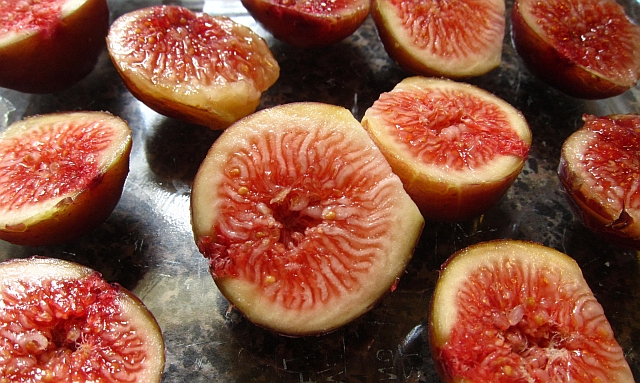
cut figs

We picked more figs from our backyard fig tree.  I drizzled the figs with a sweet sauce of melted butter, honey, cinnamon and salt then baked them for 15 minutes at 400 degrees. They were yummy on their own or on top of ricotta cheese.

Our Harvest Totals for this week: eggplant 2 pounds, figs 1.75 pounds, sweet potato leaves 2.5 pounds, hot peppers 1 pound.

Total Harvest this week: 5.25 pounds
Total Harvest this season: 262.35

Check out Daphne’s Dandelions, the host of Harvest Monday, for more harvest totals from other gardeners.

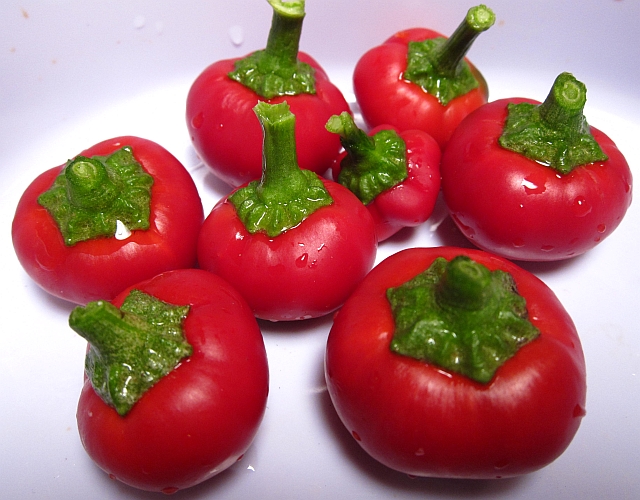
Cherry Bomb Peppers

Cherry Bomb Peppers
Hurricane Irene is expected to bring us heavy winds and rain tonight and tomorrow morning. Our cherry bomb pepper plant with its stout, bright red, thick-skinned peppers looks ready to handle any extreme weather. Nevertheless, we brought it indoors with our other container plants (lemon tree, parsley, jalapeno pepper, petunias and mint).

I plan to stuff the sweet and mildly hot cherry bomb peppers with cheese and sausage then roast them for 10 to 15 minutes at 400 degrees. A spicy snack to enjoy with our popcorn and movie tonight while the wind and rain roars outside.

Our thoughts and prayers are with those in the path of Hurricane Irene. Be stout and strong like the cherry bomb pepper!

Trees in Winter

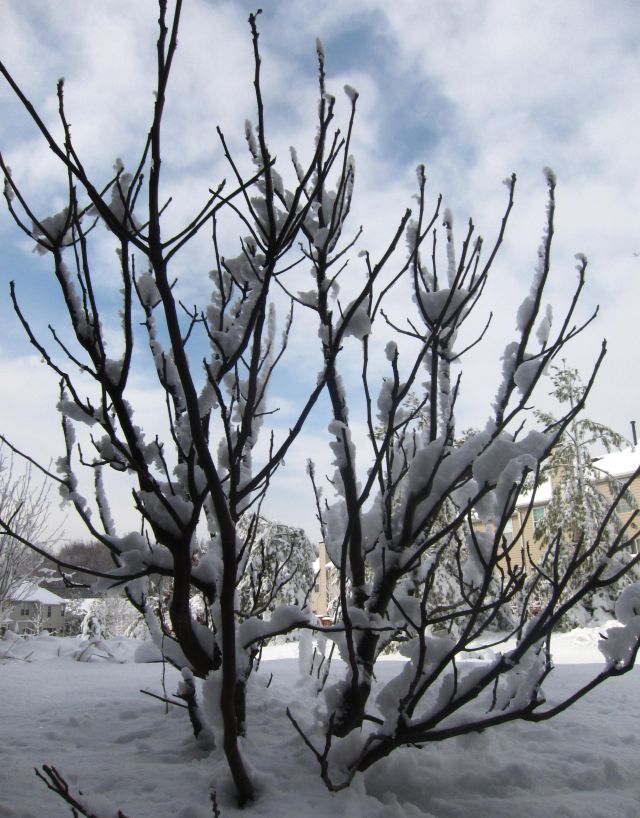
our fig tree

Trees in winter are beautiful!

The bare tree branches are like line drawings on the sky.   The branches on our fig tree grew a lot  longer this year.   We used to cover them in burlap for the winter, but they are too big for that now (see our fig tree post for more information about our productive tree).   Since figs grow only on the new branch growth, we plan to prune our fig tree towards the end of winter.    This will be its first pruning.  It is hard to do, but it must be done or we will need a ladder to reach the figs this summer!

oak

The evergreen trees and deciduous trees with remaining shriveled leaves are like welcoming shelters in the sparse winter landscape.  My son likes to play “ding dong on the doorbell”  underneath them.  It is a game where I ring a tree bark doorbell to enter and visit him in his safe and cozy tree house.

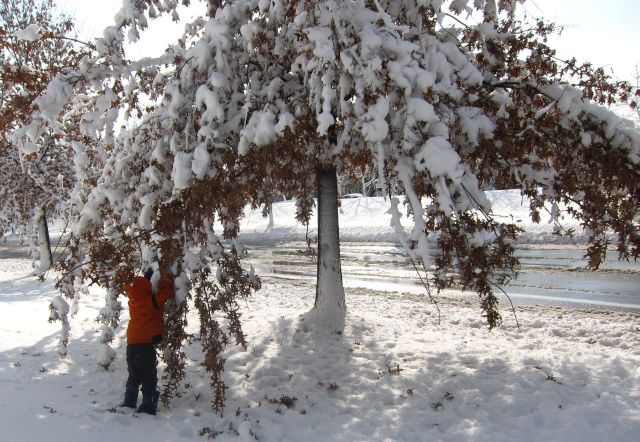
The oak trees in our neighborhood  do not drop all their leaves in winter.   I learned that it is a natural condition called marescence.  Some experts believe that this protects the overwintering buds on the trees.

Trees in winter are beautiful because they remind me that true strength is revealed in adversity and new growth requires pruning and protection.

The Unexpected Sprouts

A clear blue sky, crisp cool air, warm sunshine plus adventure equals a perfect Saturday in autumn.  We headed for our garden plot this afternoon but had a few diversions before arriving there.    We stopped at a pet store and a fall festival.  We went to the pet store to purchase biscuits for our dog and my son discovered a playful kitten.  My son slipped a thin metal wire through the kitten’s cage.  The cat flipped, batted, jumped and kicked at the bunch of cardboard strips hanging at the wire’s tip.  My son roared in laughter.  He did not want to leave the pet store.  We redirected  him with hope of a hayride at our community garden site.    The Howard County Conservancy was full of activities for its fall festival.   We bumped through rolling fields and woods on a hayride pulled by a tractor with wheels taller than my son.   A master gardener at the compost demo gave my son a bunch of pink and blue balloons.  My son slurped honey from a straw and chatted about bees with a woman from the Howard County Beekeepers Association.  We listened to steel pounding on steel as a blacksmith hammered a hot orange metal rod into a fork after heating it in a coal fire stoked by large bellows.  My son said the banging was his favorite.   While my husband and son lingered and asked questions  in the blacksmith shop,  I finally visited our garden plot.


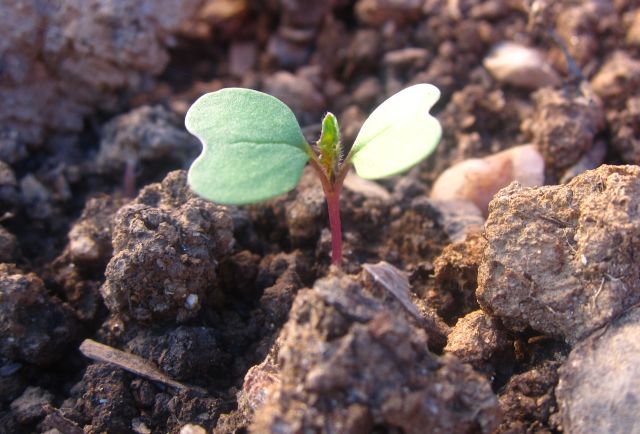
Turnip Seedling


Our plot is still producing tomatoes, peppers and beans.  I picked two grocery bags full of red and green tomatoes and peppers.  I pulled out and composted three tomato plants that had toppled to the ground.  Our fall plantings sprouted!  Radish, turnip, spinach and lettuce seedlings  now sprinkle the brown earth in unplanned patterns of curving rows, circles, clumps, pairs and triples.  Some extra seeds must have dropped from my hand during planting.  Many seedlings will need to be pulled out to allow more space for underground growth.

Those unexpected sprouts remind me of our day.   Unexpected adventure and fun popped up despite my plans.  Thank you God, for your goodness and for dropping some extra seeds outside my rows of plans.