
I made my own wreath this year from the shrubs and trees in our yard. The only additional supplies I used included: green floral wire, 18 inch metal frame, clippers and ribbon. The wreath took me less than two hours to make. I gathered about 10 to 20 stems from different varieties of shrubs and trees in our yard. The varieties are shown in photo below (clockwise): Arborvite, Holly, Laurel, Boxwood, Leland Cyprus, Thyme, Yew and Pieris (not in picture). I gathered about 5 to 6 stems into a bunch with the lighter foliage like boxwood, cyprus, thyme and pieris at top layer. I wrapped each bunch together with green floral wire at the stem.

I made 12 bunches (see photo below).
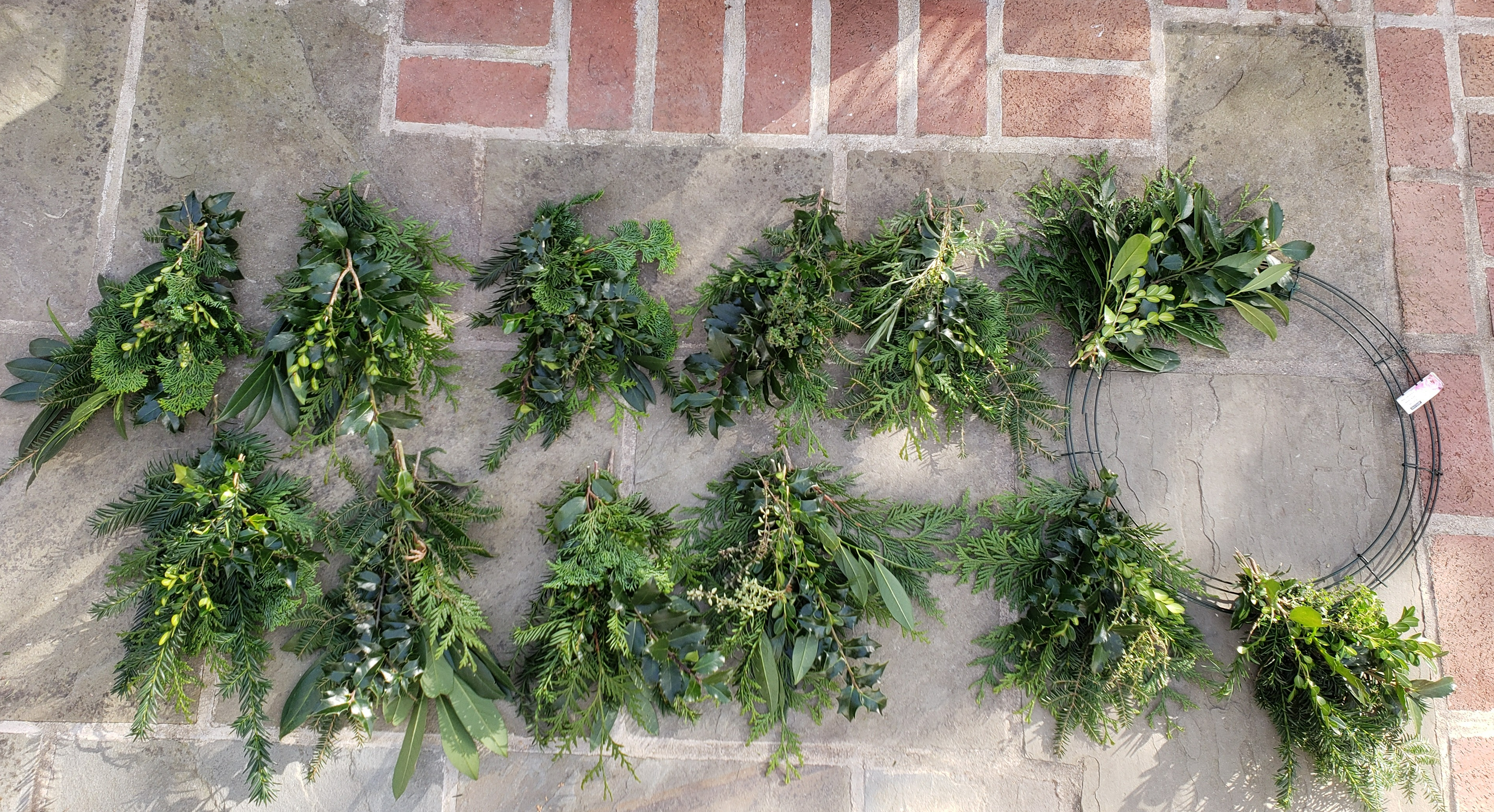
I secured each bunch onto the metal frame by wrapping the floral wire around stem of bunch and frame twice. I layered the full end of bunch over the previous stem until the metal frame was covered. I am happy with the result.
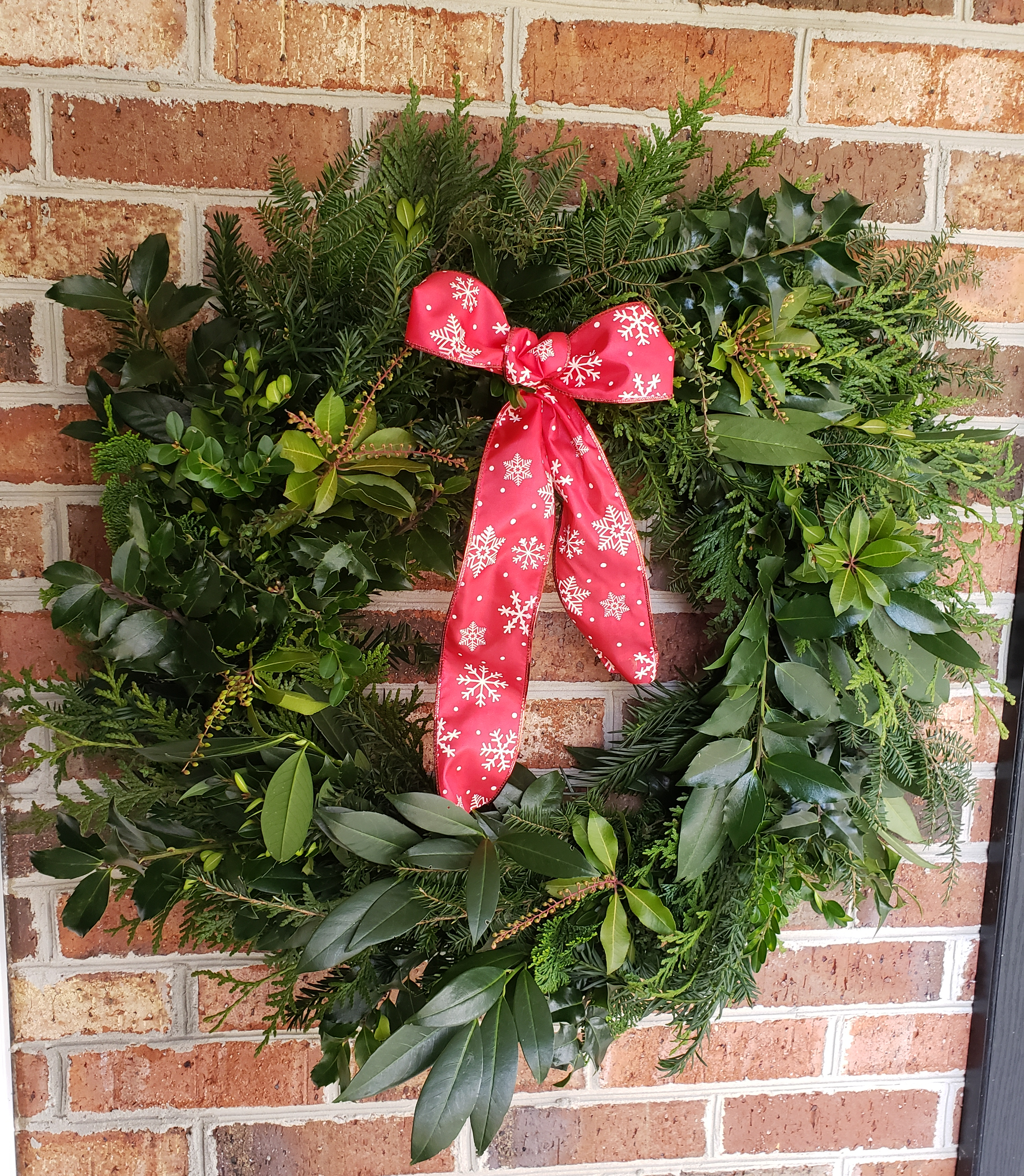
A free wreath from our yard. Next, I plan to make a smaller wreath for indoors with 12 inch metal frame. I plan to add pinecones and berries.
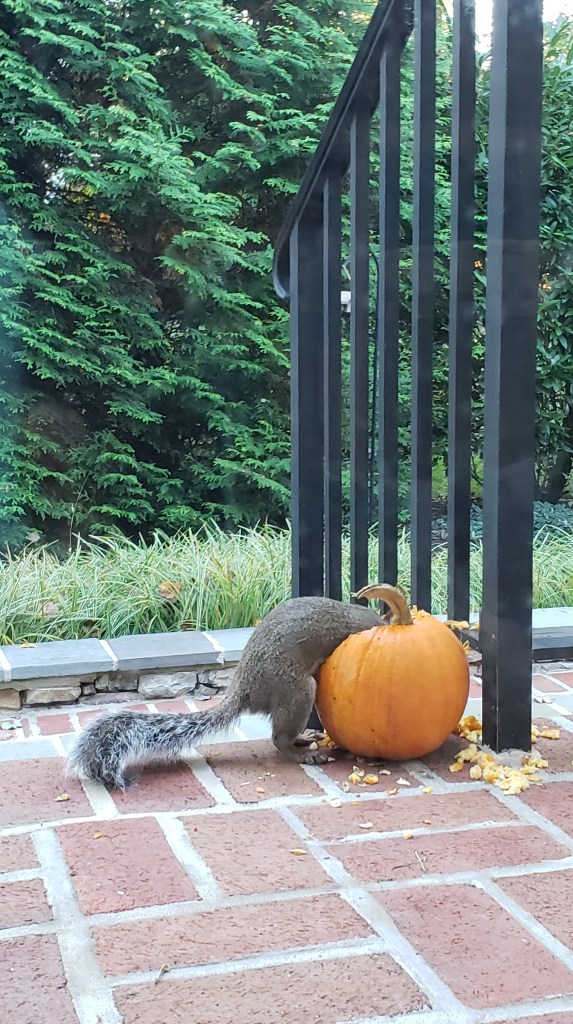
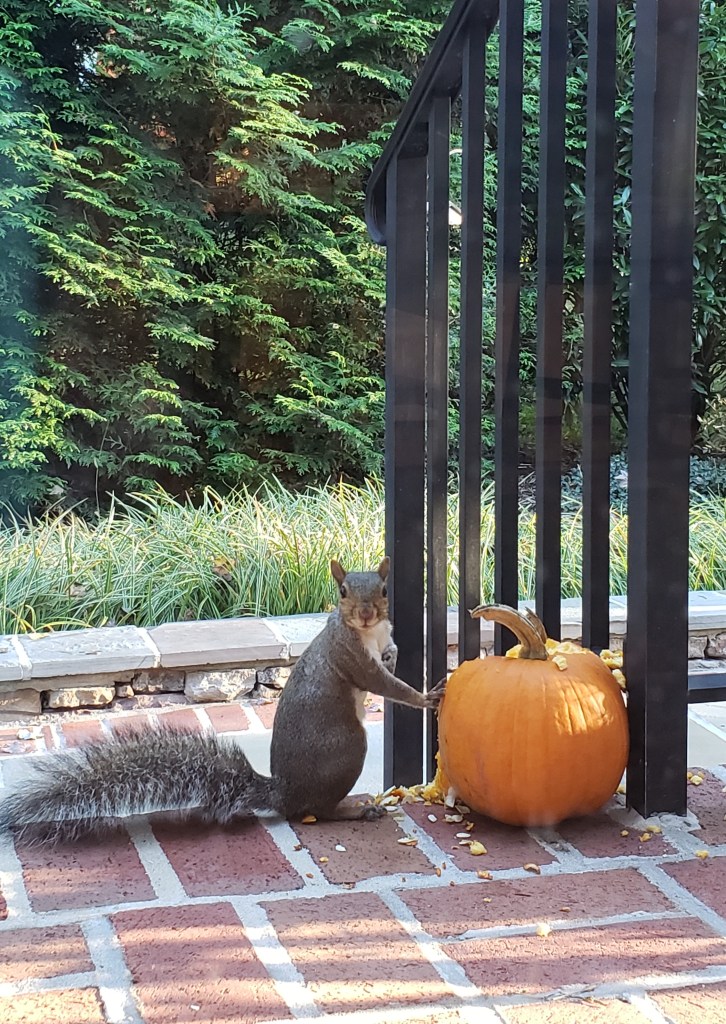
“Just watch and you will be cured,” said my son. “Cured of what?” I asked. “Thinking that squirrels are pests and annoying,” he replied. I watched the squirrel hop off the patio and run away. I looked at the mess of smeared pumpkin pulp and crushed seeds on the brick around the half-hollow pumpkin that my son planned to carve. He must have seen my expression as I thought of the clean up. He said, “it only took one minute for my mind to change and think squirrels are cute. Watch him! Your mind will change, too.”
I sat down on the kitchen floor and looked through the patio door. The squirrel returned. His frenzied feasting resumed despite my presence at the window. He worked fast using his whole body to scoop the pumpkin pulp. He sifted out seeds and held them with his small claws and nibbled while keeping a side glance at me. His body twitched, climbed and circled the pumpkin in seconds. I touched my phone blindly trying to capture his silly moves. Then he disappeared.
My son and I laughed at the squirrel photos I got. The photo of him touching the pumpkin had us imagine what he might say to us if he could speak. “Mine all mine!” and “Look, I am touching it!” We texted the photo to friends and family. We all laughed. My son was right. I was cured. The messy pest became Jack (as my son named him), our furry friend who gave us the gift of a good laugh and connection with each other and our friends.
Despite temperatures greater than 90 degrees and heat advisory warnings, my mom, aunt and I hiked a portion of the Appalachian Trail in Pennsylvania several weeks ago. The shade from the trees and shrubs on the woodland trail gave us some relief from the heat. When we felt tired, we sat on a log, drank water and ate snacks. The sun shapes nudged us forward. We wondered, “What is at the end of the trail curve or climb where the sun stretches wider?” Playful drops of light on forest leaves, rocks and moss led us along the way to our ten mile goal. Not too shabby for our “over a half-century” bodies! We discovered energy we did not know we had and inspiration as simple as sunlight.
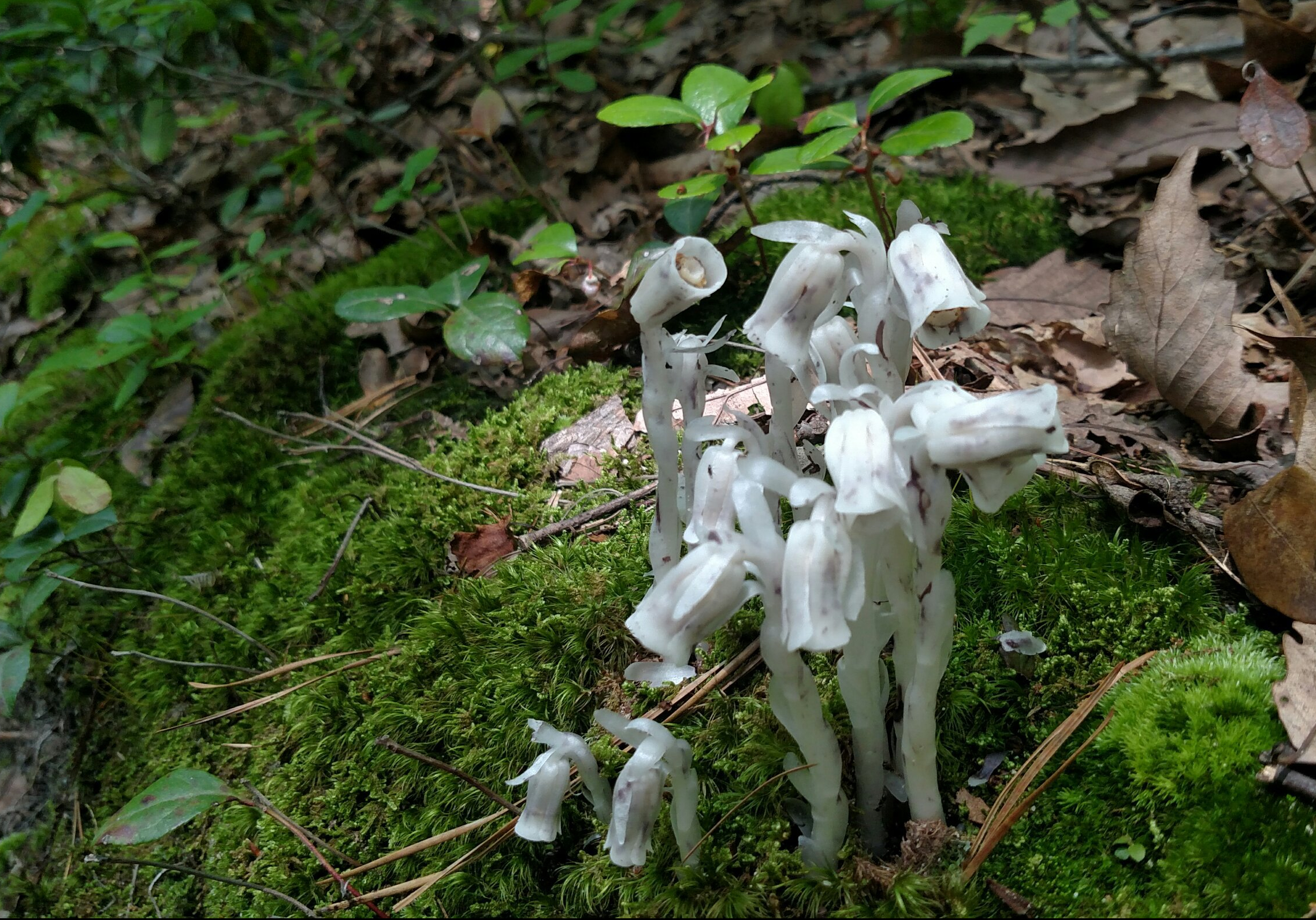
There is an herbaceous plant that does not make its own energy from sunlight. I discovered the plant on our AT hike, poking through patches of moss near tree roots. It is a white rubbery plant with a bell shaped head and notched stalk. It is Monatropa Uniflora other names: Ghost plant and Indian Pipe. The Monatropa Uniflora plant is not a fungus, but a wildflower. It does not gather its energy from sunlight, but from the mutually beneficial relationship between trees and fungi. Don’t we all feel a bit more energized with people who are kind towards each other?
These plants do not have chlorophyll (reason they are not green), therefore it does not use photosynthesis to make energy. Trees use photosynthesis to make sugars and other carbohydrates. Fungi along roots of trees in form of tiny threads underground called hyphae gather minerals and other nutrients from the soil. The trees and fungi share their energy sources with each other. When the Indian Pipe seed makes contact with the fungi hyphae it will use the hyphae’s energy sources (carbohydrates and sugars from trees and minerals from soil) to grow. Eventually more fungi grow around the Indian Pipe’s root ball and supply it with energy. The Indian Pipe depends on energy manufactured outside itself from fungi. Some folks just thrive helping others! And others are humble enough to receive the help!
Click here for more interesting facts about the Indian Pipe plant and its Native American folklore.
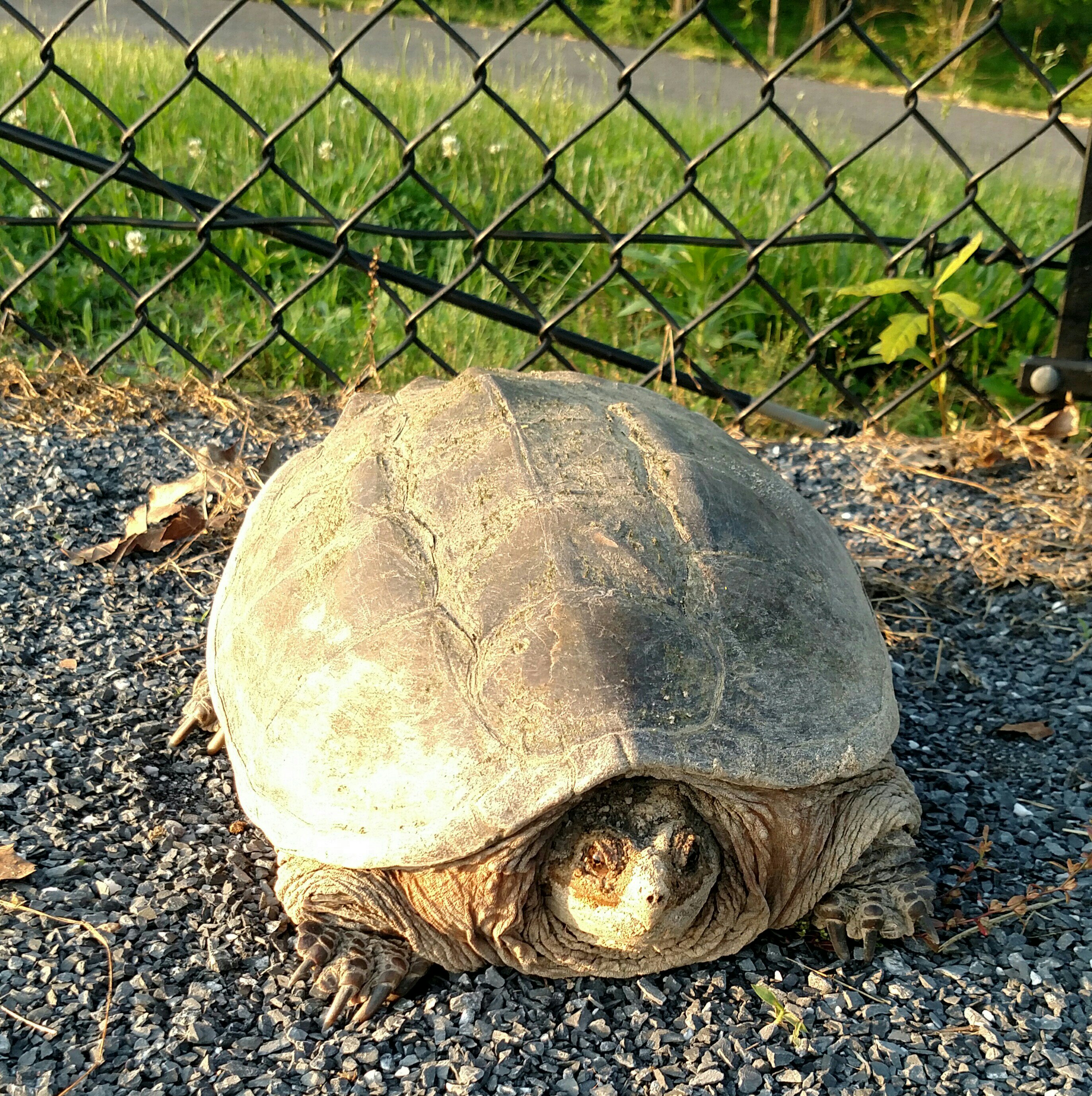
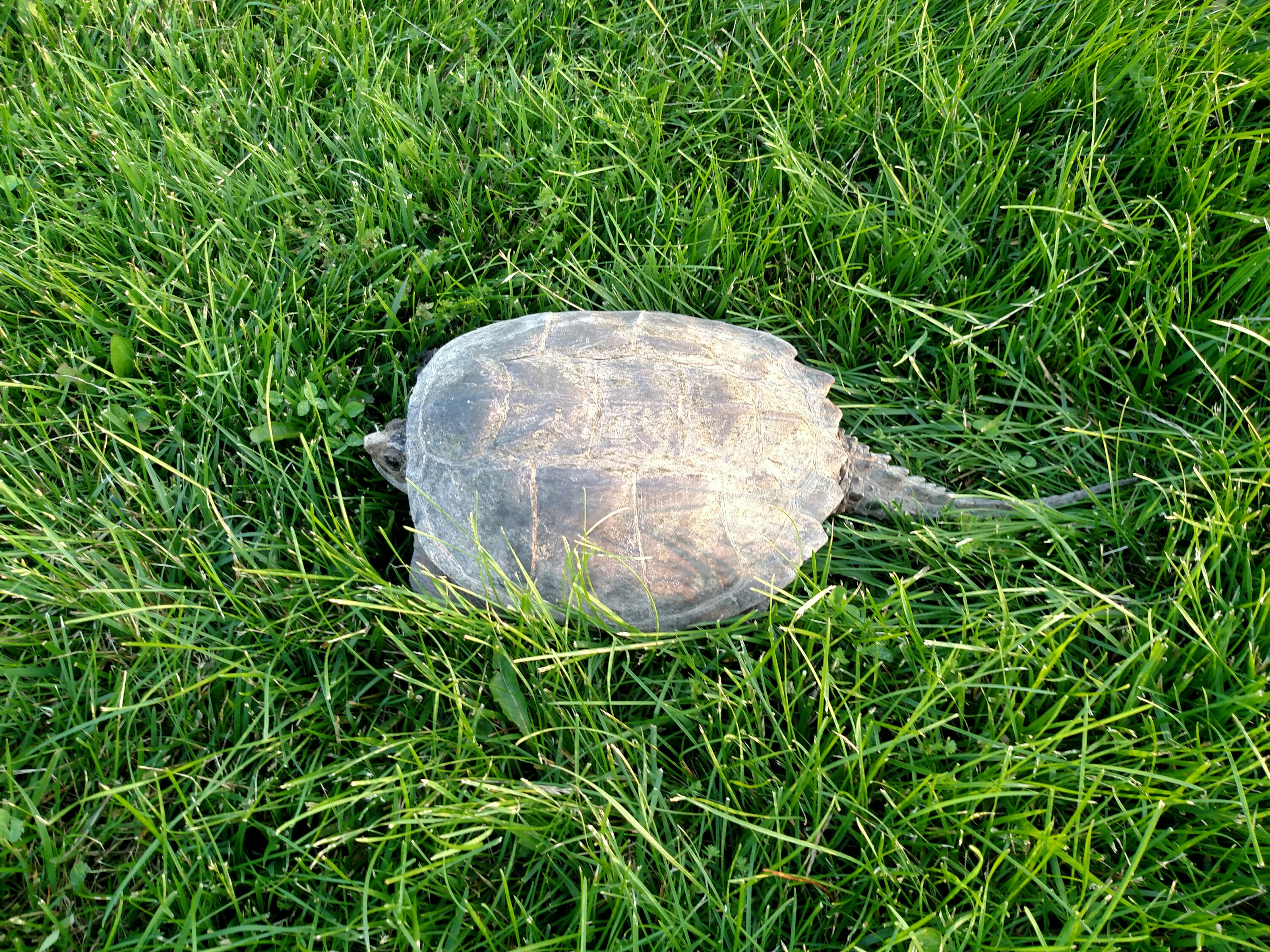
I laugh when I think of my unexpected scramble with this turtle in the outfield at Meadowbrook Park. The game began when I spotted the turtle’s head and wrinkled neck at the corner of a chain-link fence. The prehistoric-like creature looked so vulnerable and out of its element. I wanted to help it. Its head disappeared into its shell when I moved close. I consulted Google and made a plan to carry it out of the field by holding it like a sandwich in both hands with thumb on shell and fingers supporting under-body. My knuckles rolled over the gravel, grasped and lifted the turtle. POW! A fist with teeth shot out from the suspended shell towards me like a surprise back-handed punch. I screamed, jumped, and dropped the turtle.
Adults and children approached the field, curious about the commotion. Two men advised me to be careful since it was a snapping turtle. The tall man handed me a soda can through the fence and a few minutes later, the other man lifted his son’s scooter over the fence to me. They both advised me to push the turtle about 3 feet to an opening under the fence. I thought, “What? Push it with these!” I tried. The turtle turned and snapped at me and dug its claws into the sand. The people watched my tap-jump, poke-hop, push-shuffle drills. Finally, the tall man joined me on the field. He gripped the scooter handle like a croquet player and calmly batted the turtle. It spun through the hoop and in a few seconds it was free in the grassy area. The man gave me a high five and the onlookers dispersed. The game was over and both sides won.
Sometimes curiosity and wonder can cause us to make funny connections with strangers.
Later I learned that snapping turtles should not be picked up. Their bites can cause injury! They can be particularly aggressive during Spring mating and nesting season. Clink on resources about turtles and turtle rescue.
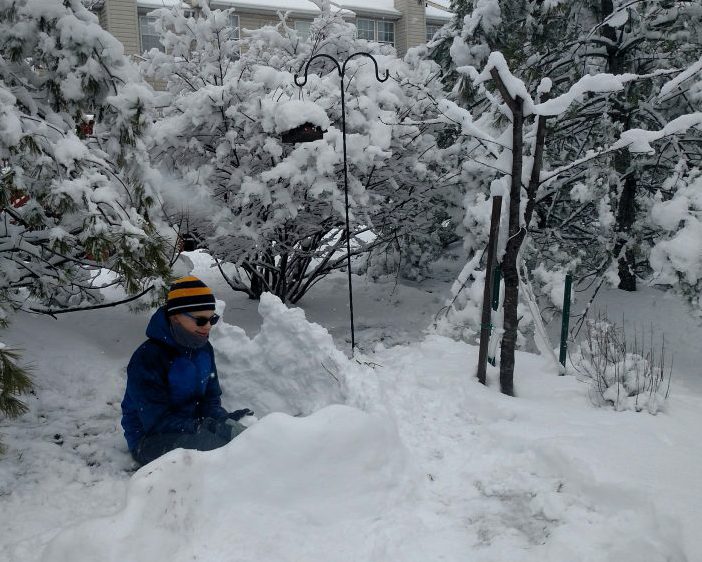
On the second day of Spring we were surprised with the perfect snow. Four inches of good packing snow on a weekday. An amazing light snow able to be shaped and sculpted. “Come on, mom! Let’s make a snow fort,” my son called as he knelt in the snow and swung his arms wide along the snow surface gathering up a snow pile. He pounded and smashed the fluffy snow into a hard mound, then gently smoothed the snow wall with his gloved hands. I bent down and began to form snow ball bricks and instructed him in the proper technique for snow fort making.
“Make the snow bricks first then stack and fill the holes with the snow, don’t pound so hard,” I said. I reminded him that I have lots of experience in this stuff because I lived most of my childhood in a state that always had snow on the ground in winter. I made my lopsided snow balls, stacked and crushed them into a bumpy wall. No amount of bragging would change my son’s plans. He pressed and shaped his snow into a solid curved wall that resembled a dragon’s tail. My son asked me why it sounds like I am criticizing his work. After we finished snow building, he threw snowballs at both of our structures. Mine toppled and his stood firm in the snow ball assault.
Next to our snow fort is the Peach tree my husband and I severely pruned a couple weeks ago. It is the “Y” standing next to our snow wall. I think about all the high limbs we cut off so it could produce more abundant and accessible fruit. It reminds me that maybe some of the words I speak need to be pruned, too – cut the critical tone so the fruit of kindness is more abundant and wisdom is more accessible to others.
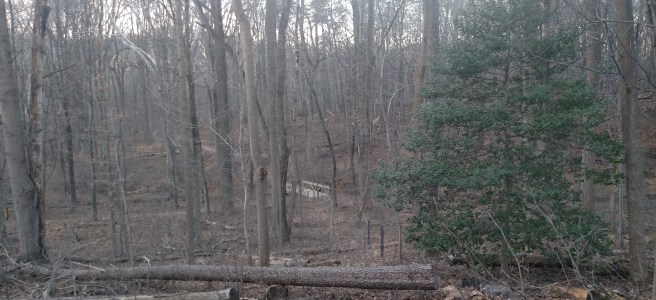
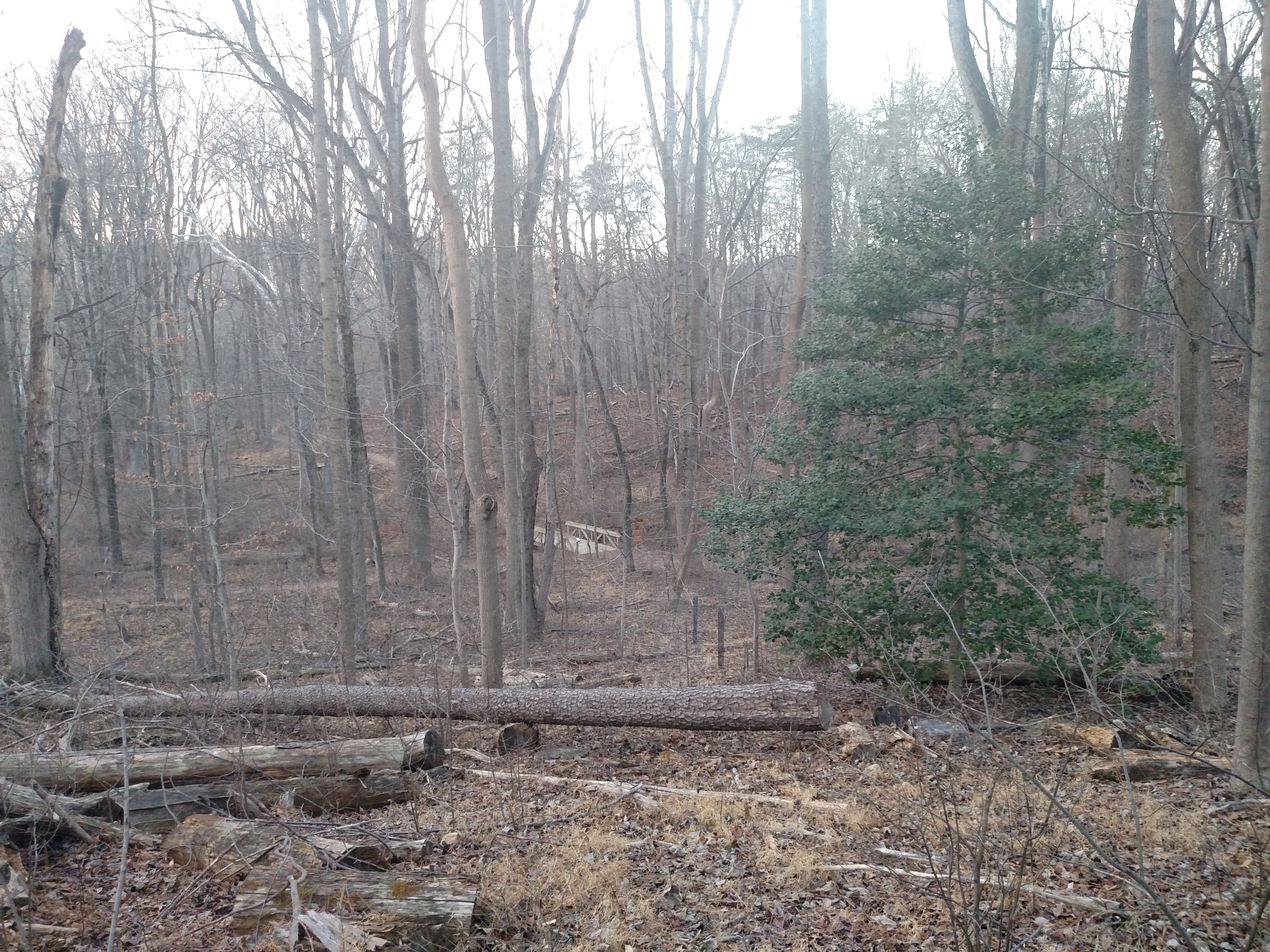
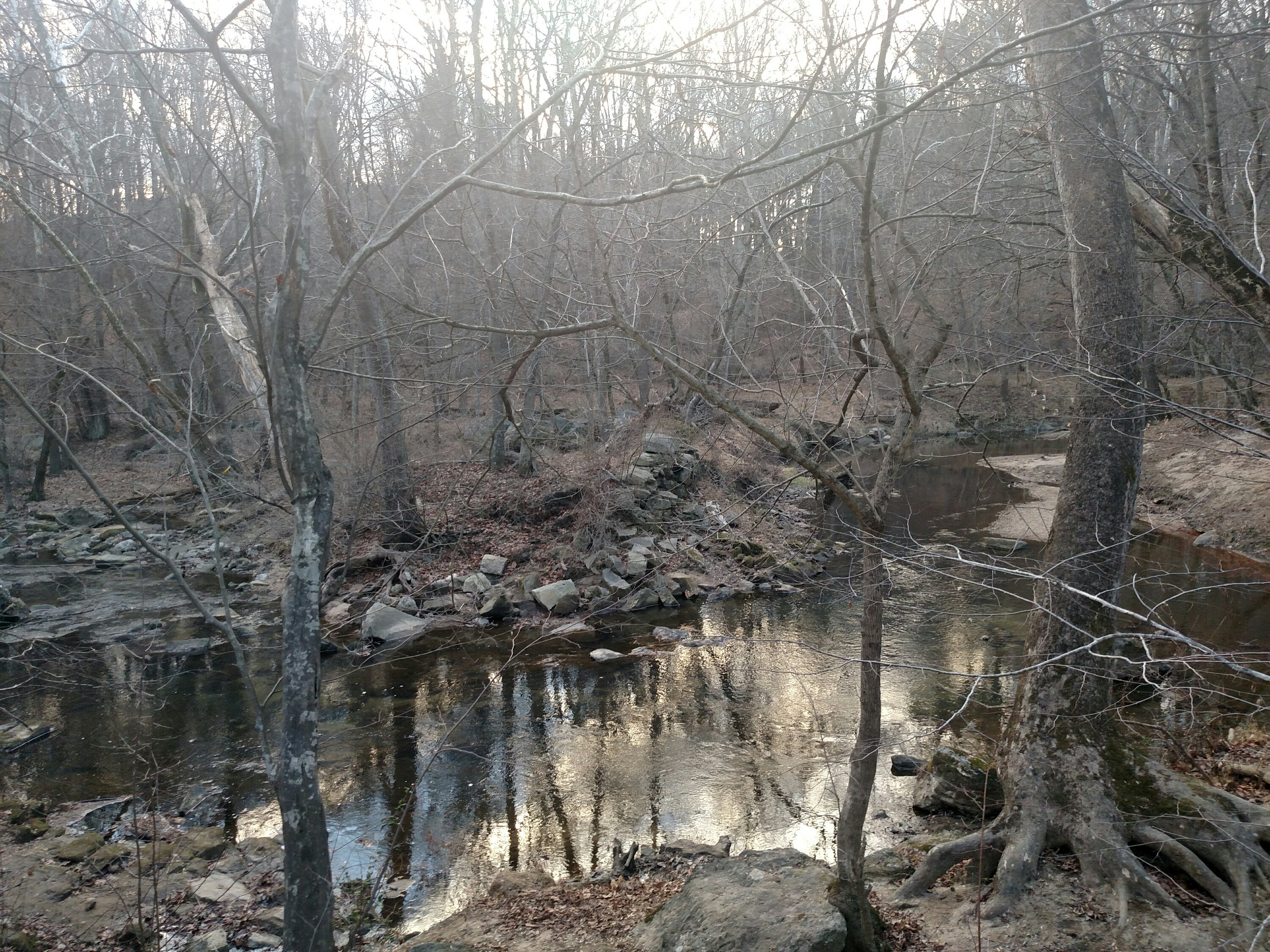
I went for a hike today on the wooded trails in Robinson Nature Center. I like the open feeling in the December woods. The sparse surroundings relieve my stress from the busy holiday season. There is less confusion and congestion and more simplicity and space in the bare woods. Only single sounds and single sights. No canopy of leafy trees to crowd me. A single bird song to listen to and try to memorize for later identification. Was it a “creekataw” or “creekachee”? A clear sound without competition. Easy to be mindful and slow down in this place. One crunching sound leads to one squirrel racing up and over a tree trunk on the ground. I could see the squirrel carrying a round orange object the size of its head in its mouth. I wondered if I could see where he would hide it. Less is hidden between the exposed trees and on the crunchy leaf covered ground. The evergreen trees stand unchanged and bold among the greys and browns. Everlasting and eternal things is where to focus. My stress melts when I do.
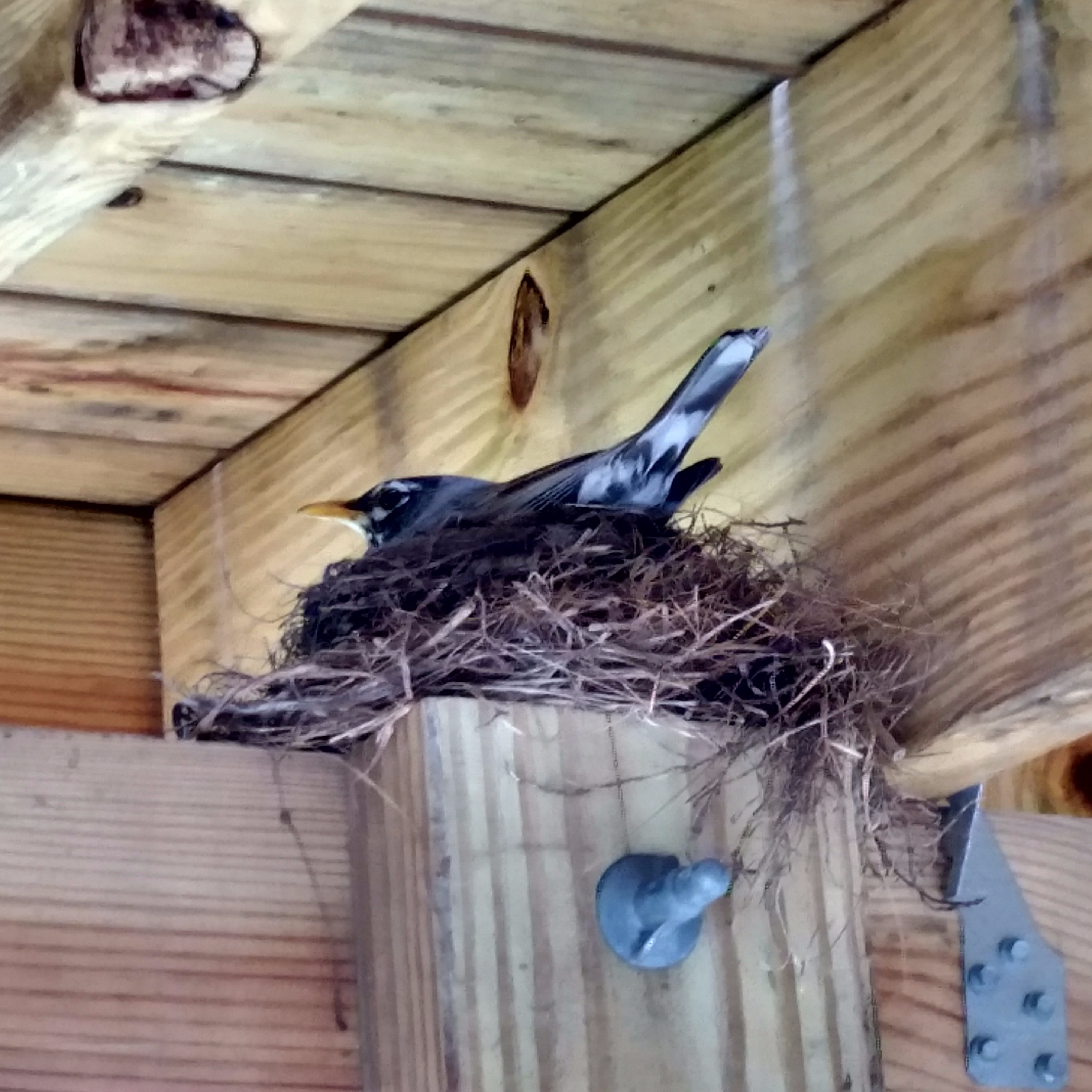
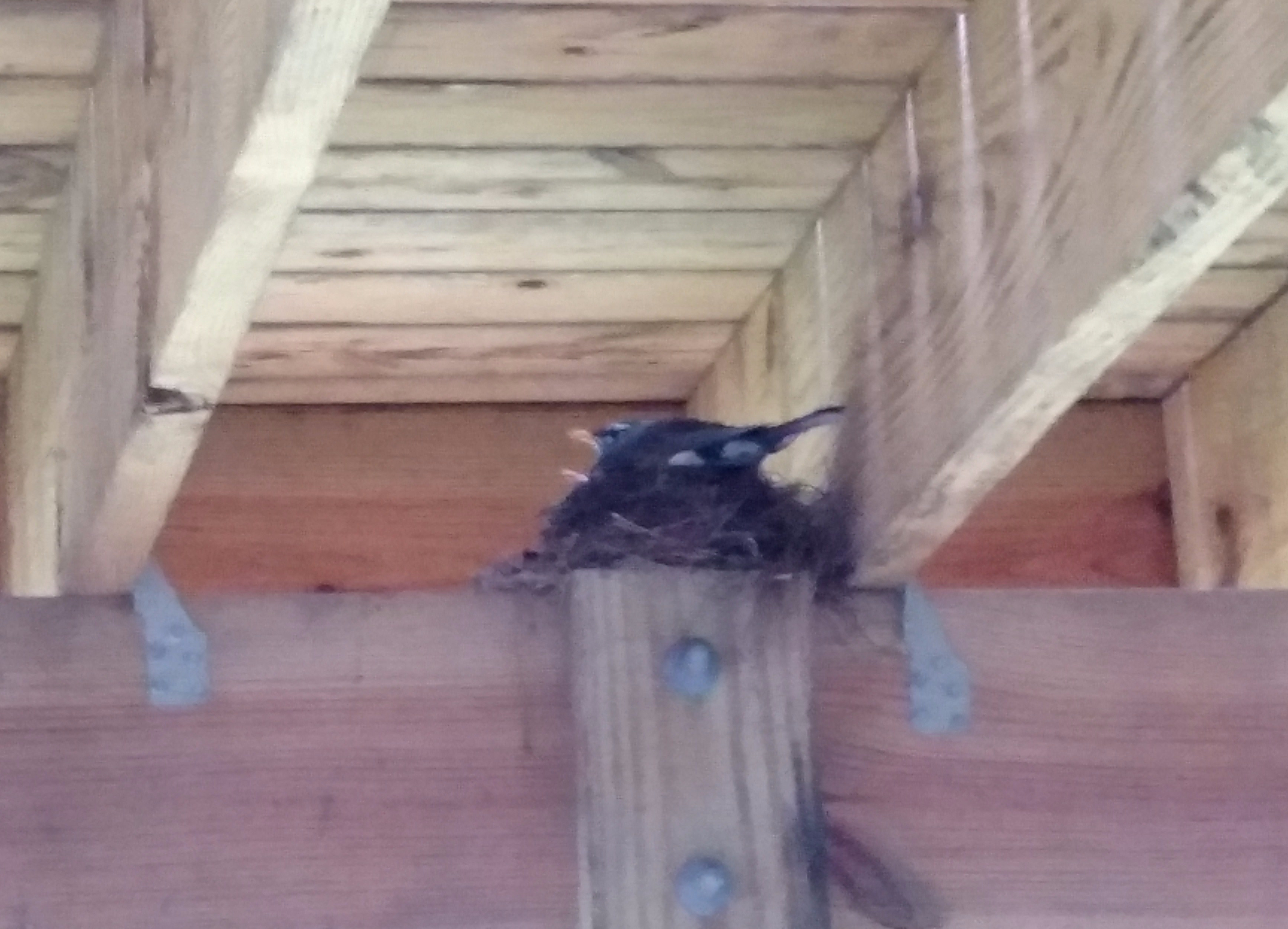
In mid April we found a new nest on the rafters under our deck. We felt like expectant parents the day our son announced he saw a Robin sitting in the nest. We tried to limit our activity around the nest. But one evening my husband and I assembled a shed on our patio while our Robin sat still in her nest the whole time. The Robin even tolerated us standing on the deck and looking through the narrow space between deck boards into her nest. We glimpsed the transformation – three bright blue eggs to black and pink squiggles to feather balls. From our basement slider window we watched the Robin fly to her nest with a worm hanging from her beak. The chicks greeted her with wobbly bobbleheads and open funnel-like beaks. Space is tight in the nest, now. See the two beaks?
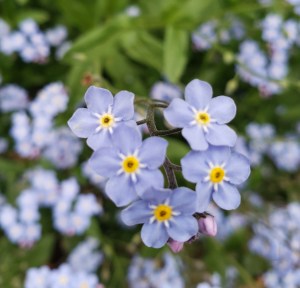
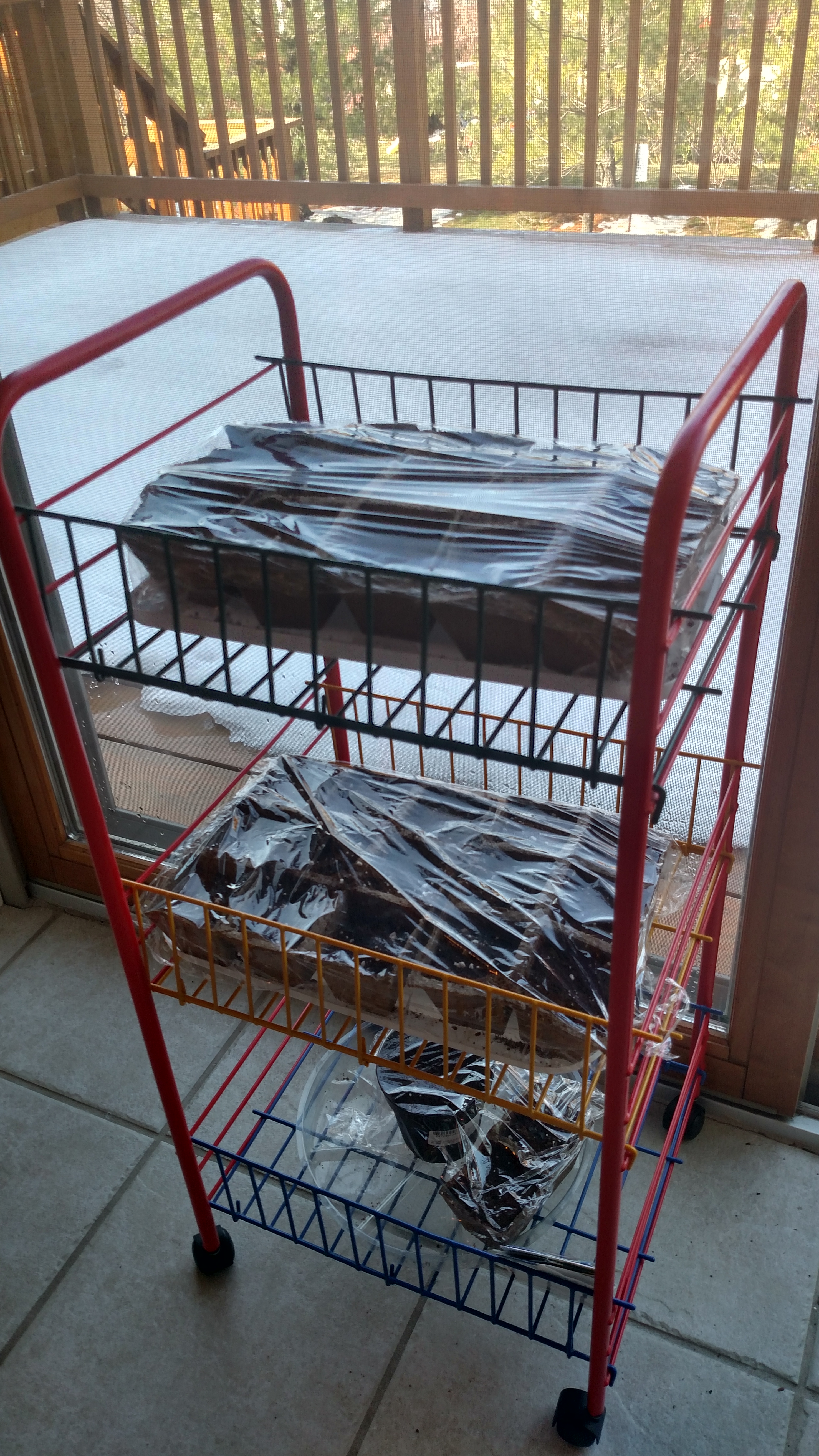 Today thin green spinach seedlings popped out of the seed starter soil, a perfect start to Spring. During our late winter snowfall last week, I planted seeds for our summer kitchen garden. I found this wire rack at the Goodwill and thought it perfect to hold our seedlings. This year I plan to make our raised beds more visually appealing with a mix of flowers planted among vegetable plants. I picked attractive vegetable plants including peppers, eggplants and spinach for our garden below the deck. I will grow patio tomatoes in pots on the deck to keep them from getting unruly. I learned my lesson from last year. My son requested his favorite flower, Forget-Me-Not, so we started those from seed, too. My husband planted garlic last fall, and tall green stalks are appearing around the raised beds already. They will be harvested in July, so I am hoping they will not detract from the plan to have a more beautiful garden that invites relaxation. The snow in this photo has melted. Spring is here bringing many garden dreams!
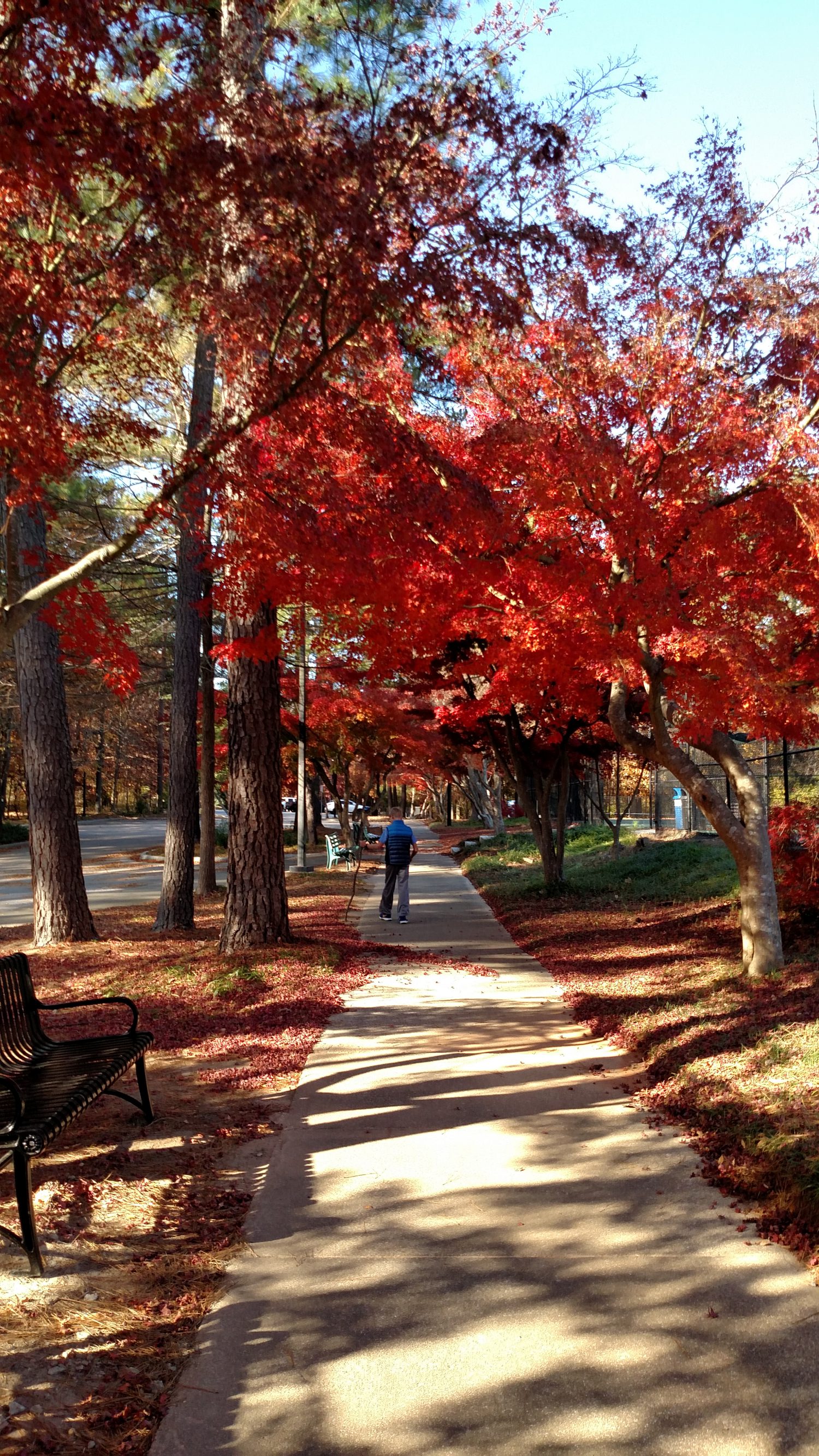
We found a lovely canopy of Japanese Maple trees on a late November walk in North Carolina. I found a little refuge, a reminder that God is our refuge and shelter. My son found walking sticks. He brought them home, removed the bark with a pocket knife and rubbed the bare wood smooth with fine grit sandpaper. “It feels like velvet now!” he said, sliding his hand along its surface. He looked proud of his uncovered treasure. At Christmas, he gave one of his carved walking sticks to a friend who hikes long distances. Nature uncovers gifts…comfort and awareness of God’s protection; a child’s perseverance and generosity; and a mom’s pride in her son.
 Our Garden Plot