2012 Spring Garden Begins

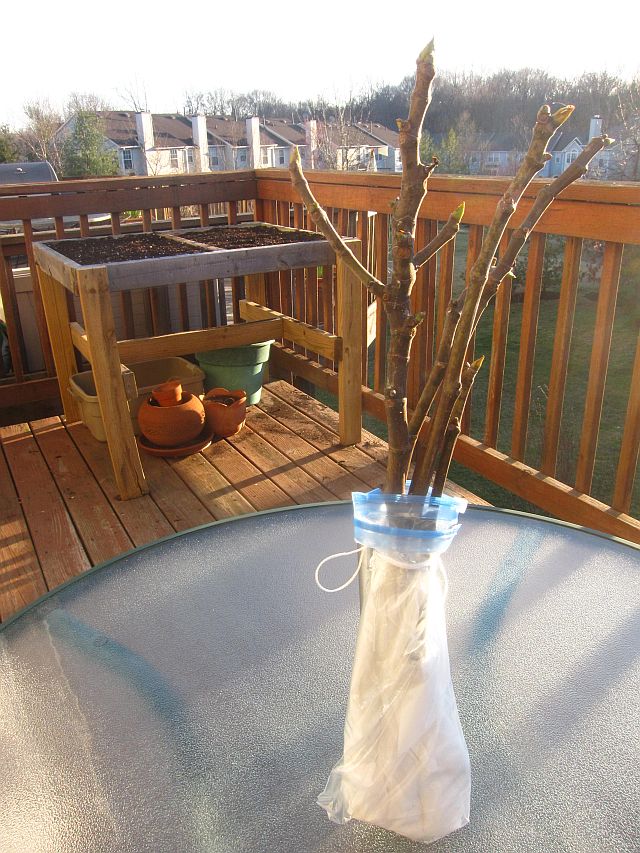
Fig tree cuttings and salad table

The Spring gardening season began this weekend in our garden plot. My husband did most of the work since I started back to full-time work outside the home a few weeks ago.  My husband pruned the fig tree, prepare the soil in our salad table, cleaned 45 small containers and planted pepper, tomato and eggplant seeds in the containers.

I enjoyed watching his gardener heart at work.  Only a true gardener would…..

1.  Wrap some fig tree cuttings with moist paper towels, bundle them in a plastic bag and place them in a warm spot on top of the refrigerator.  He has high hopes of starting more fig trees.

2. Give some fig tree cuttings to neighbors who also like to garden.

3.  Turn and work together our smelly kitchen compost and seed starting mix with bare hands and a smile.

4. Create a mini greenhouse in our basement with sawhorses, plastic drop cloth and a small space heater.  Our newly planted seeds are warm and cozy under the plastic blanket tent with warm air circulating around them.

Green fingers are the extension of a verdant heart.  ~Russell Page

Seed Catalogs and Snow

Some seed catalogs have already started to come in the mail…… Johnny’s Seed Company and Territorila Seed Company. January is the time to start planning for the spring garden, but I have only glanced through the catalogs because something is missing…snow in our garden plot!

This week there was a light snow fall as I picked up my son from school. I sat in the car pool line watching the kids turn their faces to the sky with mouths wide open. Faces of joy, standing still, waiting for the cold, soft flakes to drop onto their tongues. Powdered sugar falling from the sky. The flakes tickled my son’s eye lashes and he laughed. He shouted, “Look Mama! A blizzard!” Snow creates a dreamland. We only had a dusting, not enough to dream of our spring and summer garden. I am waiting to be snowed-in with my family and our seed catalogs!

Last year's snow

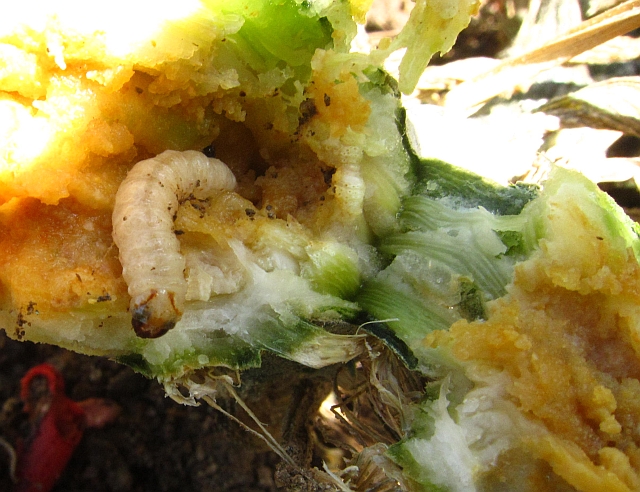
Squash Vine Borer

All curcurbits: gourds, pumpkins, summer squash, winter squash and occasionally cucumbers and melons are hosts to the squash vine borer.

I used row covers before the squash plants flowered to prevent pests, but the following actions described in the book, Good Bug, Bad Bug by Jessica Walliser may have prevented  my recent vine borer attack:

    •  Mound soil over the stem up to the lower-most flower to eliminate egg laying surface area and encourage root development.
    •  Wrap a strip of aluminum foil around the plant base early in the season, to prevent adults from laying eggs on the stem.  Nestle the foil just below the  soil surface, reaching up to the lowermost leaf.
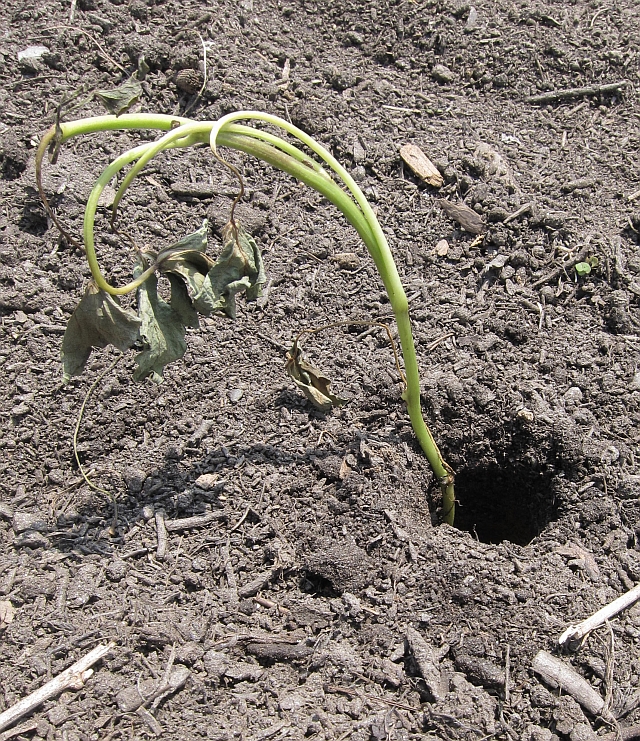
squash vine borer in one of our squash stems

We could try and save the plants by cutting the stem and digging out the vine borer larva, then covering the cut stem with dirt.  But,  I learned my lesson, next summer I will remember, “mound and wrap.”

Donating to Local Food Bank

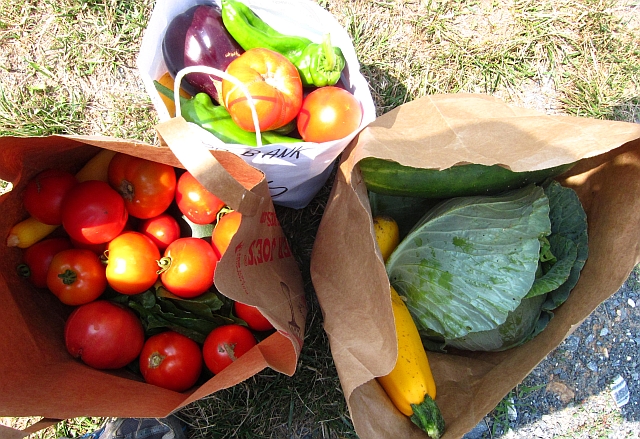
The Howard County Community Garden food bank donation for July 21st

The Howard County Conservancy Community Garden donates a portion of its produce to the Howard County Food Bank every Tuesday and Thursday.  Volunteers pick the produce contributions from a plot solely dedicated to the food bank and from individuals’ gardens with portions marked for the food bank.  Often a gardener will mark their plot for the food bank when they are out of town for  an extended period of time.  The goal is to prevent waste in our gardens.

Yesterday, my son and I joined another gardener to pick the produce for donation.    It was fun and I learned how to harvest cabbage.  The cabbage head is cut from the thick stalk because a new cabbage head may grow from the old stalk.   I will look for cabbage regrowth in the food bank plot.

We collected three bags of produce including tomatoes, cabbage, peppers, Malabar spinach, zucchini, and eggplant.   It weighed in at 29 pounds at the food bank!   The fresh organic produce was greatly appreciated.

Over 36 million Americans are hungry and rely on local food pantries to help sustain their families.  For more information about how other gardeners are giving to food banks across Maryland and the United States visit Grow It Give It.

Toad in Our Tomato Bed

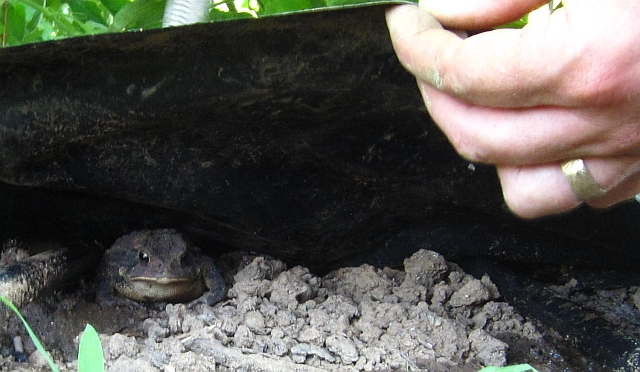
Saturday, while we worked in the garden fertilizing, weeding and securing our unruly tomato plants, we met a new garden friend.  My husband met him first when he crawled underneath the tomato plants to clip off the discolored tomato sucker branches.    He rested his hand on the black plastic below one tomato plant and felt the cool cover beat against his palm.   Startled, he lifted one edge of the plastic and saw two eyes staring back at him. “We got a toad,” he announced.


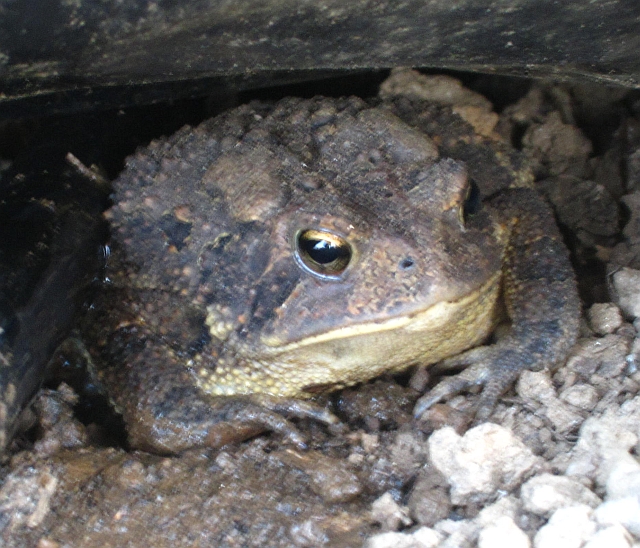
My son and I rushed over to greet our critter friend.   He did not move at all while I photographed him.  His body looked moist and well fed.   He had the perfect toad hideout in our garden – a shelter with water from the drip system and plenty of insects.   We welcomed him to our garden plot, told him to bring friends, promised him we’d watch our step around the tomatoes, then covered him back up with the plastic. My son named him “Toady.”

Toads help rid the garden of pests, including insects, slugs and snails. They can eat over 10,000 insects in one summer! Have a feast in our garden, Toady!

Drip System in Our Plot

a partial view of our new drip system in the tomato bed

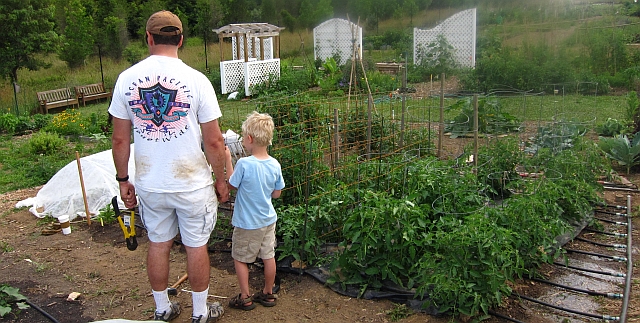
My husband installed a drip system in our garden plot.  The long black tubes looked too industrial for me at first.  But when the drip system watered the plot while I planted seeds, weeded the beds, cut the swiss chard crops, removed tomato suckers, photographed garden flowers and bugs, and played with my son,  I came to appreciate the contrast of black plastic stripes against green foliage and brown dirt.   The drip system is awesome!  It saves time and water.

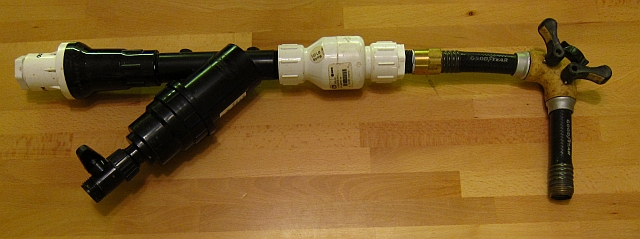
After consulting with a local master gardener, my husband ordered drip system supplies from Robert Marvel.   It took him about 2 hours to completely set up the system. The system has these basic parts:   a removable assembly (consisting of a check valve, filter and pressure regulator), a distribution tube, drip tape and a garden hose.

removable assembly part not seen in photo
the removable assembly

To water the garden, all I do is hook up our hose to the community garden water spigot and the removable assembly attached to the distribution tube (thick tube seen in photo at edge of plot).  Water flows out from the distribution tube to the drip tape between the plants.  The drip tape has emitter holes every 8 inches and delivers .53 gallons of water/minute/100 feet of drip tape.  Our garden plot needs one inch of water per week thus the drip system needs to run for a total of two hours a week.

The initial cost of installing a drip system is not cheap, but the benefits are worth it.   Drip irrigation is the most efficient way to water plants.  It delivers water directly to plant roots where the most water absorption takes place thus prevents water run off.  It eliminates water on plant foliage thus reduces risk of diseases and water evaporation.   The cost of all the parts for a drip system is around $100, but most of the parts last for many years.  Drip tape costs 3 cents a foot and is the only part that needs to be purchased each season.

Thanks to my husband for the drip system! It allows me more creative free time in our garden plot!

It’s an Assassin Bug. A Good Bug!

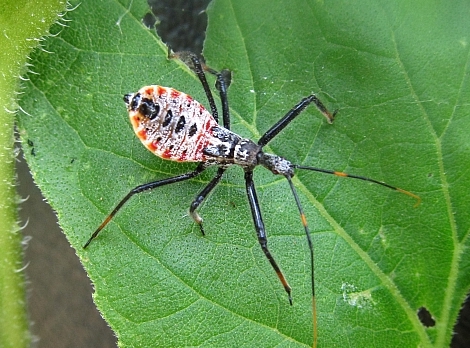
Assassin bug nymph in our garden plot

My son shouted, “It’s a Stink bug! I am going to smash it!”

“Wait! Let mama look at it, it might be a good bug,” said my husband.

For a gardener, my husband has an unhealthy aversion to bugs. He lets me make the good bug or bad bug call.   I put down my shovel to look at the bug.  My son pointed to a leaf on the sunflower plant growing out of our compost bin and declared, “There it is!”

The insect had a colorful body and long antennae.  It did not look like a Stink bug.  Its legs were too long and graceful.  It scuttled so fast around the leaves that I barely caught its image in my camera.   We let it be.  The next day,  I sent its photo to the Home and Garden Center at the Maryland Agricultural Extension. Within a few hours, I received the bug’s identity.   It is an Assassin bug nymph!

We are thrilled to have such a voracious predator in our garden plot.  This bug will help rid our garden of: aphids, Colorado potato beetles, cucumber beetles, Japanese beetles, Mexican bean beetles, tomato hornworms and many more pests.  I am glad we did not squash it!

Sweet Potato Planting

one sweet potato slip

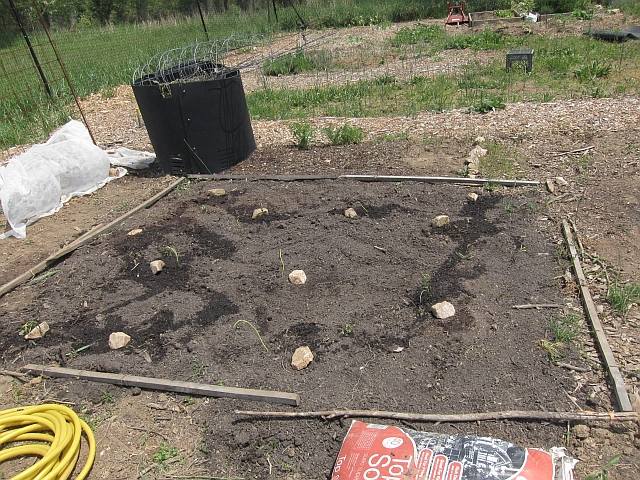
Last week I planted 12 sweet potato slips.  They look straggly now, but just wait, they will produce a hearty vine and a hidden treasure of potatoes.  Last year we planted 2 slips and dug up about 50 pounds of rugged sweet potatoes (bright orange and creamy when cooked) at harvest time.   Once the vines start growing, we will surround them with a low border fencing to prevent them from spreading into our other vegetable beds or community garden walking paths.  This year we planted the slips in a corner that is not adjacent to a neighbor’s plot.  These plants can get a bit too gregarious!  I marked each slip with a rock because it will help us find where to begin digging at harvest when there is a sea of vines.  I have high hopes for these slips.  If all twelve of these newly planted slips take off and produce we could have 300 pounds of sweet potatoes!

our sweet potato patch

(We may have more….I noticed sweet potato vines growing in last year’s sweet potato bed.  I wish I did not have to pull out these unexpected guests, but they will take over our tomato and pepper patch if I don’t).

Do you have any sweet potato recipes to share with me?

Our First Snow Peas

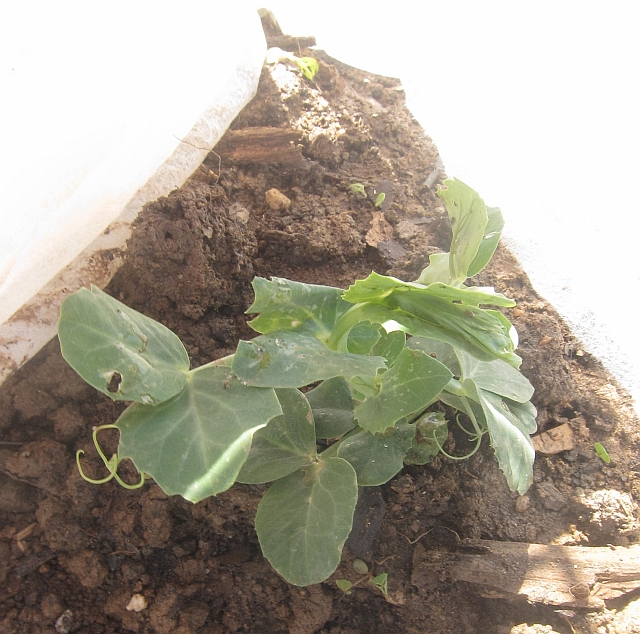
Snow peas

We finally have sturdy snow pea seedlings growing under row covers! Only a few seedlings emerged from the first snow pea seeds we planted in early April. Unfortunately, those fragile plants were nibbled down to the dirt by some critters. To improve seedling growth we treated the next batch of snow pea seeds with inoculant before planting and to prevent seedling damage we covered the ground with row covers. We now have thriving snow pea plants with dangling tendrils searching for something to climb. The plants need to grow bigger before the tendrils can wrap around the reinforcing wire trellis we installed two years ago. This is our first year planting snow peas. We learned another gardening lesson through trial and error.

What is inoculant? A commercially prepared source of dormant rhizobia, a naturally occurring soil bacterium. These tiny bacteria live within the bean roots and extract nitrogen from the air (which is 78% nitrogen), thus feeding the plants. Inoculant can be dusted onto moistened bean and pea seed just before planting. It’s a fully natural, simple process which takes only a moment, but will increase crop yields all season long. Inoculant can be purchased at most garden centers.

Our Spring and Summer Garden Diagram for 2011

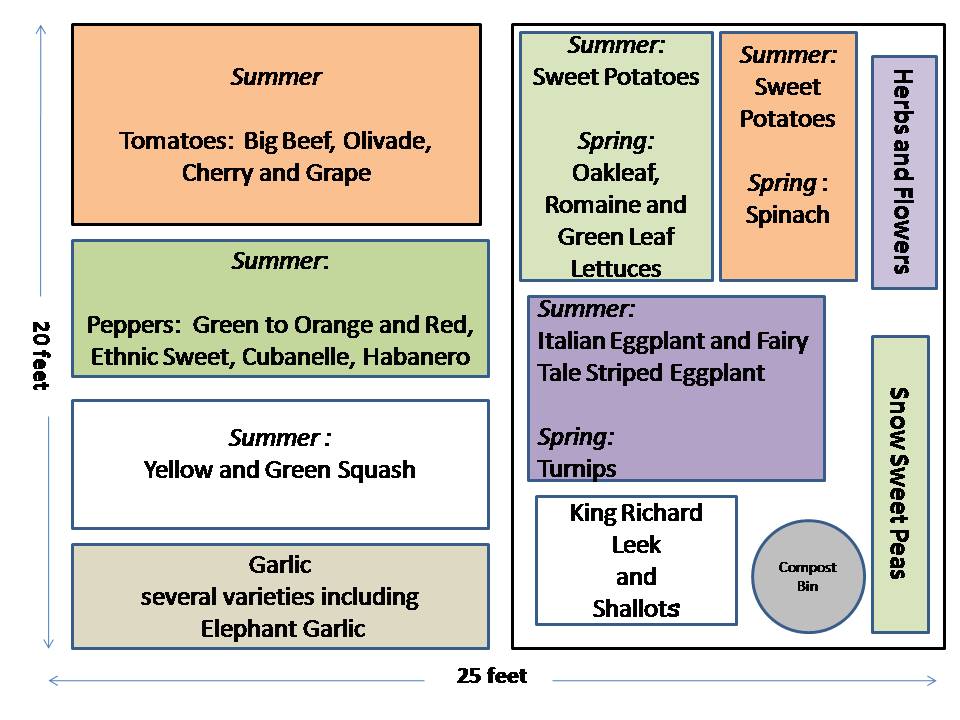
our 2011 garden plot for spring and summer

This is the 2011 spring and summer plan for our community garden plot. We planted the tomatoes, peppers and eggplants indoors last weekend. We are waiting for the seedlings to emerge soon. The leeks, shallots and herbs were planted several weeks ago and are now sturdy seedlings. The leeks and shallots look like tall thin blades of grass and will soon touch the grow lights. They tower over the other seedlings and need to be planted in our garden soon. Spinach, green leaf lettuce, turnips and garlic are currently growing in our garden plot. We planted seeds of Romaine, Oakleaf Lettuce and Snow Peas directly in our garden plot last weekend. The sweet potato plant slips will be coming from Johnny’s Seed Company in late spring. We hope to get a drip system installed by June.   We harvested some spinach and turnips.  The turnips are especially sweet after being roasted.  We are eager to get more plants growing in our garden plot!