Drip System in Our Plot

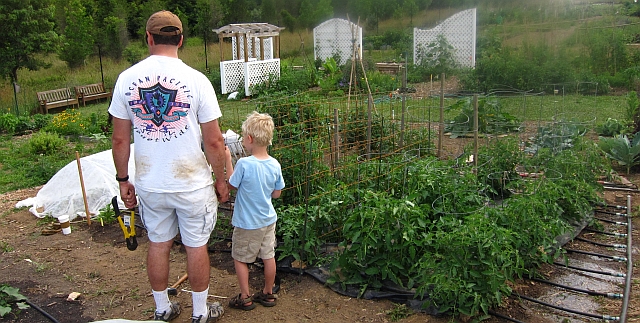
a partial view of our new drip system in the tomato bed

My husband installed a drip system in our garden plot.  The long black tubes looked too industrial for me at first.  But when the drip system watered the plot while I planted seeds, weeded the beds, cut the swiss chard crops, removed tomato suckers, photographed garden flowers and bugs, and played with my son,  I came to appreciate the contrast of black plastic stripes against green foliage and brown dirt.   The drip system is awesome!  It saves time and water.

After consulting with a local master gardener, my husband ordered drip system supplies from Robert Marvel.   It took him about 2 hours to completely set up the system. The system has these basic parts:   a removable assembly (consisting of a check valve, filter and pressure regulator), a distribution tube, drip tape and a garden hose.
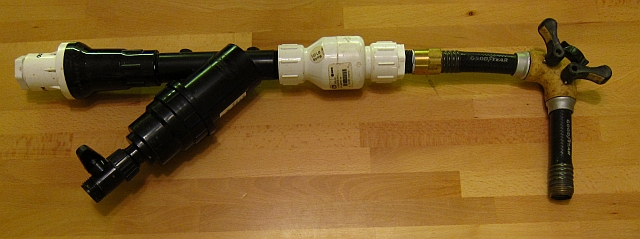
removable assembly part not seen in photo
the removable assembly

To water the garden, all I do is hook up our hose to the community garden water spigot and the removable assembly attached to the distribution tube (thick tube seen in photo at edge of plot).  Water flows out from the distribution tube to the drip tape between the plants.  The drip tape has emitter holes every 8 inches and delivers .53 gallons of water/minute/100 feet of drip tape.  Our garden plot needs one inch of water per week thus the drip system needs to run for a total of two hours a week.

The initial cost of installing a drip system is not cheap, but the benefits are worth it.   Drip irrigation is the most efficient way to water plants.  It delivers water directly to plant roots where the most water absorption takes place thus prevents water run off.  It eliminates water on plant foliage thus reduces risk of diseases and water evaporation.   The cost of all the parts for a drip system is around $100, but most of the parts last for many years.  Drip tape costs 3 cents a foot and is the only part that needs to be purchased each season.

Thanks to my husband for the drip system! It allows me more creative free time in our garden plot!
Sweet Potato Planting

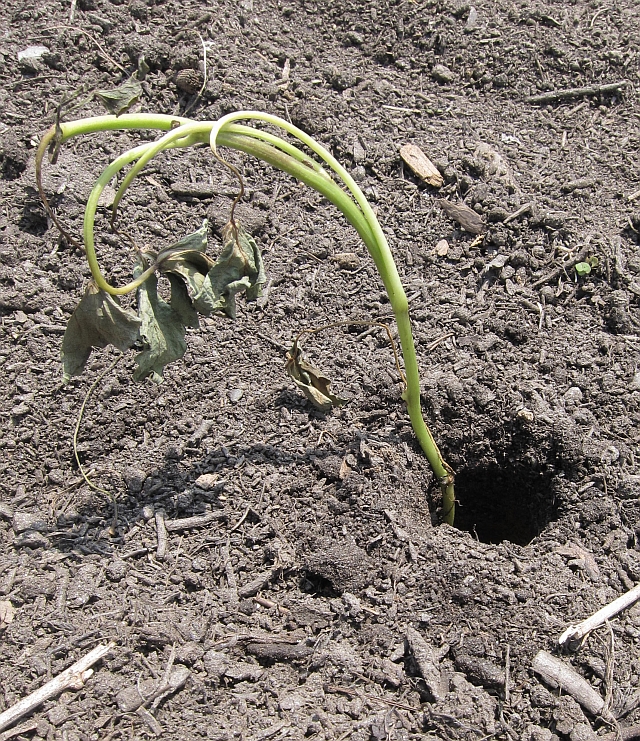
one sweet potato slip

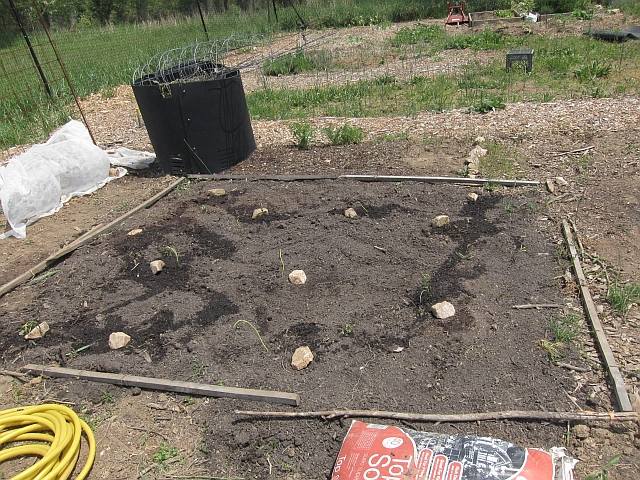
Last week I planted 12 sweet potato slips.  They look straggly now, but just wait, they will produce a hearty vine and a hidden treasure of potatoes.  Last year we planted 2 slips and dug up about 50 pounds of rugged sweet potatoes (bright orange and creamy when cooked) at harvest time.   Once the vines start growing, we will surround them with a low border fencing to prevent them from spreading into our other vegetable beds or community garden walking paths.  This year we planted the slips in a corner that is not adjacent to a neighbor’s plot.  These plants can get a bit too gregarious!  I marked each slip with a rock because it will help us find where to begin digging at harvest when there is a sea of vines.  I have high hopes for these slips.  If all twelve of these newly planted slips take off and produce we could have 300 pounds of sweet potatoes!

our sweet potato patch

(We may have more….I noticed sweet potato vines growing in last year’s sweet potato bed.  I wish I did not have to pull out these unexpected guests, but they will take over our tomato and pepper patch if I don’t).

Do you have any sweet potato recipes to share with me?

Our First Snow Peas

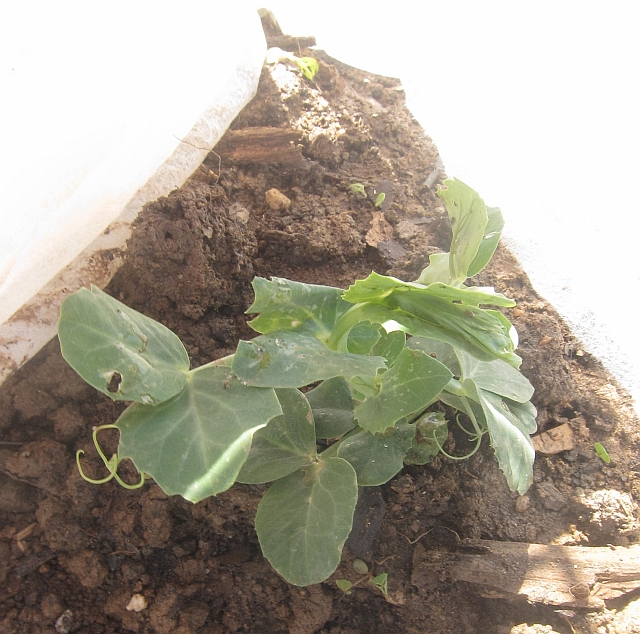
Snow peas

We finally have sturdy snow pea seedlings growing under row covers! Only a few seedlings emerged from the first snow pea seeds we planted in early April. Unfortunately, those fragile plants were nibbled down to the dirt by some critters. To improve seedling growth we treated the next batch of snow pea seeds with inoculant before planting and to prevent seedling damage we covered the ground with row covers. We now have thriving snow pea plants with dangling tendrils searching for something to climb. The plants need to grow bigger before the tendrils can wrap around the reinforcing wire trellis we installed two years ago. This is our first year planting snow peas. We learned another gardening lesson through trial and error.

What is inoculant? A commercially prepared source of dormant rhizobia, a naturally occurring soil bacterium. These tiny bacteria live within the bean roots and extract nitrogen from the air (which is 78% nitrogen), thus feeding the plants. Inoculant can be dusted onto moistened bean and pea seed just before planting. It’s a fully natural, simple process which takes only a moment, but will increase crop yields all season long. Inoculant can be purchased at most garden centers.

Our Spring and Summer Garden Diagram for 2011

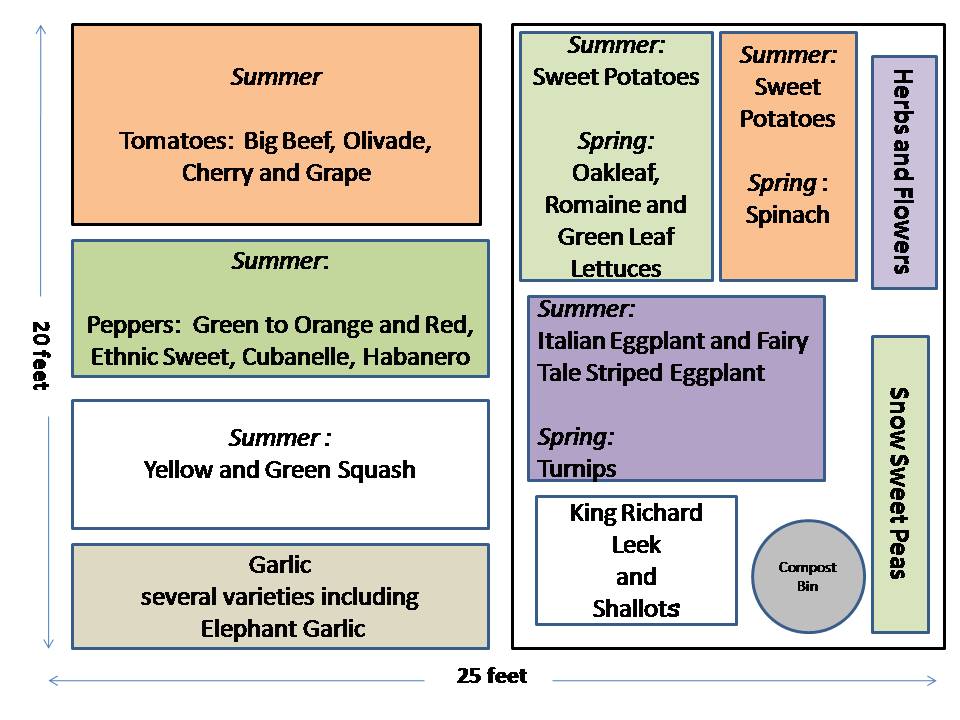
our 2011 garden plot for spring and summer

This is the 2011 spring and summer plan for our community garden plot. We planted the tomatoes, peppers and eggplants indoors last weekend. We are waiting for the seedlings to emerge soon. The leeks, shallots and herbs were planted several weeks ago and are now sturdy seedlings. The leeks and shallots look like tall thin blades of grass and will soon touch the grow lights. They tower over the other seedlings and need to be planted in our garden soon. Spinach, green leaf lettuce, turnips and garlic are currently growing in our garden plot. We planted seeds of Romaine, Oakleaf Lettuce and Snow Peas directly in our garden plot last weekend. The sweet potato plant slips will be coming from Johnny’s Seed Company in late spring. We hope to get a drip system installed by June.   We harvested some spinach and turnips.  The turnips are especially sweet after being roasted.  We are eager to get more plants growing in our garden plot!

Turnips and Spinach

We visited our community garden plot at Howard County Conservancy yesterday. We found some treasures in the soft thawed soil.

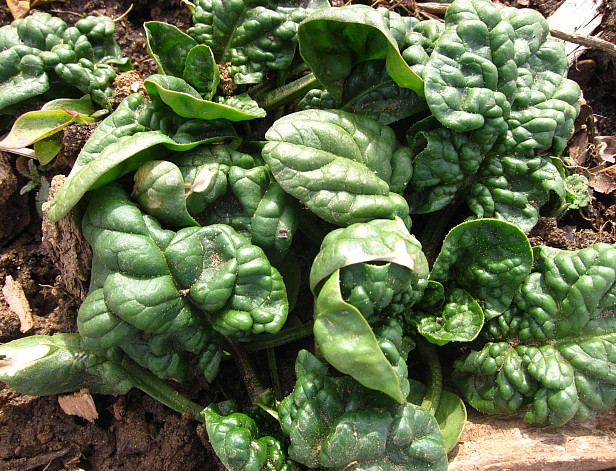
our winter spinach

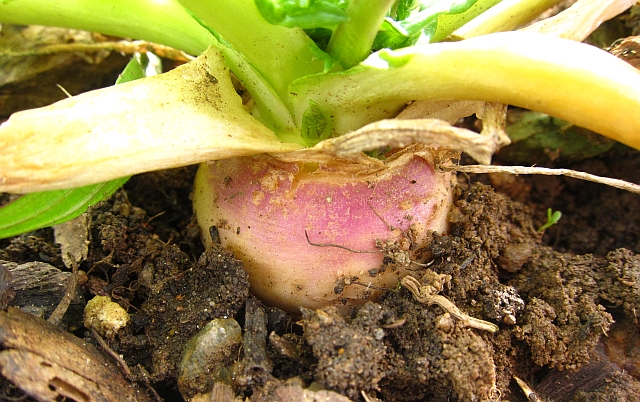
one of our many winter turnips
Turnips and spinach are growing under our row covers. Our first experiment of over-wintering our late fall crops worked!  Last fall, I planted lettuce, turnips and spinach seeds a bit late.  We did not have a good fall harvest of these crops.  In November, I covered the growing crops with row covers.   What a thrill to peel back the row covers yesterday to find green turnip tops and purple and white turnip roots, tender dark green spinach leaves and curly bright green lettuce sprouts.  I even pulled weeds out of the spinach bed.  Row covers are good winter blankets for the garden!

Our Garden Plot Dreams for 2011

My son's garden dreams include bugs and three suns (can you see them at the top right?)
Who says you can't dream big?
My husband, my son and I share our garden dreams before we start planning and ordering seeds for the new growing season. Every year our son dreams of growing tall gigantic sunflowers. This year he also wants cucumbers, tomatoes, bugs and more visits to the goats and the snowball stand near our community garden at the Howard County Conservancy.

My husband dreams of installing a drip system so we can work in the garden (and visit the goats and snowball stand) while the plants are being watered. He also wants to combine the garden beds, reduce the walking paths and cover more plants with row covers so the plot has intensive plantings thus more produce and less bug damage.

I dream of a longer growing season so I can cook from our garden harvest all year. I want to plant new types of veggies and make a cold frame. For additional crops in early summer and late fall I would like to try planting leeks, shallots and peas and Asian greens, broccoli and kohlrabi along with our regular crops of tomatoes, peppers, eggplants, zucchini, sweet potatoes, white potatoes, carrots, beans, spinach, turnips, greens and herbs. But, my biggest garden dream for 2011 is that our family has fun together with each other and other gardener friends in our community garden.

What are some of your garden dreams for 2011?

Goodbye October

The month of October ends with a photo-free post.   It is the start of a new tradition at Our Garden Plot.   A  Photo-Free Finish on the last day of each month.  It is a chance to practice creating vivid word pictures about our garden plot.

October garden highlights:

1.  We pulled out our last row of tired tomato plants.
2.  We pulled out big round radishes and long crunchy carrots from the ground.
3.  I made bean and noodle soups from fresh picked escarole and endive.
4.  We dug out football-size sweet potatoes from the soil below shriveled vines.
5.  Our glorious fig tree shed its leaves.
6.  Our turnip, lettuce, radish and spinach seeds sprouted leaves.
7.  We harvested a grocery bag of thick crisp string beans.
8.   We conquered the greedy Mexican bean beetles.
9.   We picked pounds and pounds of pungent, plump and pointed peppers.
10.  We roasted and froze our habanero peppers for the first time.
11.  We dumped a manure and compost mix onto our plot.
12.  We prepared the soil for next year’s garden.

What are your October garden highlights?

Habanero Peppers and Pumpkin Chili


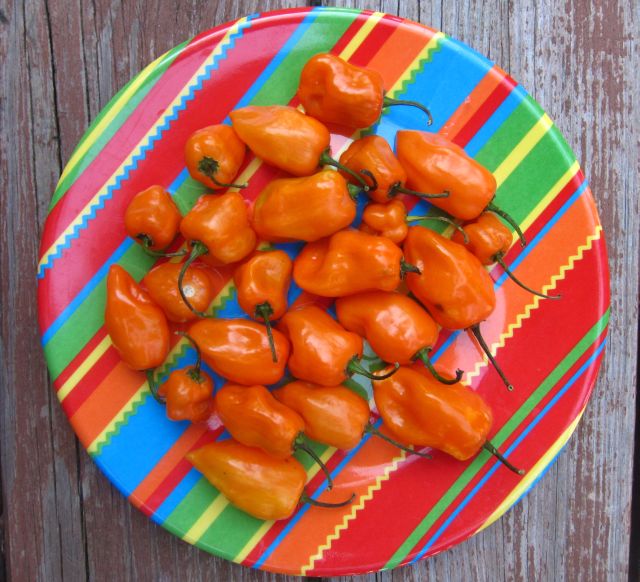
The one habanero pepper plant in our garden plot continues to supply us with more than enough hot peppers. I do not know what to do with all these small bright orange peppers. They are pretty, but so pungent! One tiny crumb size bite will burn your tongue. A week ago I roasted about 15 of the habaneros in our oven. As they roasted, the kitchen filled with a sweet smell that reminded me of a deli or a room filled with pepperoni sticks. Then the aroma became overpowering and grabbed my throat. I could not stop coughing and my eyes started watering. I opened our kitchen sliding glass door and stood outside on our deck until the coughing stopped. Those are powerful peppers!

Yesterday, while making chili for guests I wondered if my roasted habaneros had less heat than uncooked habaneros. I cut a speck of skin from a roasted habanero and placed it on my tongue. It gave a tingling burn, not a stabbing burn. The heat seemed reduced so I chopped one-fourth of a roasted habanero and added it to the sauting onions and garlic. My chili got a spice lift and tasted fabulous. It had a rich hot and sweet flavor.  My husband and guests devoured my chili as they told their own hot pepper stories.   Today, my friend, a creative cook, suggested that I add my leftover pumpkin soup to the leftover hot chili.  Our spicy pumpkin chili was delicious, mild and creamy.

Don’t be afraid to add habanero peppers to recipes.  They are hot and sweet.  The website,  Habanero Madness and  the book, Habanero has more than enough habanero pepper advice and recipes for all my habaneros.

What do you do with your habanero peppers?

Our Little Garden Helper

Cutting String and Tomato Vines
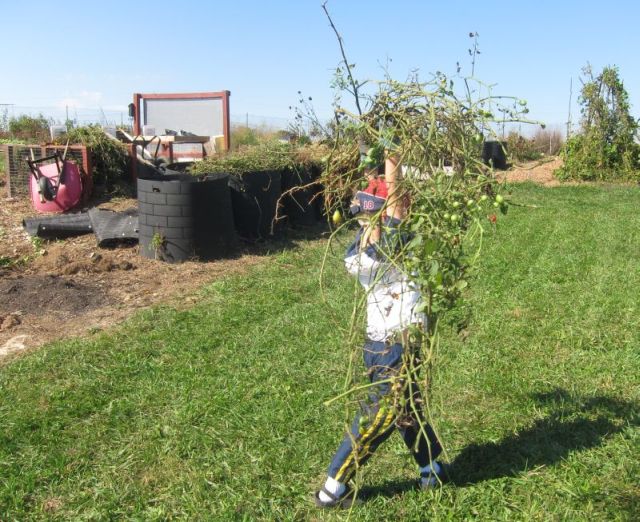
Tangled in Tomato Vines

My five year old son surprised us this past sunny Saturday when he eagerly followed our instructions and  helped us cut up and compost our tomato plants.  Often our son does not want to do the garden jobs we ask him to do.  He prefers to create his own jobs.  Here is a list of my son’s top 10 favorite garden jobs:

1.  Hold the hose and water the plants, dirt, fence and sky.

2.  Dig holes in the dirt and bury treasures or plant cut flowers.

3.  Throw the inedible fruit into the compost bin and stir it.

4.  Place or slam rocks around the garden beds.

5.  Plant sunflower seeds and sit under his tall sunflower umbrellas.

6.  Hit the sunflower  heads with sticks and watch the seeds fall.

7.  Create a web fence for the garden beds by twisting and weaving string through sticks he staked around the bed.

8.  Find bugs, worms and butterflies.

9.  Cut something!

10. Throw something!

What are your little helpers’ favorite garden jobs?

The Unexpected Sprouts

A clear blue sky, crisp cool air, warm sunshine plus adventure equals a perfect Saturday in autumn.  We headed for our garden plot this afternoon but had a few diversions before arriving there.    We stopped at a pet store and a fall festival.  We went to the pet store to purchase biscuits for our dog and my son discovered a playful kitten.  My son slipped a thin metal wire through the kitten’s cage.  The cat flipped, batted, jumped and kicked at the bunch of cardboard strips hanging at the wire’s tip.  My son roared in laughter.  He did not want to leave the pet store.  We redirected  him with hope of a hayride at our community garden site.    The Howard County Conservancy was full of activities for its fall festival.   We bumped through rolling fields and woods on a hayride pulled by a tractor with wheels taller than my son.   A master gardener at the compost demo gave my son a bunch of pink and blue balloons.  My son slurped honey from a straw and chatted about bees with a woman from the Howard County Beekeepers Association.  We listened to steel pounding on steel as a blacksmith hammered a hot orange metal rod into a fork after heating it in a coal fire stoked by large bellows.  My son said the banging was his favorite.   While my husband and son lingered and asked questions  in the blacksmith shop,  I finally visited our garden plot.


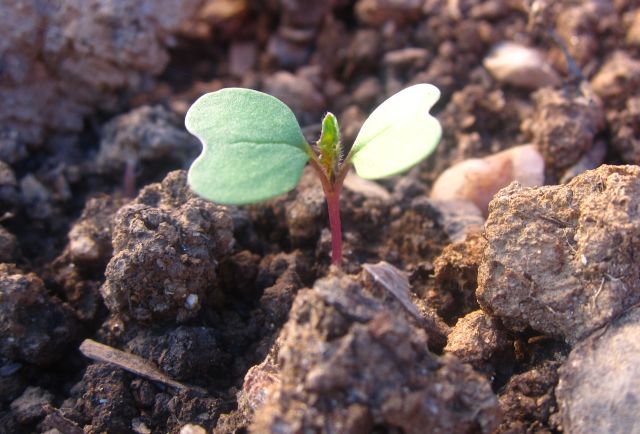
Turnip Seedling


Our plot is still producing tomatoes, peppers and beans.  I picked two grocery bags full of red and green tomatoes and peppers.  I pulled out and composted three tomato plants that had toppled to the ground.  Our fall plantings sprouted!  Radish, turnip, spinach and lettuce seedlings  now sprinkle the brown earth in unplanned patterns of curving rows, circles, clumps, pairs and triples.  Some extra seeds must have dropped from my hand during planting.  Many seedlings will need to be pulled out to allow more space for underground growth.

Those unexpected sprouts remind me of our day.   Unexpected adventure and fun popped up despite my plans.  Thank you God, for your goodness and for dropping some extra seeds outside my rows of plans.