
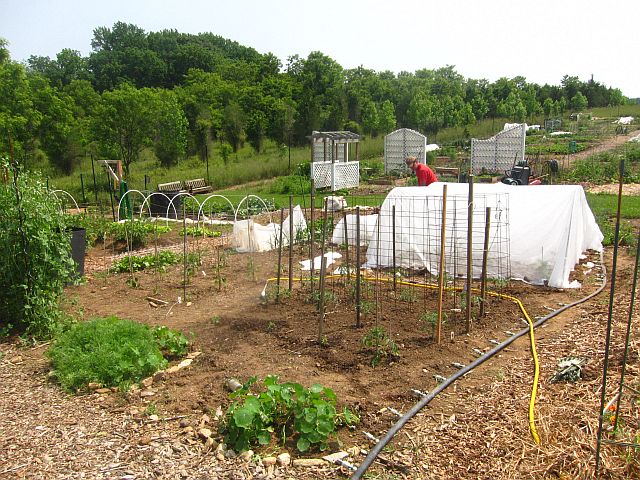
We used an organic method to plan our garden plot this year. No sketches or diagrams, just pick and plant. The plot is finally taking shape. It is planted, supported and protected. We worked in 90 degree weather today to plant eggplants and zucchini, stake the tomatoes and peppers and cover the eggplant, zucchini and butternut squash plants with row covers.
Here is what we are growing now:
From left to right in the above picture…
1. First row: Nasturtium flowers (will have edible red flowers), Arctic Poppy flowers (seeds were an anniversary present from my sweetie who knew Poppy flowers are my childhood favorite) and Sugar Snap Peas (growing on trellis).
2. Second row: Tomato patch, Pepper patch, and Beets.
3. Third row: Eggplants (I asked for Eggplants and my sweetie got me over 18 plants, including the following varieties, Neon, Regular large, Finger, and Sicilian Globe) all under row covers to protect from the flea beetles; Zucchini, Red Onion and Butternut Squash (under row covers to protect from the Squash bugs) and more Beets.
Before the planting my enthusiastic hubby did a “grow” dance, arms waving overhead with a cute body wiggle. After the planting, muddy, sweaty, tired we slumped in the air conditioned van and wondered if we should continue with the community garden. Anyway, we are glad the planting is done.
Garden Tools
Holding On
 It has been difficult to get to our community garden plot this spring. More responsibilities at work, school, and home pull us away. But we are determined to hold on to our garden plot and our family gardening hobby.
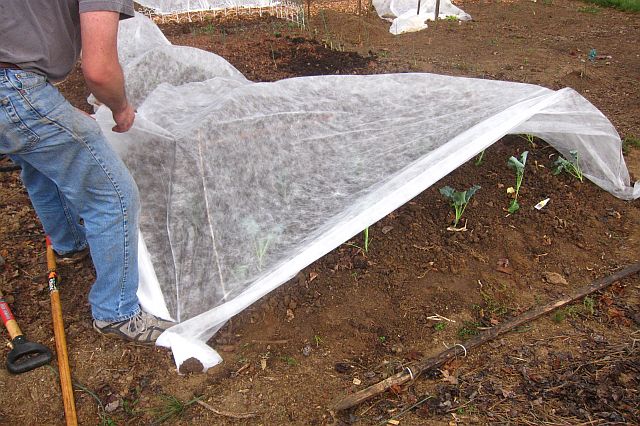
Yesterday, we arrived at our community garden plot in the late afternoon, just before the heavy rains came. The dark rain clouds moved closer as we rushed to plant beet seeds and broccoli, eggplant and nasturtium seedings. The wind blew strong, the rain fell fast and the row covers fluttered and flapped. My son ran for the van, then on his own initiative returned to help me carry supplies back to the van. I gathered rocks to help my husband secure our row covers over the broccoli and eggplants and anchor our neighbor’s row cover that almost flew away.

It didn’t matter that we got wet. We felt the simplicity in physical work and nature. My husband and son pounded the hard clods of dirt to aerate the soil for the plants. I gently unraveled tendrils on the sugar snap peas and led them toward the trellis. We felt a storm unfold around us. We worked together with our hands and helped protect our garden neighbor’s plants. We completed our garden work and picked a bunch of lettuce. We slowed down.
Our garden plot holds us so we are not blown away by the frenetic life in Howard Co. Maryland.
Our First Snow Peas
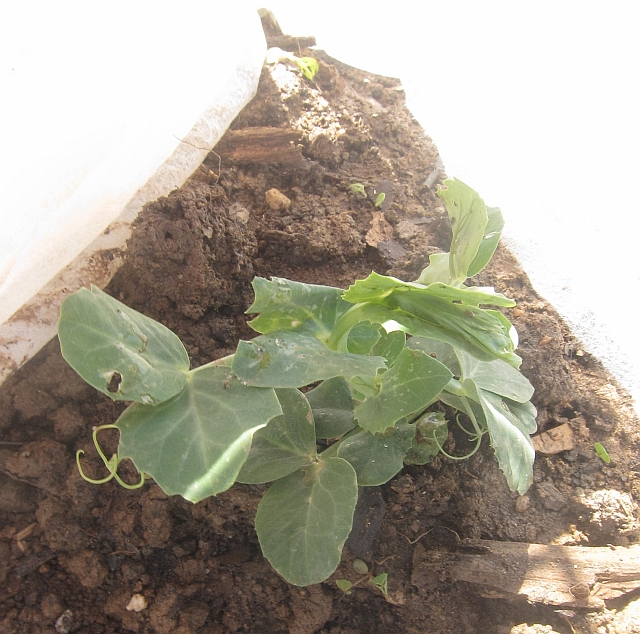
We finally have sturdy snow pea seedlings growing under row covers! Only a few seedlings emerged from the first snow pea seeds we planted in early April. Unfortunately, those fragile plants were nibbled down to the dirt by some critters. To improve seedling growth we treated the next batch of snow pea seeds with inoculant before planting and to prevent seedling damage we covered the ground with row covers. We now have thriving snow pea plants with dangling tendrils searching for something to climb. The plants need to grow bigger before the tendrils can wrap around the reinforcing wire trellis we installed two years ago. This is our first year planting snow peas. We learned another gardening lesson through trial and error.
What is inoculant? A commercially prepared source of dormant rhizobia, a naturally occurring soil bacterium. These tiny bacteria live within the bean roots and extract nitrogen from the air (which is 78% nitrogen), thus feeding the plants. Inoculant can be dusted onto moistened bean and pea seed just before planting. It’s a fully natural, simple process which takes only a moment, but will increase crop yields all season long. Inoculant can be purchased at most garden centers.
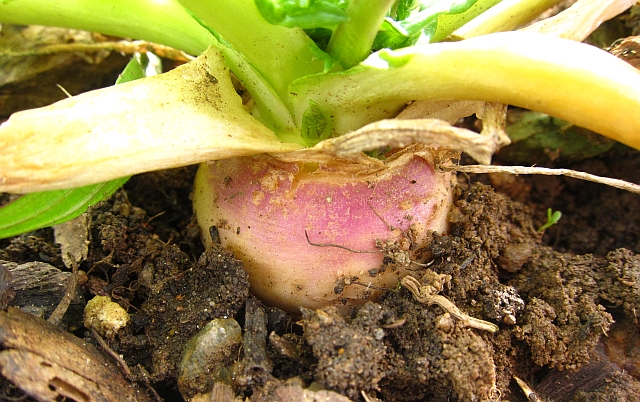
Turnips and Spinach
We visited our community garden plot at Howard County Conservancy yesterday. We found some treasures in the soft thawed soil. 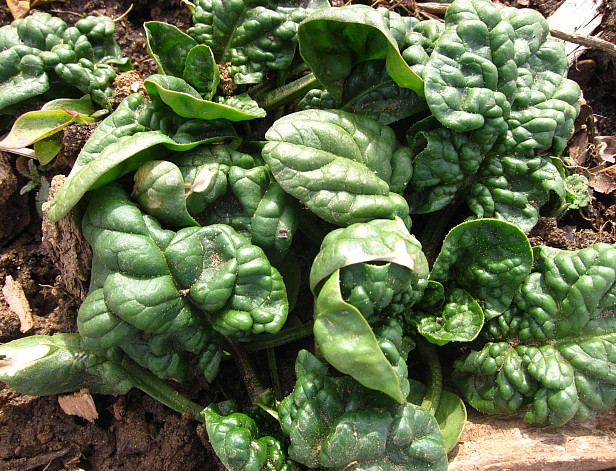
Happy New Gardening Year

A couple weeks ago, we covered our garden plot with one more blanket of mulched leaves and made our last harvest of 2010. We harvested spinach and carrots. The carrots still tasted fresh and crisp even though we had to pry them out of the slightly frozen earth. We loosened the ground with a garden fork and pulled out about 12 medium-sized carrots.
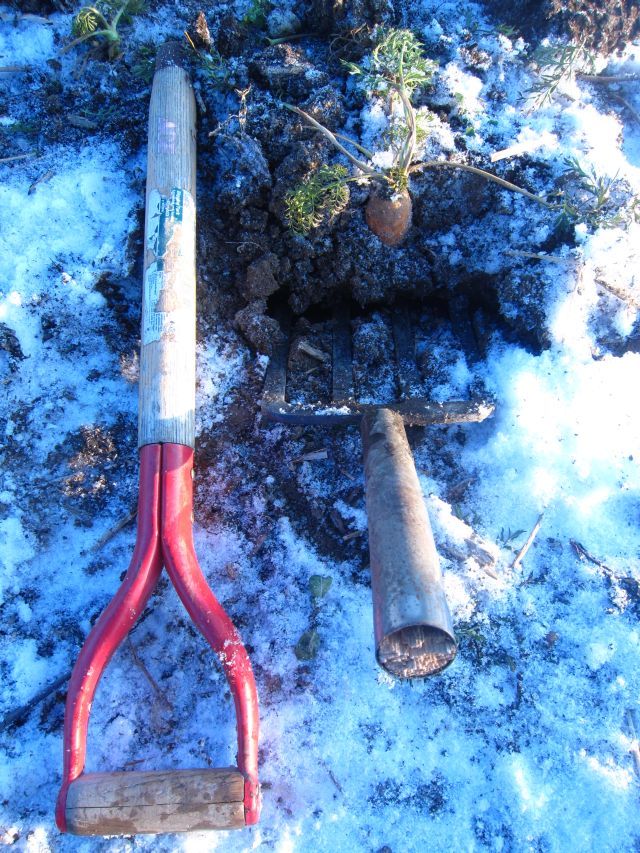
One stubborn carrot would not separate from its block of earth so my strong husband pressed down hard on the garden fork until its wooden shaft snapped in half. My husband sighed at the loss of his faithful garden tool. But he smiled after I announced, “we now have a dibber for the leeks we want to plant in early spring!” A broken off shovel or garden fork with an intact handle makes an effective hole digger for planting seedlings.
A garden blunder can be a gem to the gardener who dreams about next year’s garden.
Happy New Gardening Year, my gardening friends!
Saving Fall Leaves for the Garden
The wind swirls and scoops up leaves from the neighborhood and dumps them into our tiny front yard. The yard is covered with brown leaves when the only tree in it, a Bradford Pear, still has its green leaves. Every fall we collect at least 4 tall bags of these extra leaves.
We are grateful for the extra leaves because we save them for our garden plot. We keep our compost healthy by adding the extra leaves to our compost bin. The brown carbon rich leaves balance the green nitrogen rich kitchen waste in our composter. We add a dense layer of minerals and nutrients to our garden plot by mulching the garden soil with the leaves. We provide winter protection for tender plants in our garden by surrounding them with the leaves. When our fig tree was smaller, we protected it from the cold winter winds by covering it with leaves and a burlap blanket.
This fall, gathering and chopping our leaves became easier due to our new electric leaf blowing-vacuum- mulchinator. We do not have a grass lawn in our front yard, but perennials and bushes. It is tedious to comb out the leaves from our Nandina, Hydrangea and Azalea bushes and flower beds. Instead of raking the leaves into piles and chopping them with a lawn mower, we gently vacuumed up the leaves and created mulch at the same time. Our new garden toy is gentle on our plants and saves time. Fantastic!
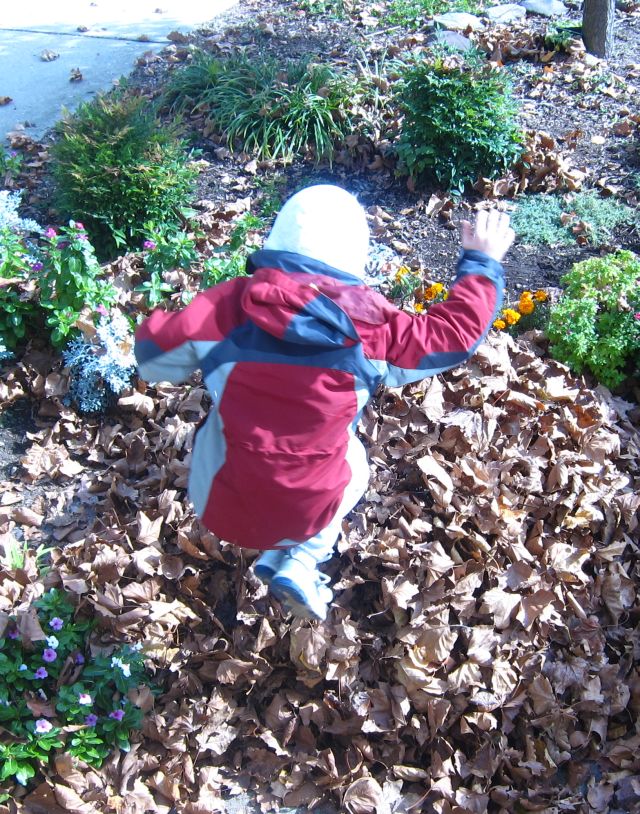
We did not vacuum up all the leaves immediately. We saved some for my son and dog. My son likes jumping from our front door steps into a mound of leaves then pretending he is a bird sleeping in a nest. My dog likes to catch, in his mouth, bunches of leaves tossed up in the air.
How do you collect and use or play in your fall leaves ?
 Our Garden Plot