White Fuzzy Caterpiller

white fuzzy caterpillar
White fuzzy caterpillar on lettuce leaf

The lettuce in our garden had a long growing season due to the cool and wet weather in the early part of summer.  We had more lettuce than we could consume.  Unfortunately, lettuce can not be frozen like Kale or other thick greens.  Our lettuce plants finally started to go to seed and were very bitter, so I pulled them out a week ago.  While removing the plants, I found this white fuzzy caterpillar tunneling at the center of one green leaf lettuce plant.  I hated to disturb its home so I pulled out the whole plant and placed it in our compost bin with fuzzy still tucked inside the leafy goodness.

I did not mind a caterpillar munching on a plant that had become too bitter for us to consume, but I wonder if it will harm other crops in our garden plot.  My guess is that the caterpillar will turn into a Tiger moth, but I am not sure.  For any bug identification or garden questions, I contact The University of Maryland Extension Service, Ask a Garden Expert .   They reply with an answer to my gardening questions within a couple of days.  They are a wonderful service to the garden community.

I am waiting to see what the garden experts have to say about “snowy bear” as my son named it.   I will let you know what I find out.
Visitors in Our Plot

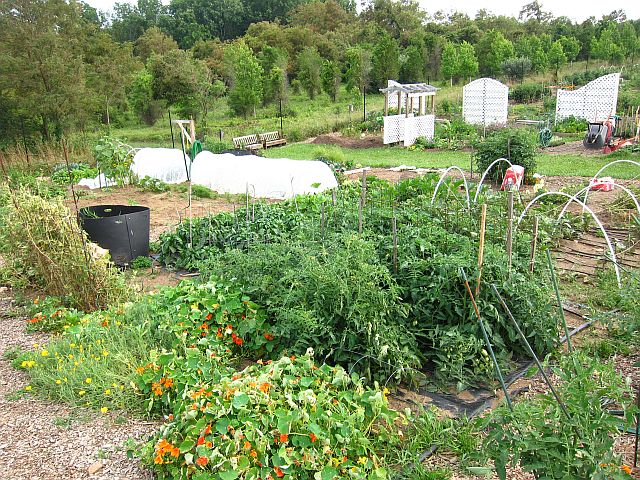
The garden grew dramatically while we were on vacation.  In less than two weeks we found new veggies and critters in our garden.  There were many overgrown zucchini logs waiting to be picked; about a dozen small butternut squashes growing on traveling vines; thick tomato vines dangling with yellow flowers and green tomatoes; yellow and red beets bursting through the ground; four large healthy cabbage heads stuck in the ground; and several small purple eggplants hanging on leaning stalks. Unfortunately, we found wilted yellow leaves on the spaghetti squash vines. Vine borer larvae were in its stalk. We picked the two medium-sized squashes then pulled out the entire plant. I will wrap the stalks of the zucchini and butternut with aluminum foil to try and prevent the vine borer from laying eggs on their stalks.

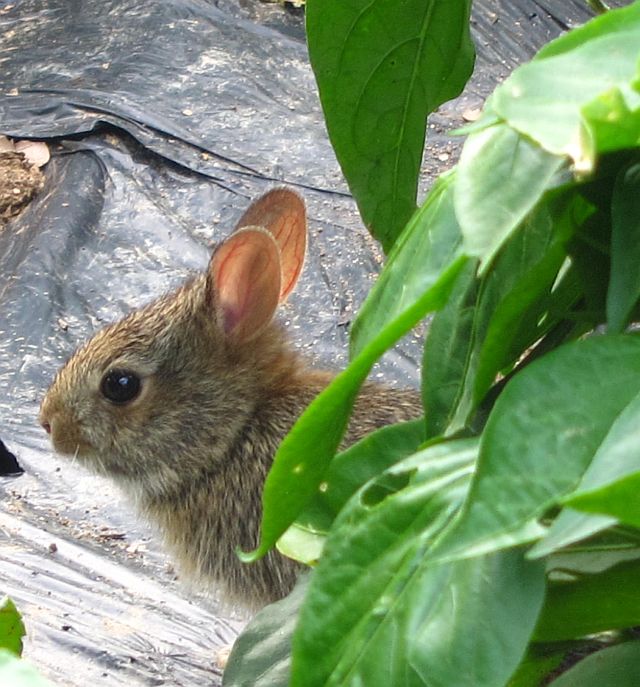
I found more critter visitors, too. Squash bugs and their egg clusters, crickets, ladybugs and a large (half-dollar size) black furry spider. When I first walked up to the plot I saw something brown dash out of the pepper patch, then another trembling furry animal under a pepper leaf. I hoped it was not a vole (others have found voles in their community garden plots). I was relieved it was only a baby bunny. At least it was a cute pest!
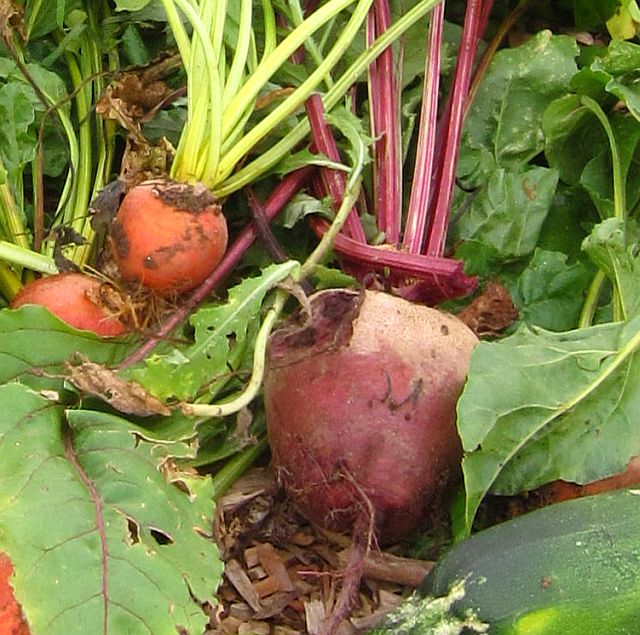
After it scurried away, I found its lunch – our golden and red beets! We pulled out several nibbled on beets. I wanted to leave the partially eaten beets for the bunnies. But, my husband protested, “we don’t want to attract more bunnies!”  We placed the nibbled beets in the community garden compost bin. I hope the baby bunnies look for their meals in the compost bin, on the other side of the garden fence!

Zucchini Tribute

Our zucchini plants produced over 22 pounds of zucchini!   We could not pick them fast enough so some zucchini grew into a size worthy of the county fair.  My kitchen counters were covered with green logs a few weeks ago.  I chopped and my son shredded (using the food processor) until we filled over 15  cups with zucchini meat.  Here is our zucchini resume…

  • Traditional zucchini bread
  • Oatmeal cookies containing shredded zucchini (squeezed dry).
  • Appetizers of breaded then broiled zucchini slices (can be used in Lasagna in place of noodles).
  • Pasta with sauted zucchini, tomatoes, garlic and onion.
  • Pizza with a crust made from shredded zucchini, eggs, flour, olive oil and cheese.  My son’s culinary review, “It does not look like pizza, but it tastes like pizza.  It is yummy!”

    pizza with a zucchini crust

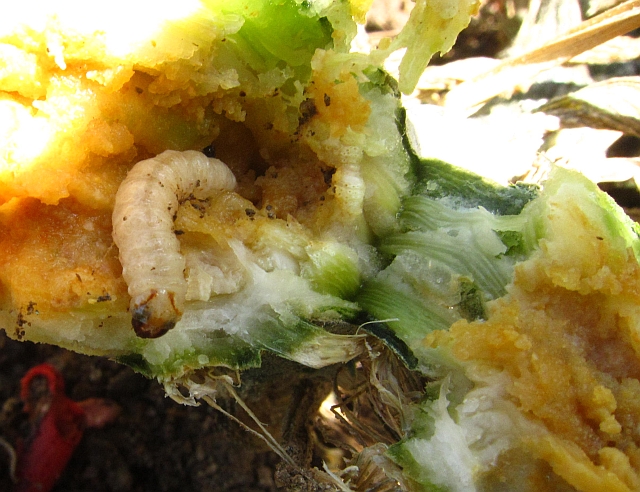
Unfortunately, we had to say goodbye to our zucchini plants this week.   I found a squash vine borer larva inside the stem of one of our plants.  Moist sawdust-like debris around each stem and wilted leaves were signs of this devastating pest.  I cut open one stem and found the larva.  Sometimes the plant can be saved by digging out the larva and covering the stem with dirt.  Our plants had too much damage to be saved.  But our zucchini legacy will continue despite the vine borers……there is more shredded zucchini frozen in a bag inside our freezer!

Squash Vine Borer

All curcurbits: gourds, pumpkins, summer squash, winter squash and occasionally cucumbers and melons are hosts to the squash vine borer.

I used row covers before the squash plants flowered to prevent pests, but the following actions described in the book, Good Bug, Bad Bug by Jessica Walliser may have prevented  my recent vine borer attack:

    •  Mound soil over the stem up to the lower-most flower to eliminate egg laying surface area and encourage root development.
    •  Wrap a strip of aluminum foil around the plant base early in the season, to prevent adults from laying eggs on the stem.  Nestle the foil just below the  soil surface, reaching up to the lowermost leaf.
squash vine borer in one of our squash stems

We could try and save the plants by cutting the stem and digging out the vine borer larva, then covering the cut stem with dirt.  But,  I learned my lesson, next summer I will remember, “mound and wrap.”

A Snake in Our Strawberry Patch

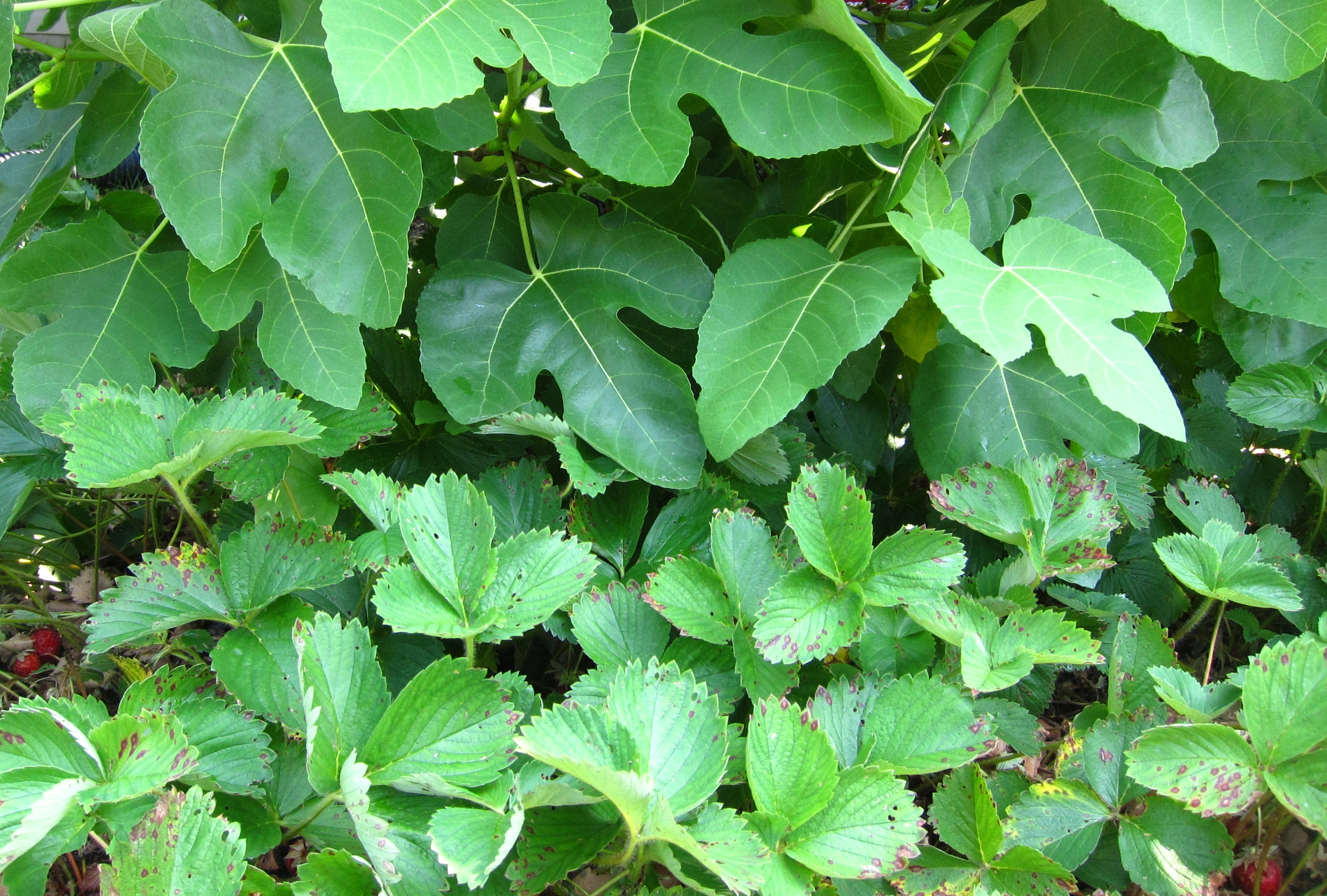
fig and strawberry leaf hideout

I found a big snake in our backyard strawberry patch! I saw the brown, black and white stripped snake a few days ago as I reached to remove the netting over the plants. It was not a slim little garter snake. This snake was long and coiled beneath the strawberry and fig tree leaves. It was still until it saw me, then it poked its head through the netting, opened its mouth and wiggled its tongue at me. I ran for my camera. When I returned to the strawberry patch, the snake had completely disappeared. A bit nervous, I combed through the strawberry patch with a long stick and picked the last strawberries of the season.

Why did a big snake visit our small strawberry patch?

Snakes do not eat fruit, but they eat the critters (rodents, moles and chipmunks) that nibble our strawberries.  Also, the fig leaves and strawberry plant leaves provide a cool hideout for the snake during the hot days.   Although a bit frightening,  the snake is a beneficial garden critter.  It may even be more effective in protecting our strawberries than the netting!

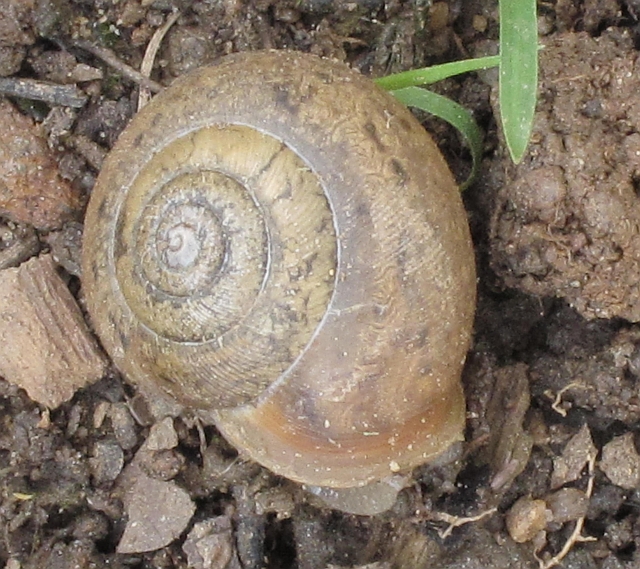
Snail in Our Spinach Bed

snail in our spinach bed

I found a snail and a slug in our spinach bed yesterday. My son was thrilled to play with these two critters while my husband and I worked in the plot. He made them a little home of sticks, rocks and leaves. I heard him say, “I cracked snaily’s shell by accident!” My heart sank. He was upset at first, but our new hose attachment distracted him. Later, I learned how damaging snails can be to newly planted seedlings. “Snaily” had to go. We just transplanted our tomato, peppers and eggplant seedlings to our garden plot!

Here are a few facts about snails from the Good Bug Bad Bug book. Snails attack young seedlings, lettuce, ripening strawberries, tomatoes and peppers. They will not eat plants with fragrant foliage or fuzzy leaves. To prevent snails and slugs in your garden….keep it clear of garden debris where they can hide and eat decaying plant matter, water garden in the morning to allow foliage to dry before night fall, and remove snails by hand and place them in a jar of soapy water. To protect seedlings from slugs, place pieces of window screening around seedling base (snails detest rough surfaces). Ducks, moles, shrews, garter snakes, frogs, toads and turtles eat snails.

This is the first time we’ve noticed a snail in our garden plot. Did all the recent rain make our plot more attractive to snails? Have you seen snails in your garden?

Spinach Pesto

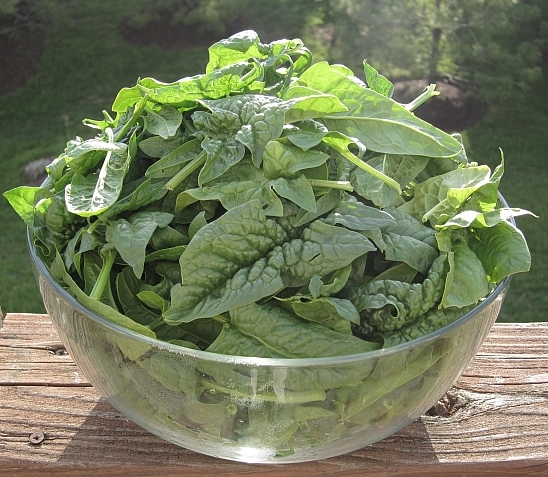
spinach picked from our plot

The spinach in our garden plot is starting to flower so I picked a grocery bag full of spinach this week.  Slugs like green leafy vegetables so I always clean greens by putting them into our kitchen sink filled with water.   If there are slugs hidden in the greens they will float to the water surface in several minutes.   Before I cleaned our huge batch of spinach, I soaked a batch of fresh picked green leaf lettuce and found two small slugs!  Spinach leaves are tough so I put them through a soak and rinse cycle three times.  We ate the squeaky clean spinach in salads all week!

Today I made spinach pesto, mixed it with ricotta cheese and created a white pizza topping. Yummy!

Spinach Pesto is easy to make by pulsing the following ingredients together in a food processor.
Ingredients:
2 cups fresh spinach leaves, well-washed and stemmed
1/2 cup walnuts
1/4 cup parmesan cheese, freshly grated, not canned
2 garlic cloves
2 tablespoons extra virgin olive oil
1/4 teaspoon sea salt
1/8 teaspoon fresh ground black pepper

Do you have any surprising spinach recipes?

Moving Day for Tadpoles

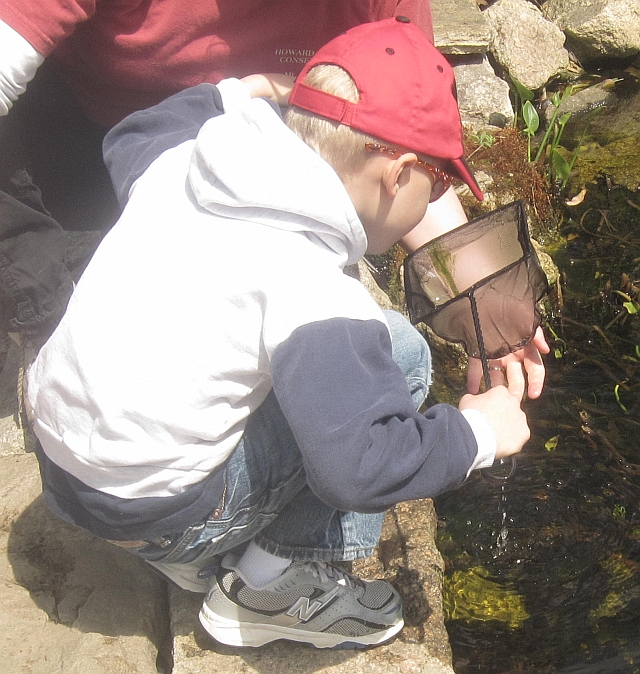
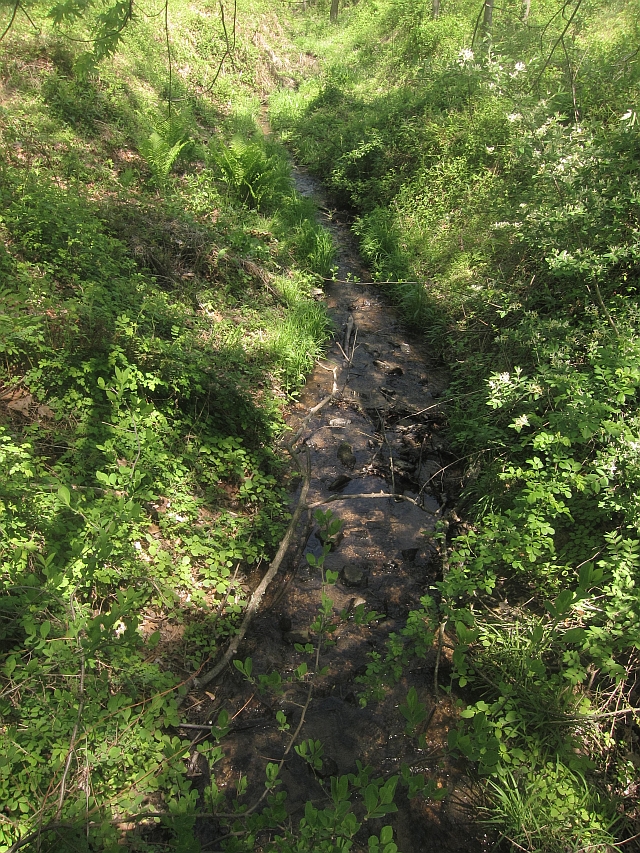
scooping up the tadpoles

Howard County Conservancy gives my son a big backyard where he can freely explore a creek, run in a field, study wildlife, feed a goat, grow a garden, hold a wiggling tadpole and observe its eyes under a magnifying glass and simply learn to value our beautiful natural world.

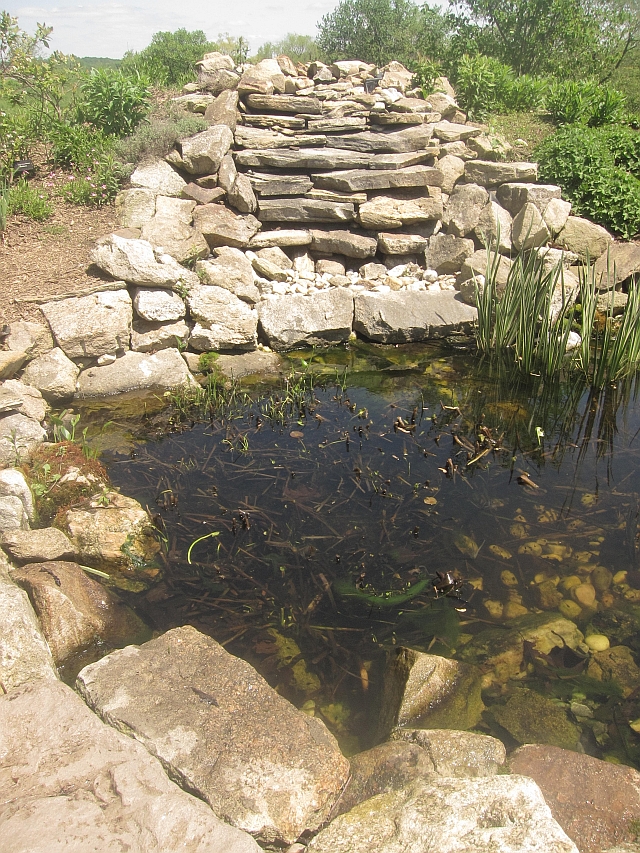
tadpoles' crowded home in stone pond

Last weekend, our family worked at the Howard County Conservancy. While my husband mowed the grass between the plots in the  community garden,  my son and I assisted with an Earth Day project.  The stone waterfall in the Honors Garden was temporarily turned off because thousands of tadpoles were living in it.

Our assignment, help relocate the tadpoles to a nearby creek in the Conservancy. A patient and knowledgeable Conservancy volunteer guided my son.  She helped him gather tadpoles in a net and place them in a container with water.  Then he carried the little oval-body-tailed swimmers about a 10 minute walk to the creek. We stepped through mud, rocks and weeds to get to the edge of the creek. My son slowly poured hundreds of tadpoles into the quiet creek.

tadpoles' new home

We watched the tadpoles adjust to their new home. The strong swimmers tried to swim upstream until they found a pocket of still water between some rocks. Others just let the stream carry them to the calm water.  We imagined the creek filled with frogs this summer.  We will look for them in June.   The meandering creek gives them plenty of space to thrive.

The frog population in urban communities is threatened by the commercial use of pesticides to maintain lawns.  We want to help frogs and toads thrive. They are good because they eat garden pests and insects that can harm plants and vegetables. How are you helping frogs and toads thrive in your garden?

Sunflowers Protect Garden

sunflowers from 2010 garden

Last week in our community garden we turned the soil, picked spinach, pulled weeds, planted sugar snap peas, leeks and shallots and discussed last years’ stink bug invasion with a new garden neighbor.   She feared the stink bugs might cause damage to her new garden this summer.  She heard other community gardeners’ stories of tomatoes, squash and other crops ruined by the pesky bugs.  I reassured her that the stink bugs did not damage our crops.  We had an abundance of tomatoes, peppers, eggplants and squash, but by the end of summer our sunflowers were infested with the bugs.  We had a stink bug hotel towering above our garden (see Fall Clean Up and Demolition blog post).   We did not plan to grow sunflowers in our garden this year, but after talking to our new garden neighbor,  I realize the sunflowers probably saved our crops last year!   We will plant sunflowers again to divert the stink bugs.

How will you protect your garden from the stink bugs this year?