
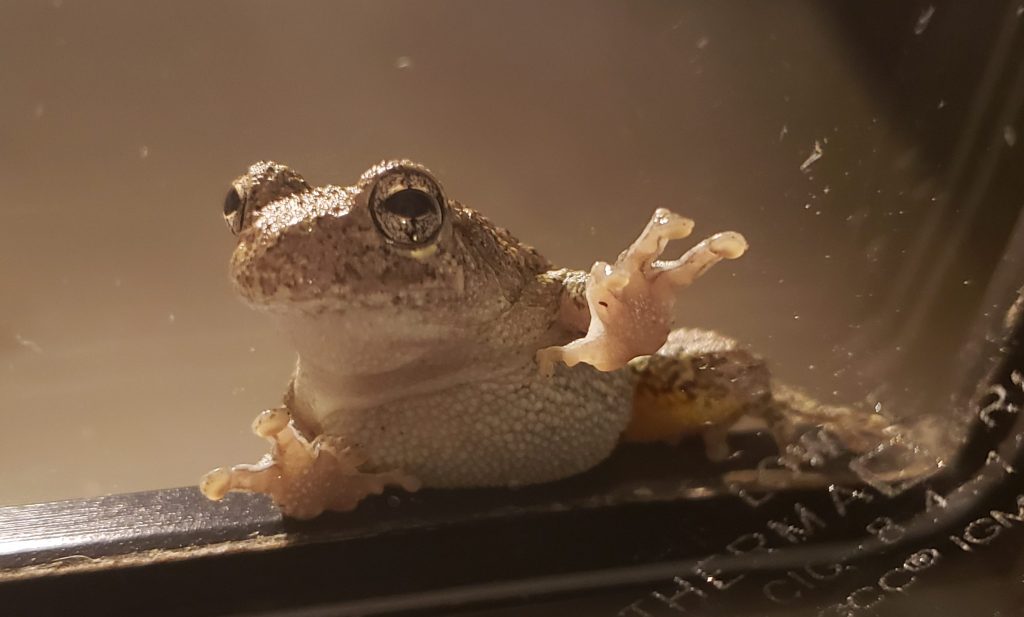
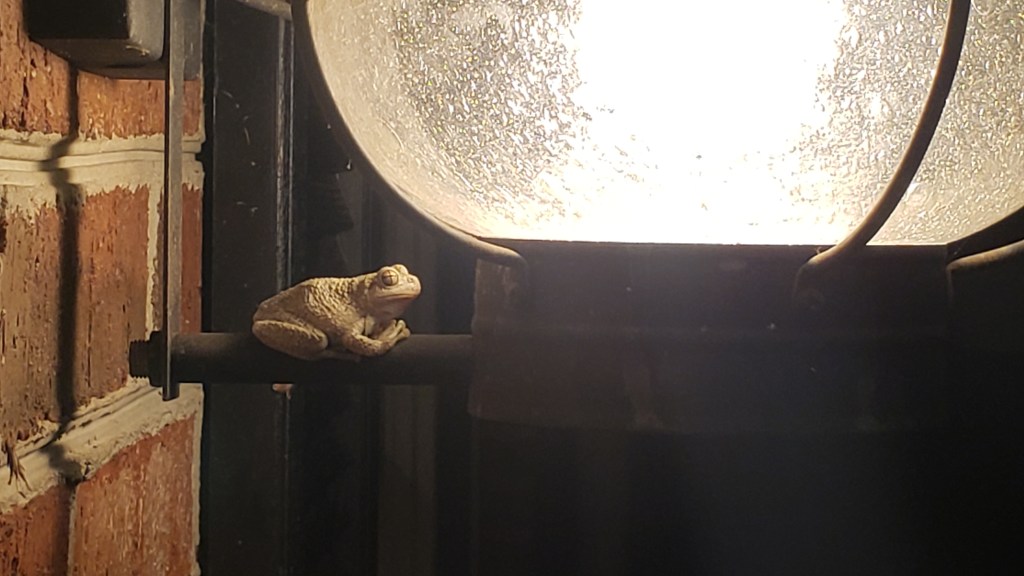
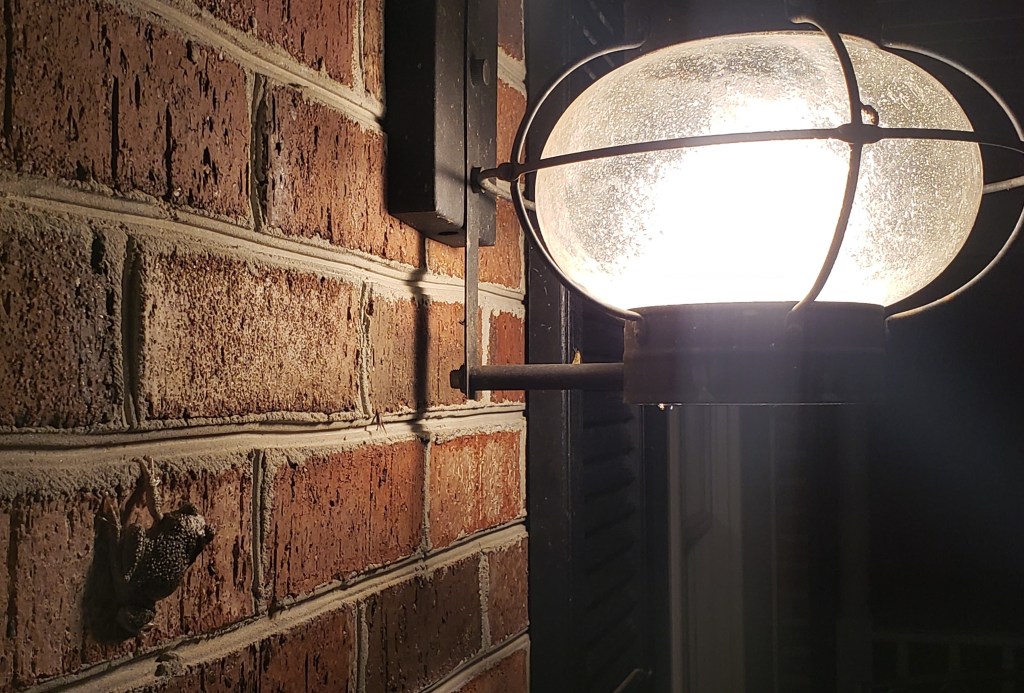
We miss our nightly visitors. Spring through summer frogs and toads of varying sizes came to our front porch light. We saw them balance on the light bracket with legs folded in a prayer pose or on the rounded light with legs sprawled in a grip hug. They clung to the light with an unbreakable stillness and cool stare despite the insects circling them. We checked the light every night and counted our frog and toad friends. Since the cool fall weather arrived, our front porch light is bare. Only a few bugs and moths flick around it. Where did our frogs and toads go?
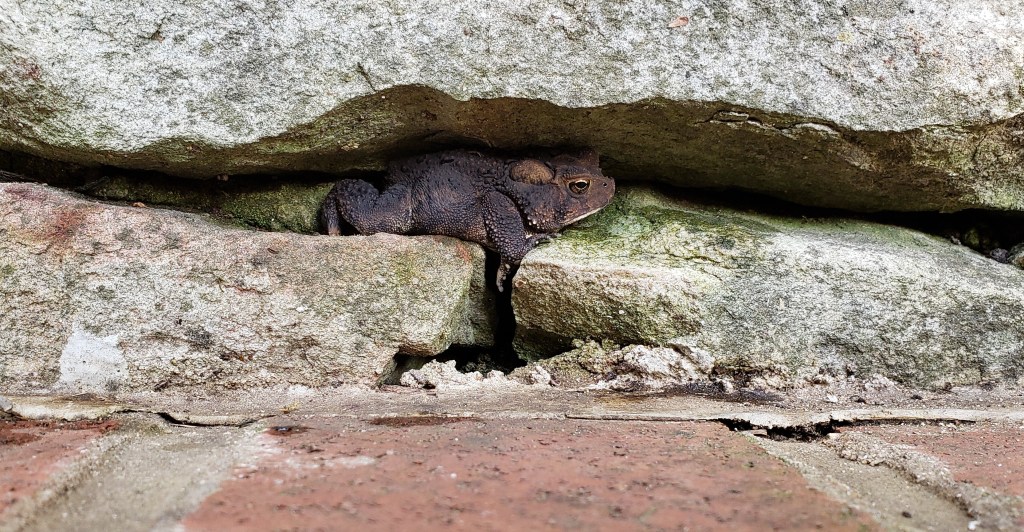
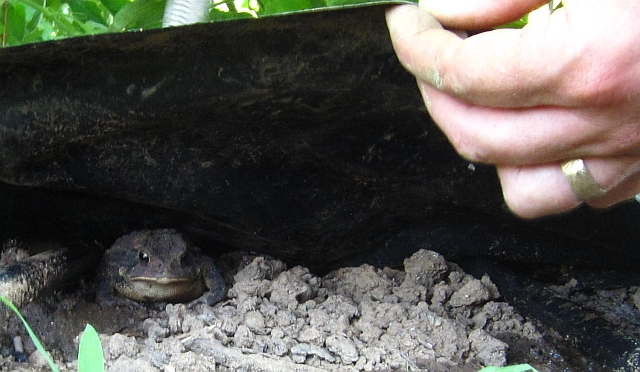
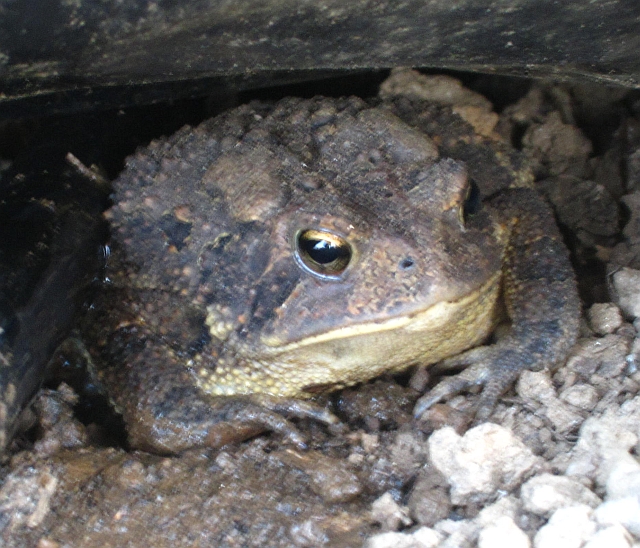
The Ecologist’s Notebook provides an in depth answer to this question. Frogs and toads are preparing warm habitats (a hibernaculum) in the ground under plants, leaves, and compost material. They are ectothermic creatures and depend on the heat of the environment to maintain their body temperature. The biologist in the Ecologist’s Notebook article describes the miraculous biochemical changes in frogs and toads as they prepare to hibernate in winter. A complex process that basically increases glucose and creates a sort of cellular antifreeze that keeps their frozen bodies alive.
How can we help our dear frogs and toads? Keep some piles of leaves in our yard, and maintain our compost pile. If we see a frozen frog or toad in our yard this winter, cover it with some dirt and leaves and let it be, it is hibernating.
 Our Garden Plot