Where do the frogs and toads go in fall and winter?

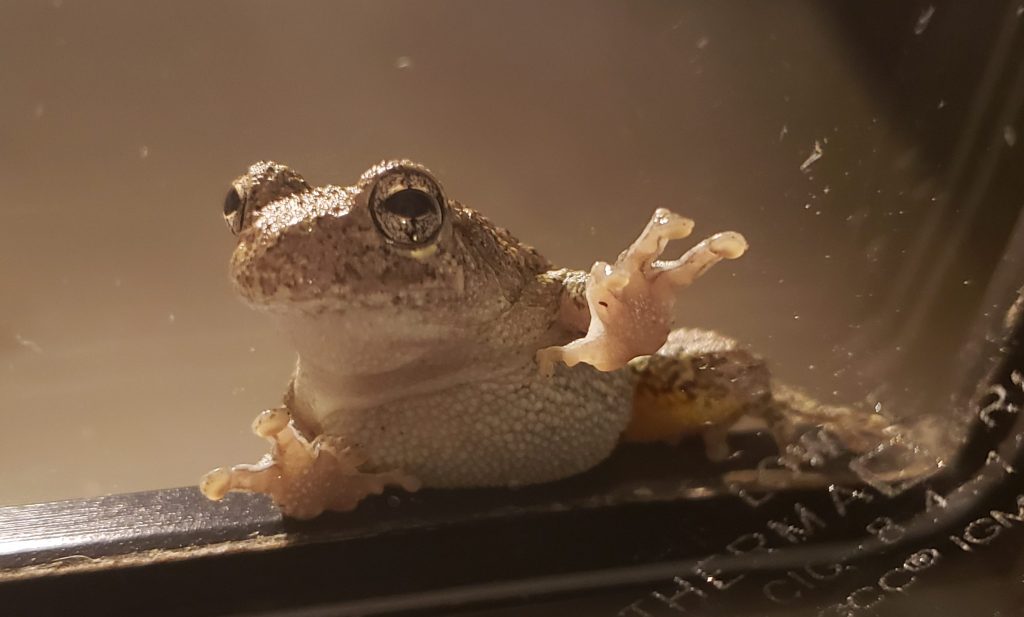
Frog visitor peeking in on us through front door window
Our contemplative frog visitor

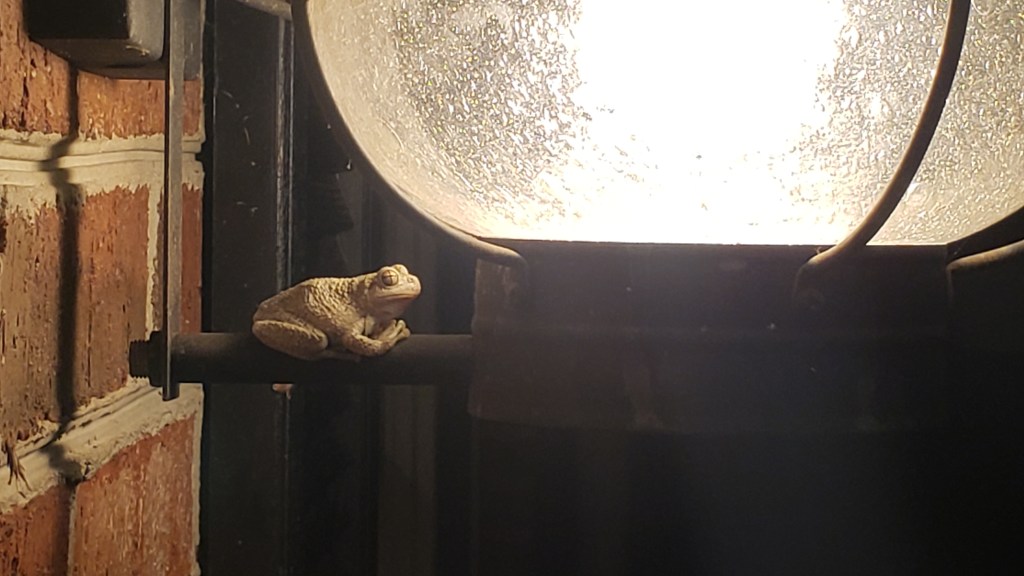
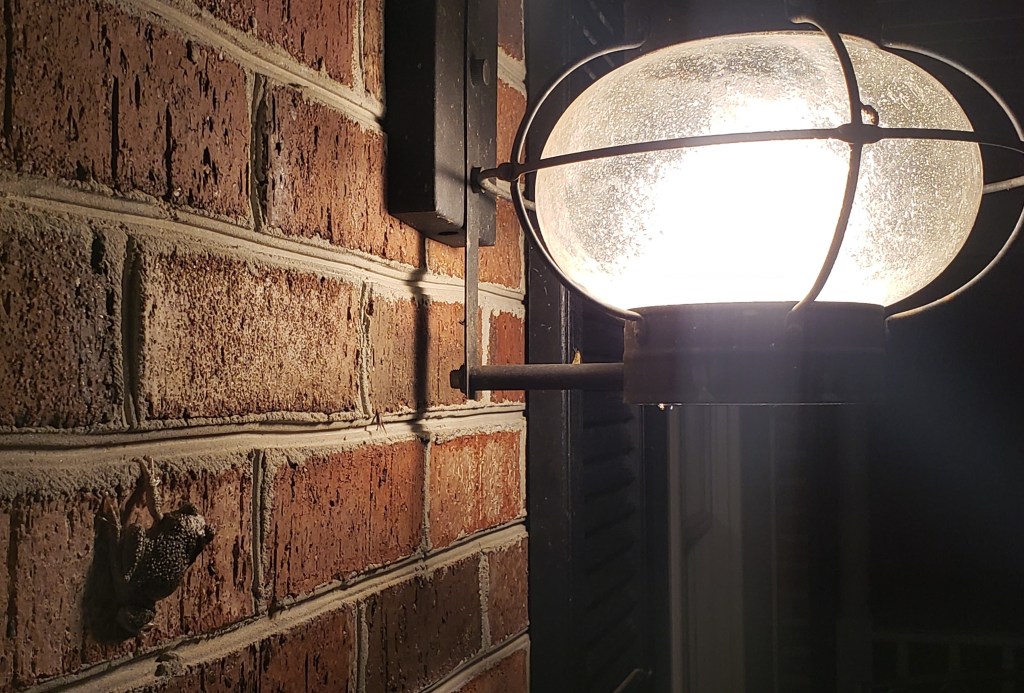
We miss our nightly visitors.   Spring through summer frogs and toads of varying sizes came to our front porch light. We saw them balance on the light bracket with legs folded in a prayer pose or on the rounded light with legs sprawled in a grip hug.   They clung to the light with an unbreakable stillness and cool stare despite the insects circling them. We checked the light every night and counted our frog and toad friends. Since the cool fall weather arrived, our front porch light is bare. Only a few bugs and moths flick around it.  Where did our frogs and toads go?
The Ecologist’s Notebook provides an in depth answer to this question. Frogs and toads are preparing warm habitats (a hibernaculum) in the ground under plants, leaves, and compost material. They are ectothermic creatures and depend on the heat of the environment to maintain their body temperature. The biologist in the Ecologist’s Notebook article describes the miraculous biochemical changes in frogs and toads as they prepare to hibernate in winter. A complex process that basically increases glucose and creates a sort of cellular antifreeze that keeps their frozen bodies alive.

How can we help our dear frogs and toads? Keep some piles of leaves in our yard, and maintain our compost pile. If we see a frozen frog or toad in our yard this winter, cover it with some dirt and leaves and let it be, it is hibernating.
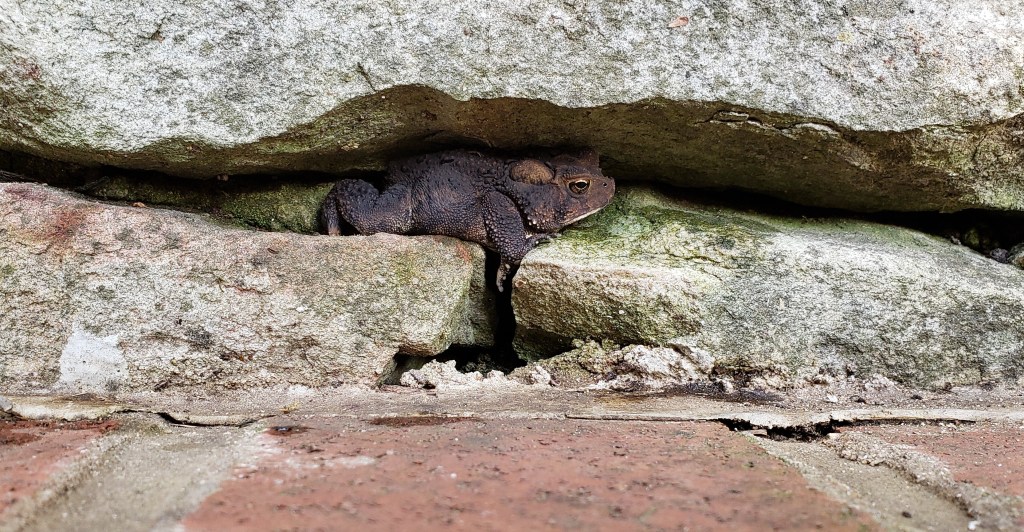
Enjoy your winter rest friends!

Moving Day for Tadpoles

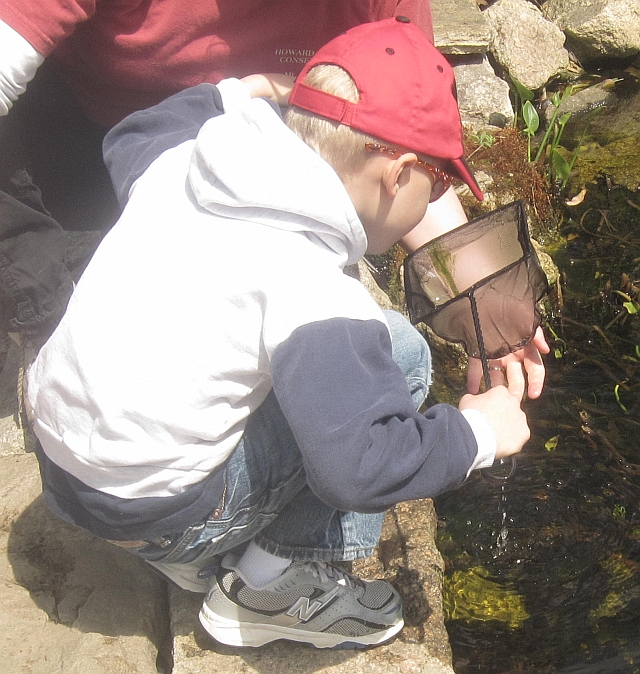
scooping up the tadpoles

Howard County Conservancy gives my son a big backyard where he can freely explore a creek, run in a field, study wildlife, feed a goat, grow a garden, hold a wiggling tadpole and observe its eyes under a magnifying glass and simply learn to value our beautiful natural world.

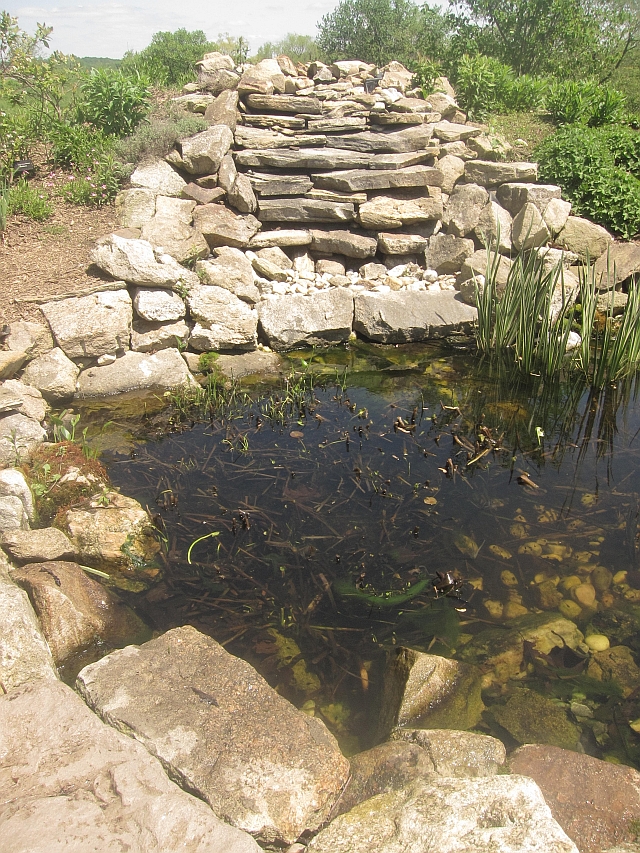
tadpoles' crowded home in stone pond

Last weekend, our family worked at the Howard County Conservancy. While my husband mowed the grass between the plots in the  community garden,  my son and I assisted with an Earth Day project.  The stone waterfall in the Honors Garden was temporarily turned off because thousands of tadpoles were living in it.

Our assignment, help relocate the tadpoles to a nearby creek in the Conservancy. A patient and knowledgeable Conservancy volunteer guided my son.  She helped him gather tadpoles in a net and place them in a container with water.  Then he carried the little oval-body-tailed swimmers about a 10 minute walk to the creek. We stepped through mud, rocks and weeds to get to the edge of the creek. My son slowly poured hundreds of tadpoles into the quiet creek.

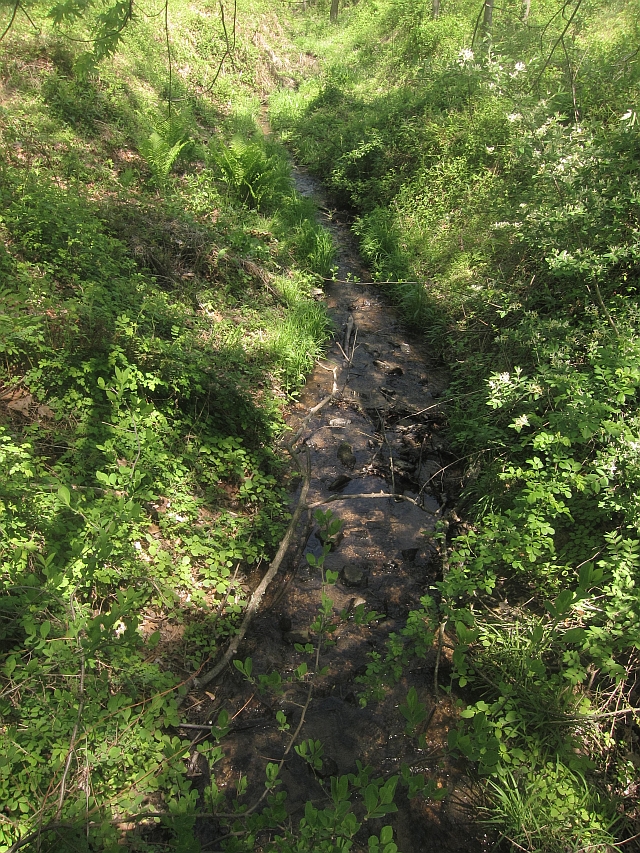
tadpoles' new home

We watched the tadpoles adjust to their new home. The strong swimmers tried to swim upstream until they found a pocket of still water between some rocks. Others just let the stream carry them to the calm water.  We imagined the creek filled with frogs this summer.  We will look for them in June.   The meandering creek gives them plenty of space to thrive.

The frog population in urban communities is threatened by the commercial use of pesticides to maintain lawns.  We want to help frogs and toads thrive. They are good because they eat garden pests and insects that can harm plants and vegetables. How are you helping frogs and toads thrive in your garden?