
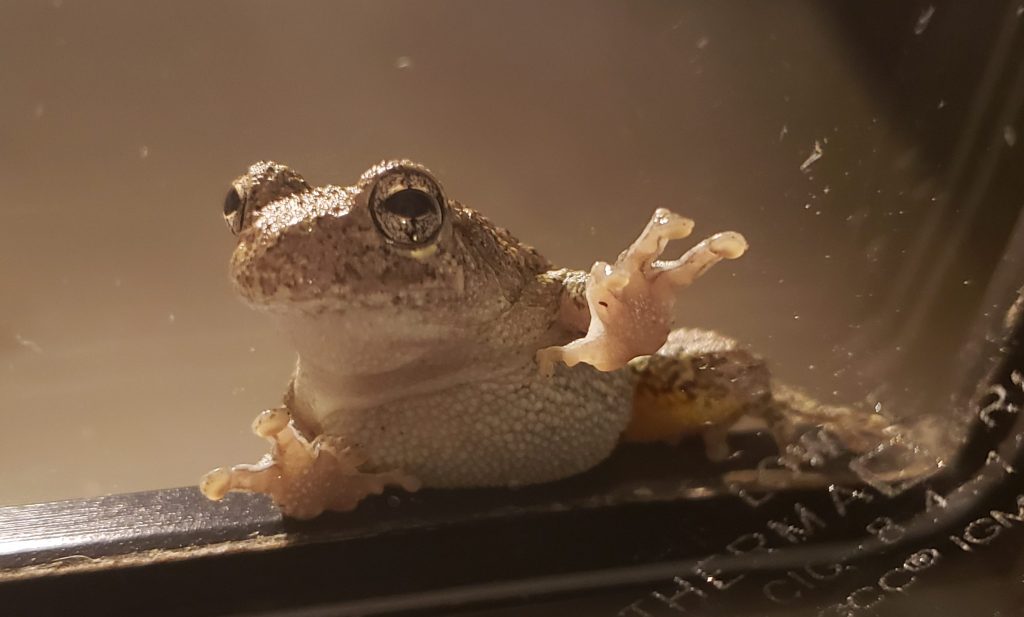
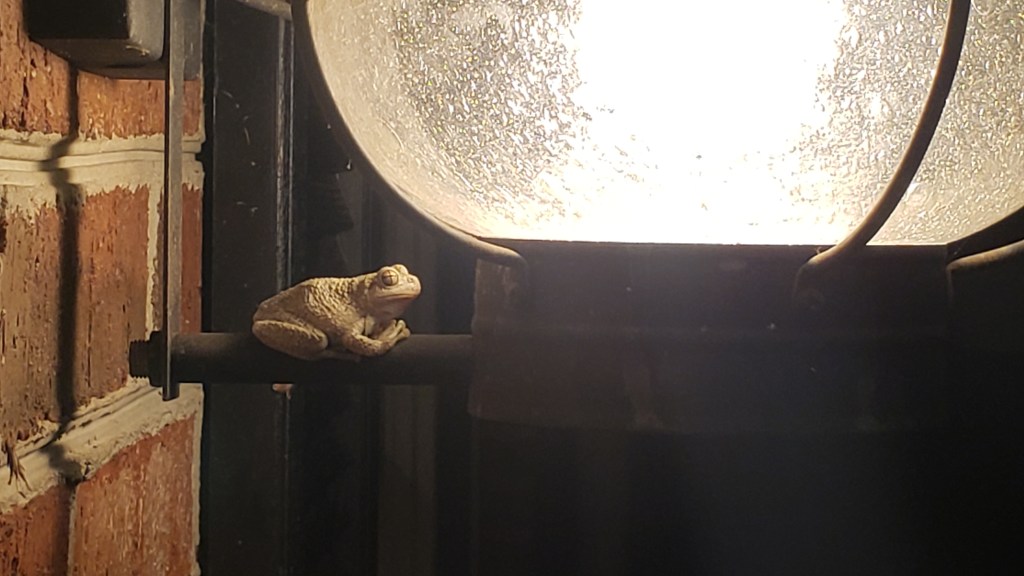
We miss our nightly visitors. Spring through summer frogs and toads of varying sizes came to our front porch light. We saw them balance on the light bracket with legs folded in a prayer pose or on the rounded light with legs sprawled in a grip hug. They clung to the light with an unbreakable stillness and cool stare despite the insects circling them. We checked the light every night and counted our frog and toad friends. Since the cool fall weather arrived, our front porch light is bare. Only a few bugs and moths flick around it. Where did our frogs and toads go?
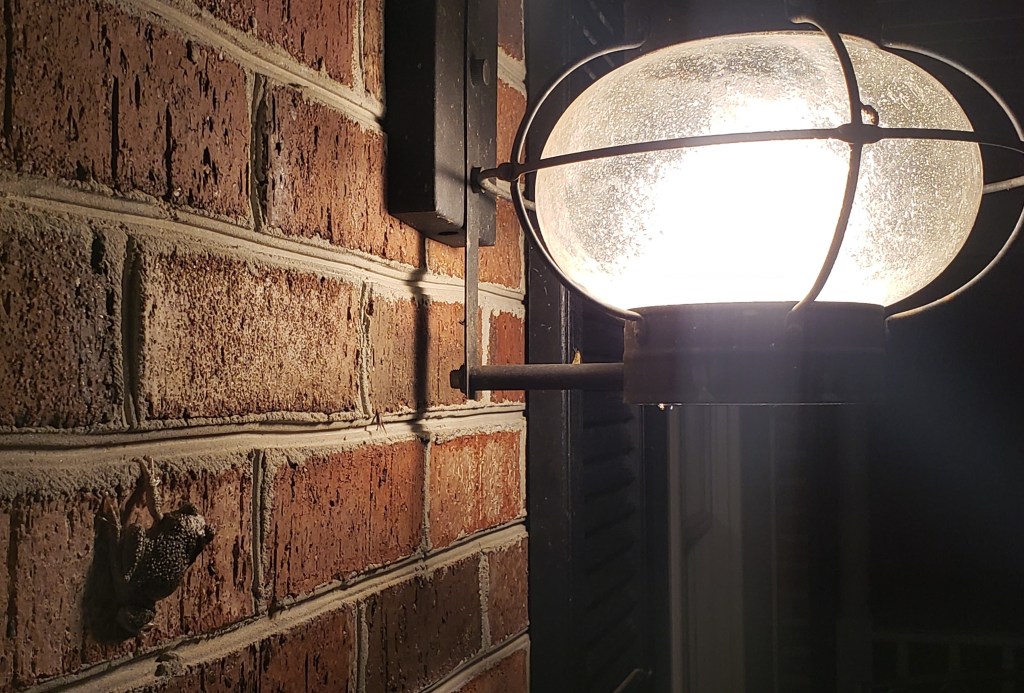
The Ecologist’s Notebook provides an in depth answer to this question. Frogs and toads are preparing warm habitats (a hibernaculum) in the ground under plants, leaves, and compost material. They are ectothermic creatures and depend on the heat of the environment to maintain their body temperature. The biologist in the Ecologist’s Notebook article describes the miraculous biochemical changes in frogs and toads as they prepare to hibernate in winter. A complex process that basically increases glucose and creates a sort of cellular antifreeze that keeps their frozen bodies alive.
How can we help our dear frogs and toads? Keep some piles of leaves in our yard, and maintain our compost pile. If we see a frozen frog or toad in our yard this winter, cover it with some dirt and leaves and let it be, it is hibernating.
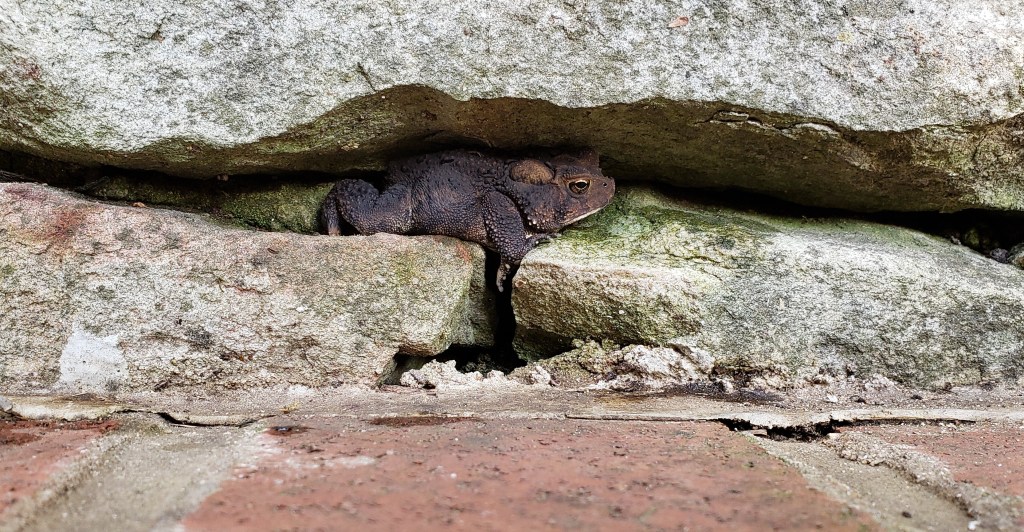
Visitors to our garden are welcome!
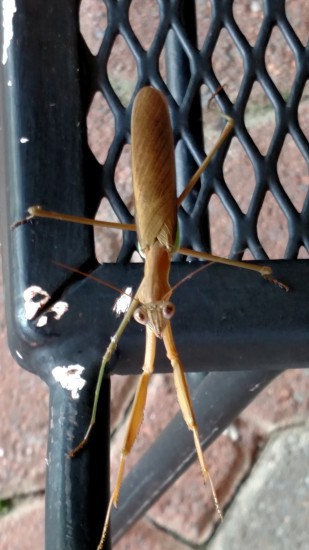
We were thrilled to find helpers in our garden this year – a toad, wasps, spiders and a praying mantis. They kept some of the insect pests from doing too much damage. This praying mantis was not intimidated by the size of its prey. After a few flashes from my camera, he flew towards it and grabbed with his long legs. His attack reverted my attention back to weeding and watering the garden. Could that have been his plan? He has that “get to work” look.
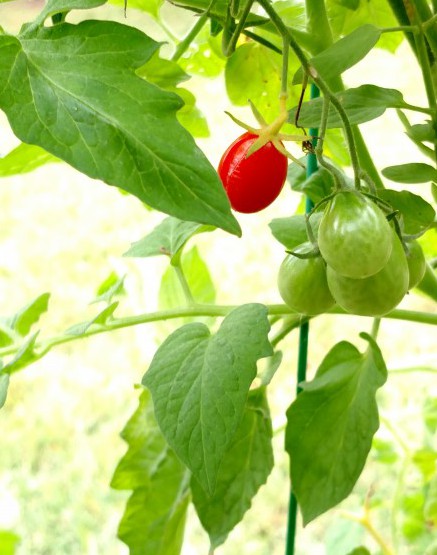
We were super thrilled to find another kind of helper in our garden this year – a little girl. Our neighbor’s tomato loving daughter picked and ate from our garden when she played outside. A child enjoying our home garden and their veggies, that is the perfect garden visitor!

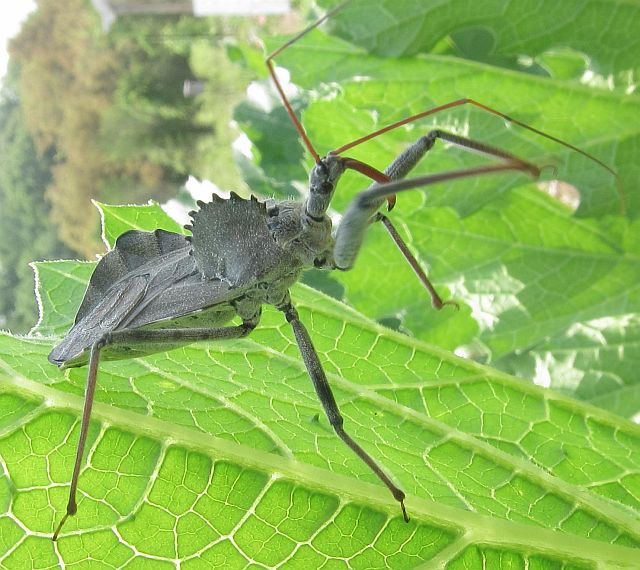
The pest bugs in our garden – squash bugs, flea beetles, Colorado potato beetles and others kept this Assassin Nymph well fed! I found the nymph about 4 weeks ago on an eggplant leaf. Yesterday, I found two mature Assassin bugs. I recognized them by their long hooked beaks and agile legs. Last year, my son found an Assassin bug nymph. I wrote a post describing how we identified it. This year is the first time we found a mature Assassin bug. It is hard to miss these fierce bugs. They resemble a prehistoric animal with its spiky hump and bronze oval mark on its back. The Assassin bug waits for insects then stabs them with its proboscis (the beak) and injects them with a toxin. Its bite is very painful to humans. I am glad for organic help to remove the bad bugs from our garden plot, but I will keep my distance!
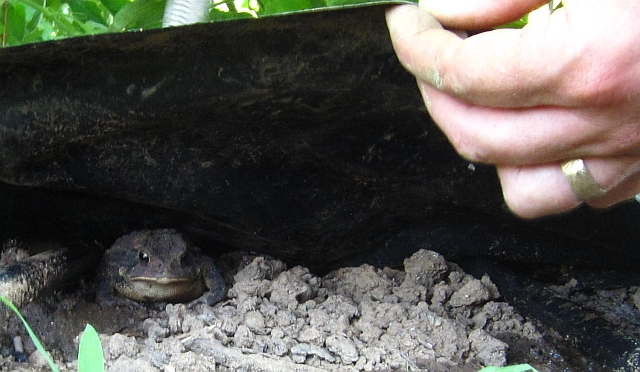 Saturday, while we worked in the garden fertilizing, weeding and securing our unruly tomato plants, we met a new garden friend. My husband met him first when he crawled underneath the tomato plants to clip off the discolored tomato sucker branches. He rested his hand on the black plastic below one tomato plant and felt the cool cover beat against his palm. Startled, he lifted one edge of the plastic and saw two eyes staring back at him. “We got a toad,” he announced.
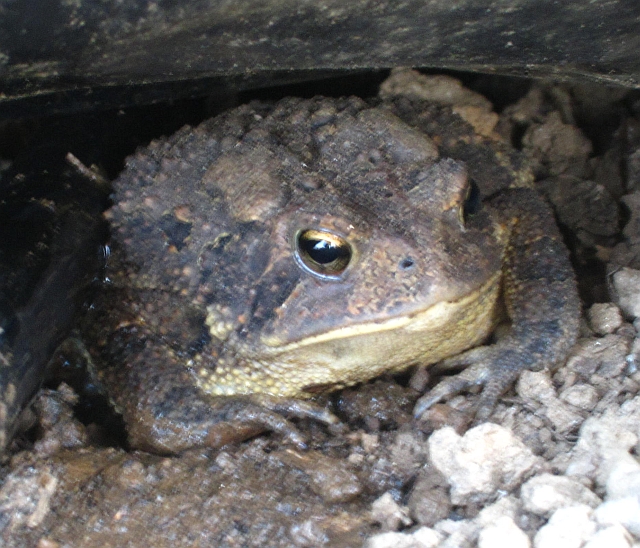
My son and I rushed over to greet our critter friend. He did not move at all while I photographed him. His body looked moist and well fed. He had the perfect toad hideout in our garden – a shelter with water from the drip system and plenty of insects. We welcomed him to our garden plot, told him to bring friends, promised him we’d watch our step around the tomatoes, then covered him back up with the plastic. My son named him “Toady.”
Toads help rid the garden of pests, including insects, slugs and snails. They can eat over 10,000 insects in one summer! Have a feast in our garden, Toady!
My son shouted, “It’s a Stink bug! I am going to smash it!”
“Wait! Let mama look at it, it might be a good bug,” said my husband.
For a gardener, my husband has an unhealthy aversion to bugs. He lets me make the good bug or bad bug call. I put down my shovel to look at the bug. My son pointed to a leaf on the sunflower plant growing out of our compost bin and declared, “There it is!”
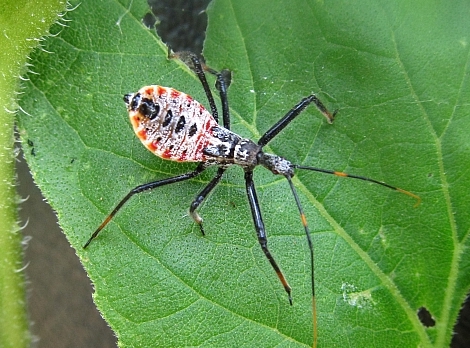
The insect had a colorful body and long antennae. It did not look like a Stink bug. Its legs were too long and graceful. It scuttled so fast around the leaves that I barely caught its image in my camera. We let it be. The next day, I sent its photo to the Home and Garden Center at the Maryland Agricultural Extension. Within a few hours, I received the bug’s identity. It is an Assassin bug nymph!
We are thrilled to have such a voracious predator in our garden plot. This bug will help rid our garden of: aphids, Colorado potato beetles, cucumber beetles, Japanese beetles, Mexican bean beetles, tomato hornworms and many more pests. I am glad we did not squash it!
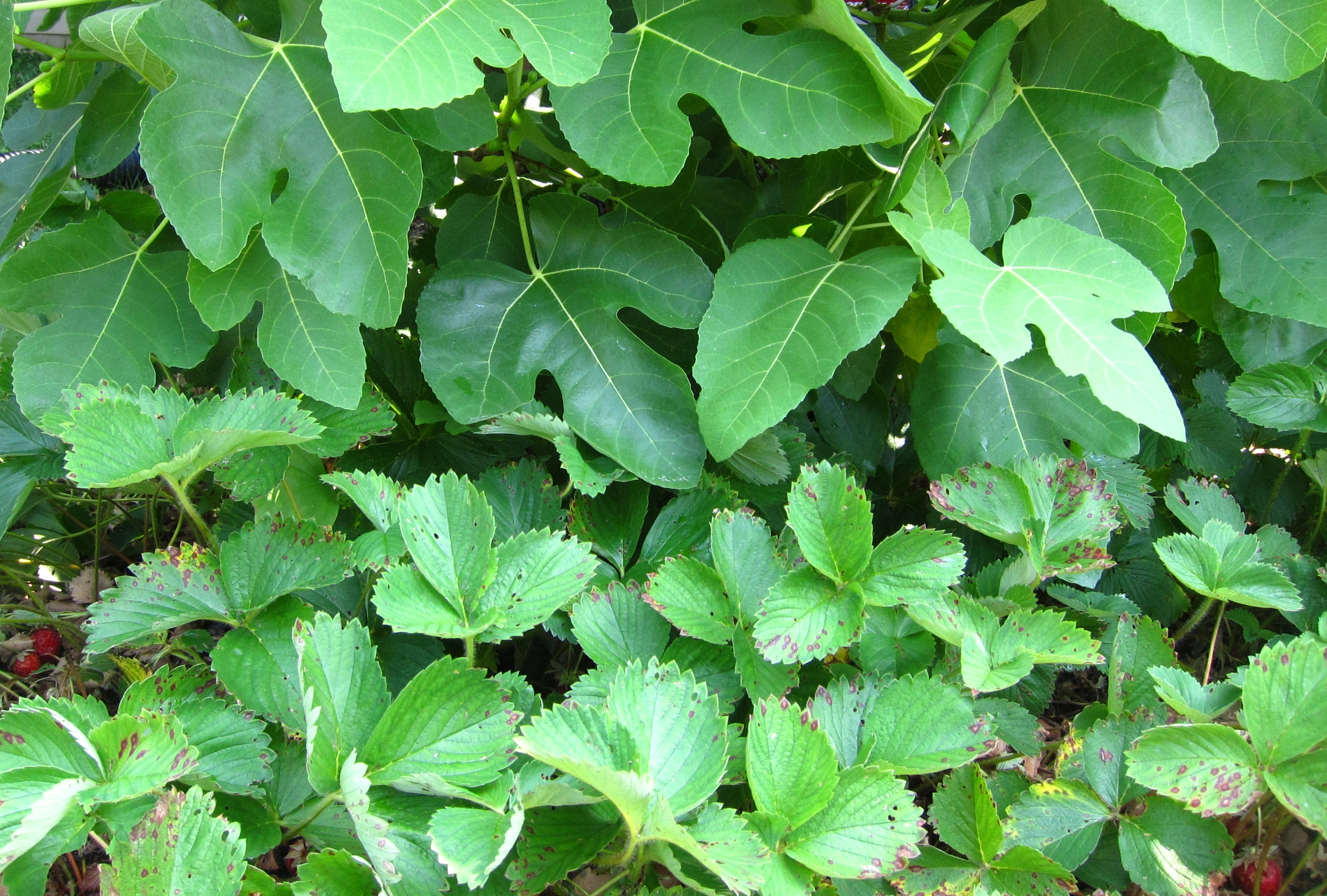
I found a big snake in our backyard strawberry patch! I saw the brown, black and white stripped snake a few days ago as I reached to remove the netting over the plants. It was not a slim little garter snake. This snake was long and coiled beneath the strawberry and fig tree leaves. It was still until it saw me, then it poked its head through the netting, opened its mouth and wiggled its tongue at me. I ran for my camera. When I returned to the strawberry patch, the snake had completely disappeared. A bit nervous, I combed through the strawberry patch with a long stick and picked the last strawberries of the season.
Why did a big snake visit our small strawberry patch?
Snakes do not eat fruit, but they eat the critters (rodents, moles and chipmunks) that nibble our strawberries. Also, the fig leaves and strawberry plant leaves provide a cool hideout for the snake during the hot days. Although a bit frightening, the snake is a beneficial garden critter. It may even be more effective in protecting our strawberries than the netting!
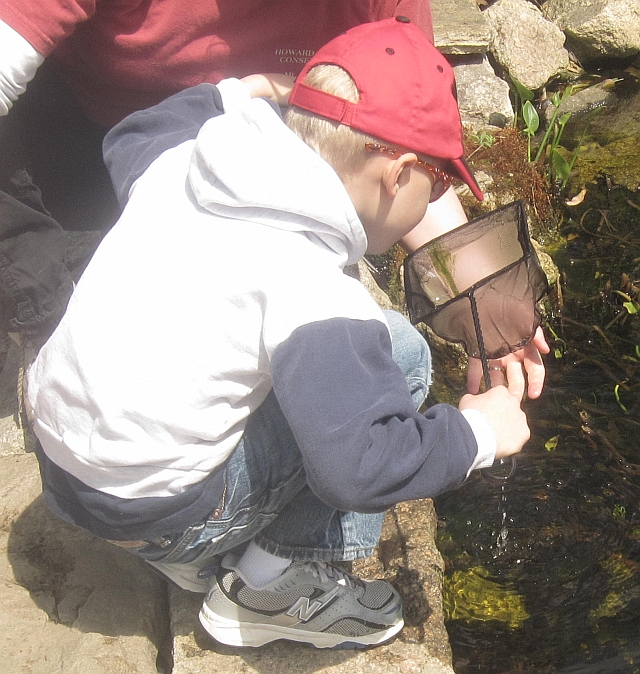
Howard County Conservancy gives my son a big backyard where he can freely explore a creek, run in a field, study wildlife, feed a goat, grow a garden, hold a wiggling tadpole and observe its eyes under a magnifying glass and simply learn to value our beautiful natural world.
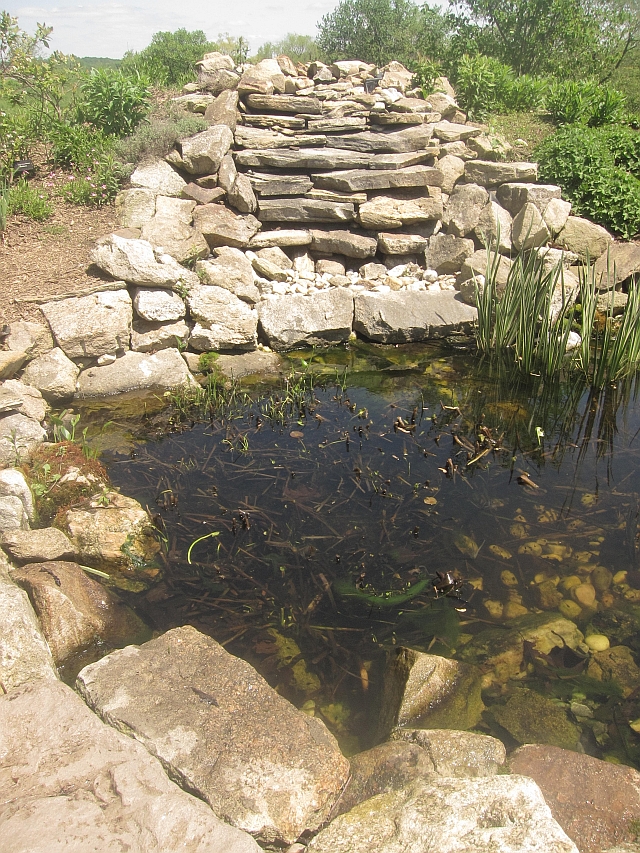
Last weekend, our family worked at the Howard County Conservancy. While my husband mowed the grass between the plots in the community garden, my son and I assisted with an Earth Day project. The stone waterfall in the Honors Garden was temporarily turned off because thousands of tadpoles were living in it.
Our assignment, help relocate the tadpoles to a nearby creek in the Conservancy. A patient and knowledgeable Conservancy volunteer guided my son. She helped him gather tadpoles in a net and place them in a container with water. Then he carried the little oval-body-tailed swimmers about a 10 minute walk to the creek. We stepped through mud, rocks and weeds to get to the edge of the creek. My son slowly poured hundreds of tadpoles into the quiet creek.
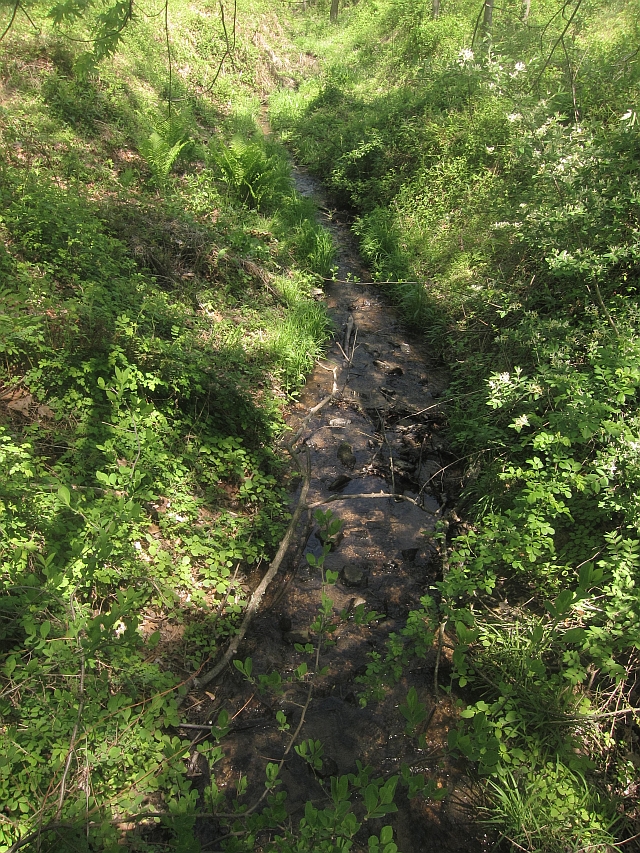
We watched the tadpoles adjust to their new home. The strong swimmers tried to swim upstream until they found a pocket of still water between some rocks. Others just let the stream carry them to the calm water. We imagined the creek filled with frogs this summer. We will look for them in June. The meandering creek gives them plenty of space to thrive.
The frog population in urban communities is threatened by the commercial use of pesticides to maintain lawns. We want to help frogs and toads thrive. They are good because they eat garden pests and insects that can harm plants and vegetables. How are you helping frogs and toads thrive in your garden?
 Our Garden Plot