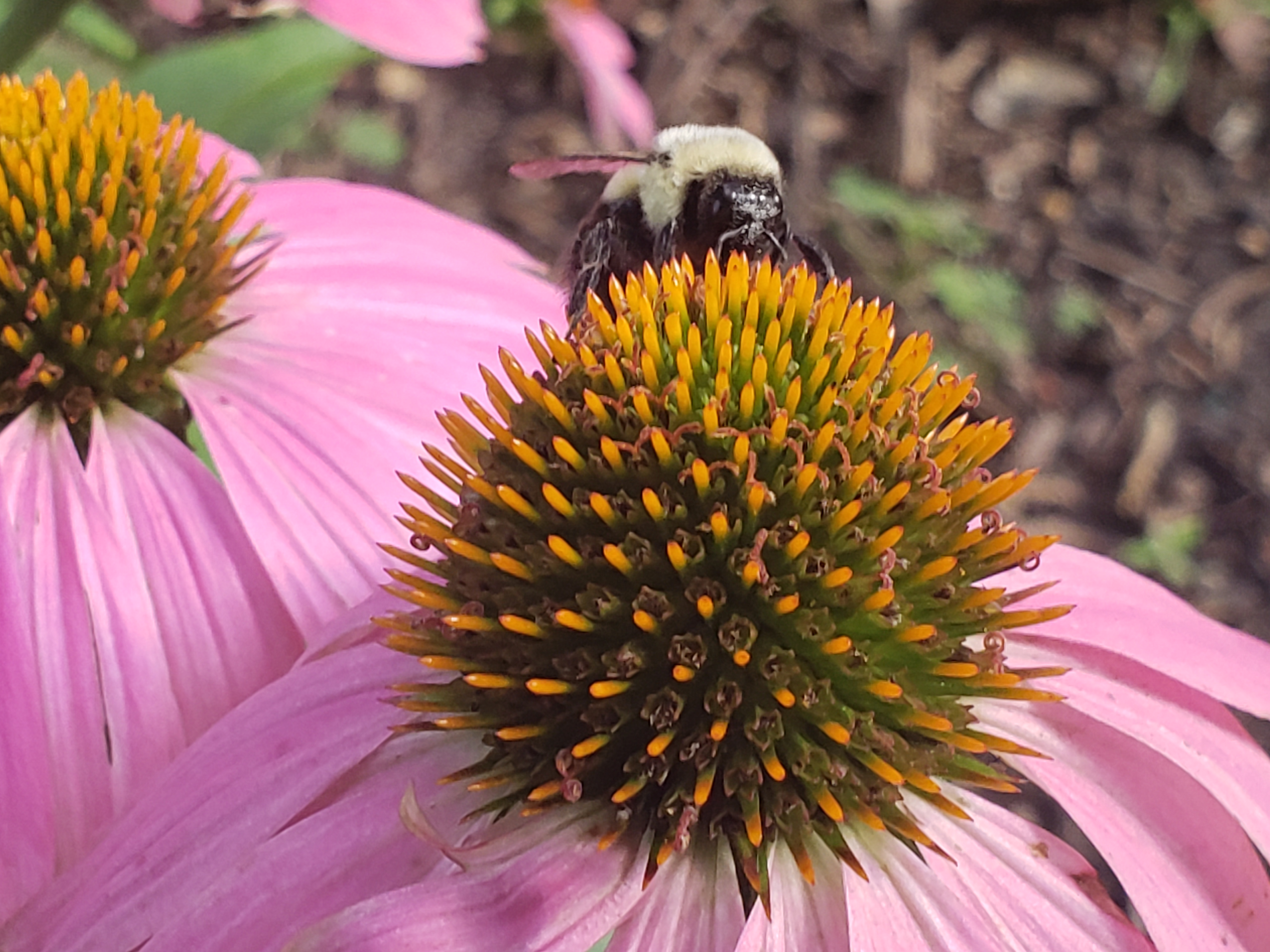
Happy to see bees, dragonflies and butterflies swirling around and settling on our flowers in our new small pollinator garden. The coneflowers are flourishing this summer.

Happy to see bees, dragonflies and butterflies swirling around and settling on our flowers in our new small pollinator garden. The coneflowers are flourishing this summer.
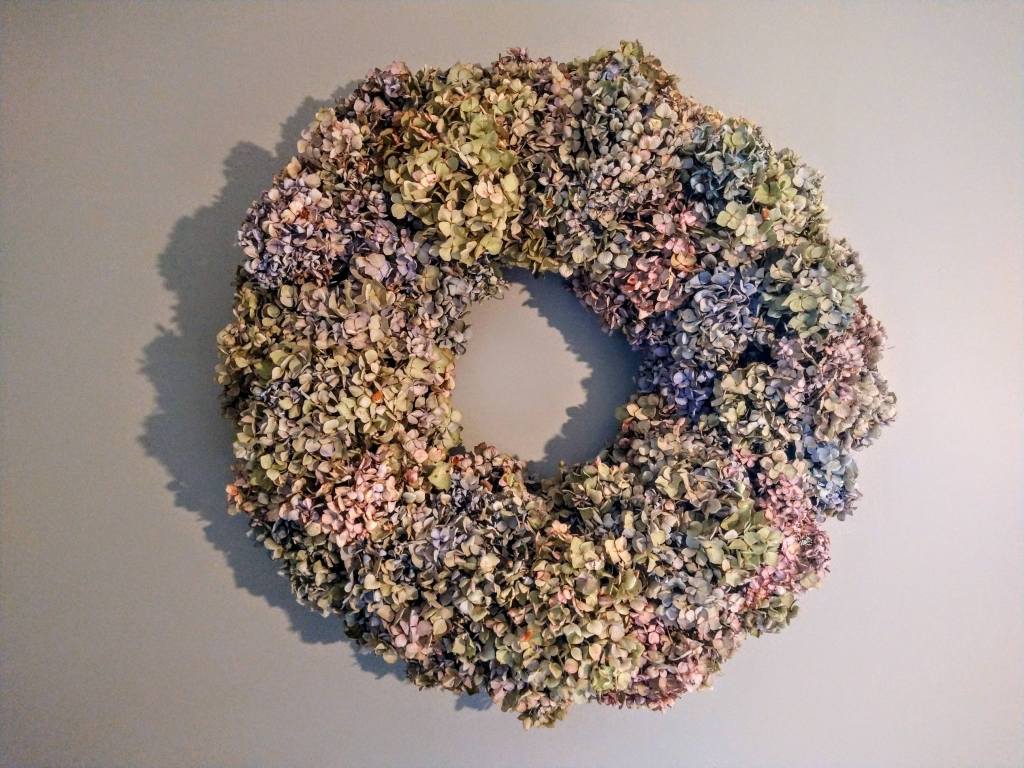
My mother had a thriving business making dried floral arrangements for over 15 years. Through trial and error she discovered the best techniques for drying flowers, collecting objects in nature and creating stunning arrangements, wreaths and topiaries, including a system for creating beautiful long lasting hydrangea wreaths. Our Garden Plot wants to give mom a space to show the techniques she perfected as owner of JoyAnne Wreaths. Our hope is that these tutorials will help others create their own decorative pieces or even their own small business from the beautiful gifts found in nature.
This summer my son’s video production company, Amberillian Productions worked with mom to create the first video in the JoyAnne Wreaths tutorial series.
Mom spent many years perfecting her craft. She is now 82 years young. She creates lovely floral arrangements for friends and family members but she no longer sells her work. There are more tutorials on the JoyAnne Wreaths tutorials page along with the opportunity to make a donation to support JoyAnne Wreaths and any future tutorials.
Please let us know if the tutorial was helpful or if you have any questions. We welcome your ideas for future dried flower arrangement tutorials, too. Thanks for watching and reading!
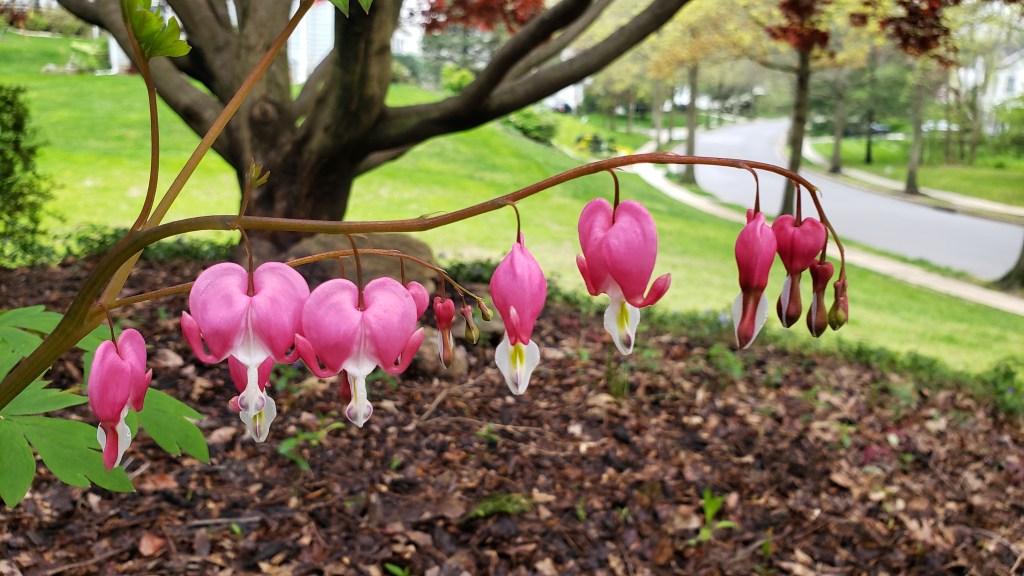
In early April, as the world sunk deep into the despair of the COVID pandemic shutdown, this bleeding heart (Dicentra spectabilis) appeared in the bare ground under our Japanese Maple tree. I never planted it and there were no signs that it grew there last spring. I am grateful for this unexpected plant. It gave me hope.
I struggled to celebrate the beauty of our first spring in our new house. It felt strange to watch my new garden come alive while the world around me became covered in fear and death. The stories of loss, grief, separation, and loneliness were everywhere. We were all in shock. Our lives changed in days. Suddenly, we had to stay home. We gathered only with our families. We feared a trip to the grocery store or contact with strangers. We made face masks and treasured disinfectant. Anything to keep us free from the virus while others walked into danger doing their daily job to care for the sick and help those suffering.
The unknown plant with fern-like leaves under our Japanese Maple grew a sturdy arching stem. An outstretched arm reaching for hope and wonder. I studied it each day. When pink buds appeared dangling from the stem, I recognized it was a bleeding heart plant. The exquisite flowers slowly emerged into open hearts dropping white tears. I cried. The flowers were delicate and strong. A symbol of all the compassionate hearts in this pandemic. People who cared and prayed for others and ultimately the Creator and Lord of all who weeps with us during this time of pandemic. There is beauty in the sorrow.
Despite temperatures greater than 90 degrees and heat advisory warnings, my mom, aunt and I hiked a portion of the Appalachian Trail in Pennsylvania several weeks ago. The shade from the trees and shrubs on the woodland trail gave us some relief from the heat. When we felt tired, we sat on a log, drank water and ate snacks. The sun shapes nudged us forward. We wondered, “What is at the end of the trail curve or climb where the sun stretches wider?” Playful drops of light on forest leaves, rocks and moss led us along the way to our ten mile goal. Not too shabby for our “over a half-century” bodies! We discovered energy we did not know we had and inspiration as simple as sunlight.
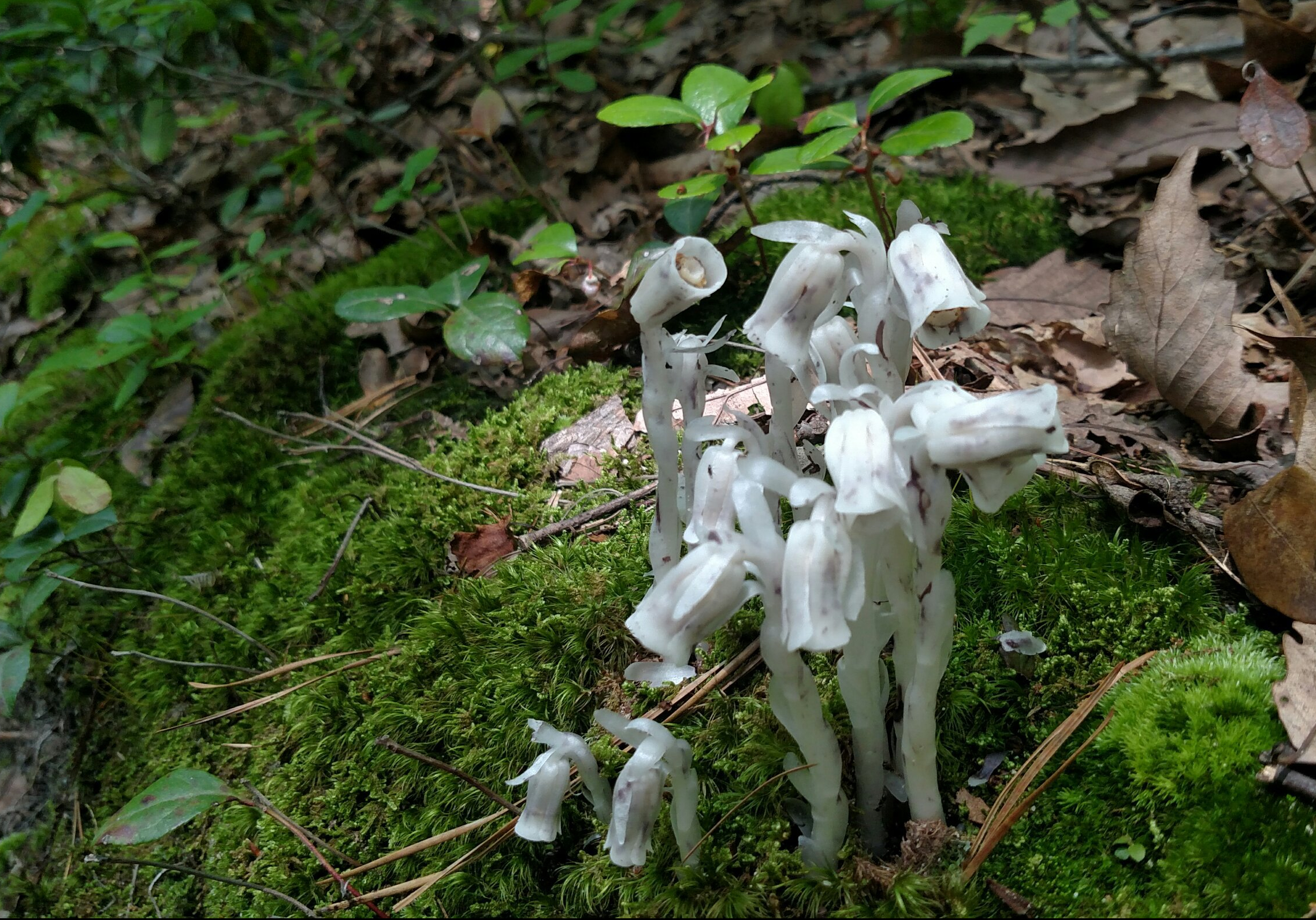
There is an herbaceous plant that does not make its own energy from sunlight. I discovered the plant on our AT hike, poking through patches of moss near tree roots. It is a white rubbery plant with a bell shaped head and notched stalk. It is Monatropa Uniflora other names: Ghost plant and Indian Pipe. The Monatropa Uniflora plant is not a fungus, but a wildflower. It does not gather its energy from sunlight, but from the mutually beneficial relationship between trees and fungi. Don’t we all feel a bit more energized with people who are kind towards each other?
These plants do not have chlorophyll (reason they are not green), therefore it does not use photosynthesis to make energy. Trees use photosynthesis to make sugars and other carbohydrates. Fungi along roots of trees in form of tiny threads underground called hyphae gather minerals and other nutrients from the soil. The trees and fungi share their energy sources with each other. When the Indian Pipe seed makes contact with the fungi hyphae it will use the hyphae’s energy sources (carbohydrates and sugars from trees and minerals from soil) to grow. Eventually more fungi grow around the Indian Pipe’s root ball and supply it with energy. The Indian Pipe depends on energy manufactured outside itself from fungi. Some folks just thrive helping others! And others are humble enough to receive the help!
Click here for more interesting facts about the Indian Pipe plant and its Native American folklore.
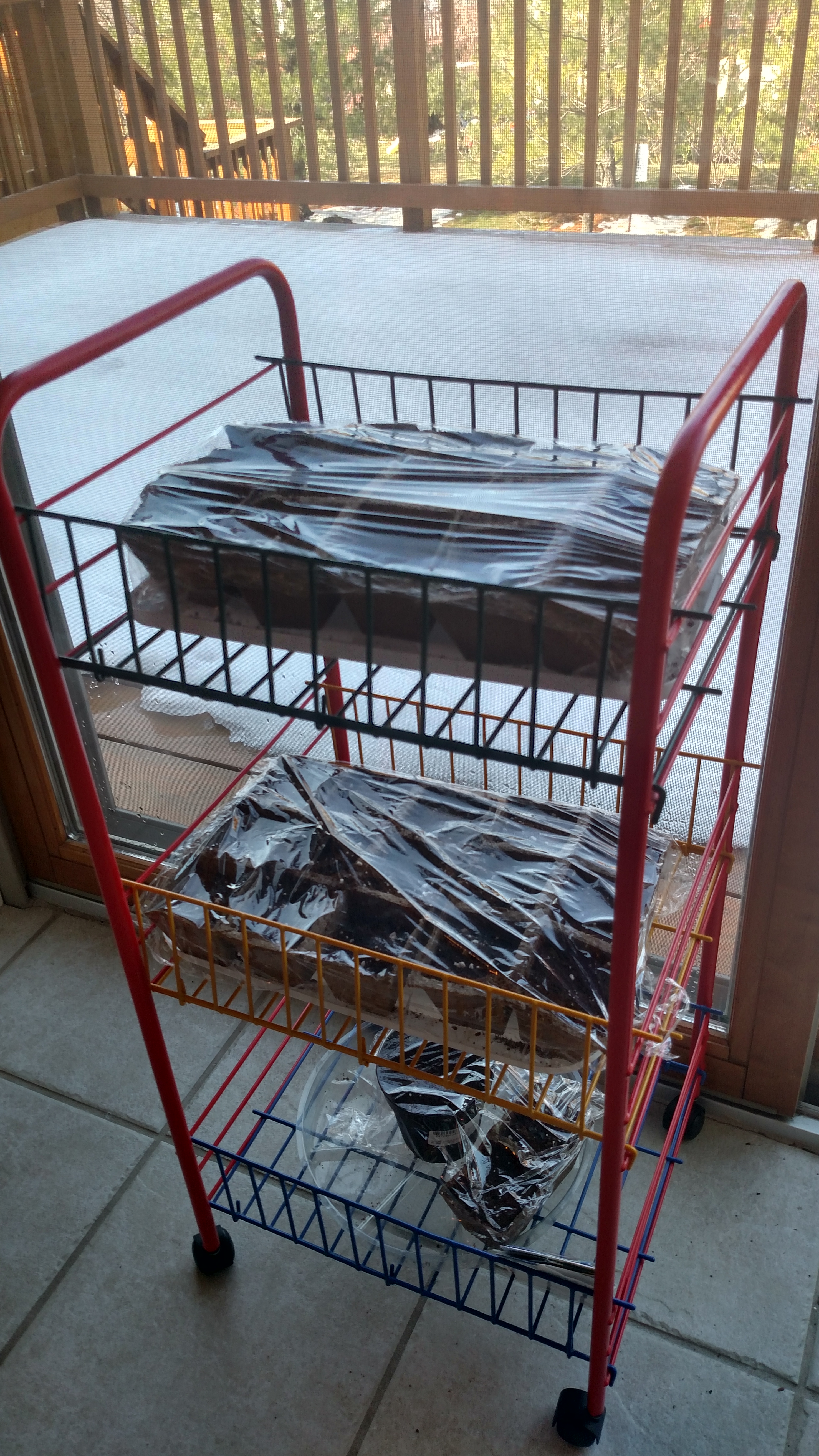 Today thin green spinach seedlings popped out of the seed starter soil, a perfect start to Spring. During our late winter snowfall last week, I planted seeds for our summer kitchen garden. I found this wire rack at the Goodwill and thought it perfect to hold our seedlings. This year I plan to make our raised beds more visually appealing with a mix of flowers planted among vegetable plants. I picked attractive vegetable plants including peppers, eggplants and spinach for our garden below the deck. I will grow patio tomatoes in pots on the deck to keep them from getting unruly. I learned my lesson from last year. My son requested his favorite flower, Forget-Me-Not, so we started those from seed, too. My husband planted garlic last fall, and tall green stalks are appearing around the raised beds already. They will be harvested in July, so I am hoping they will not detract from the plan to have a more beautiful garden that invites relaxation. The snow in this photo has melted. Spring is here bringing many garden dreams!
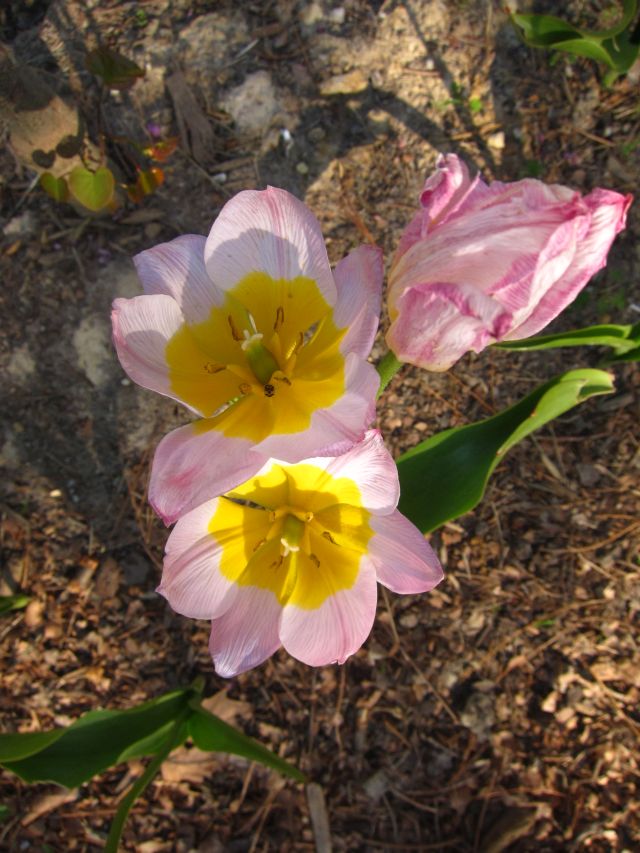 The Lilac Wonder tulips were in bloom for about two weeks in our garden plot. They lasted long enough for a Mother’s Day appearance. These tulips remind me of a mom’s power. There is a bright ruffled circle formed from all the random yellow splotches on each pink petal. Order created from chaos. God’s design. A peaceful home forms as a mom prays and loves each stress splotched life into the center of God’s grace.
Happy Mother’s Day!
Tulip tip: Do not cut the leaves, let them yellow. Yellow leaves on tulips are a sign that the bulbs have stored enough energy and are now ready to go dormant until next spring. If the leaves are cut off before they go yellow, the bulbs will not get enough energy and may not produce a large flower or survive a winter.
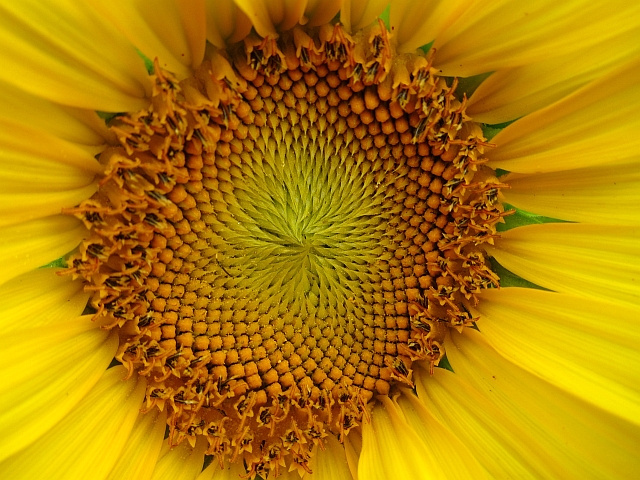
It is August and I am nostalgic for Giant sunflowers. I miss growing them. They are too big for our townhouse garden. I remember when my 5 year old son planted sunflower seeds in our community garden. In wonder he watched them grow fast into hard thick stalks towering over him. Bright and cheerful garden flags waving and smiling over our garden. How could a simple seed grow so tall and produce hundreds more seeds inside the flower’s center?
My son inspired me to write this simple poem over 4 years ago when we played in our sunflower garden.
A Community Garden
A neighborhood of dirt plots,
Garden F-1 is our spot.
Open the gate, down first row,
Here’s the garden we did grow.
See my sunflowers standing tall,
an umbrella, a green wall.
Under giants I will run,
play hide and seek
with the sun.
Our Amaryllis was in bloom all through December. One bulb purchased for 5 dollars at Walmart, produced six large red flowers that looked like trumpets announcing the good news of Christmas, “God is with us.” The Amaryllis is an excellent Christmas flower because it is glorious and does not have a strong odor like the Paperwhites. The Christmas cactus also produces beautiful odorless flowers during the holidays. Our Christmas cactus has faithfully produced delicate slender red flowers every year for almost 10 years!
We did not have a Poinsetta plant in our home this year, but I learned more about the history of this Christmas time flower from my son’s library book, Legend of the Poinsetta. It is a delightful Mexican legend of a little girl who offers weeds to the Christ Child as her gift for Christmas. She presents her humble gift with a sincere heart and the weeds turn into hundreds of Poinsetta flowers all around the figure of baby Jesus in the Christmas procession. My son’s brief review of the book, “You should read it if you like flowers. My favorite part is when Lucida put down the weeds and flowers started appearing.”
What is your favorite Holiday flower?
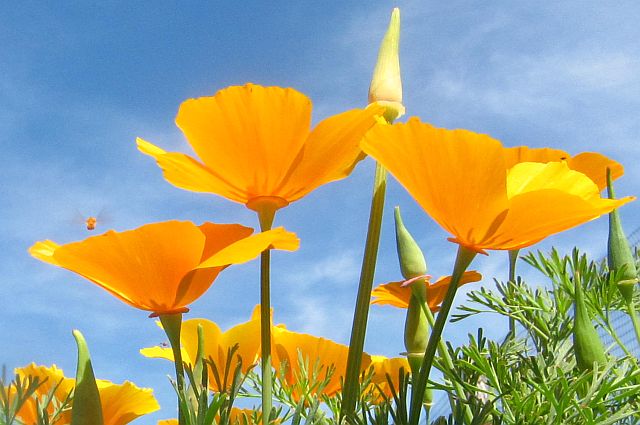 The Poppies are blooming in our garden plot. They seem to laugh and embrace the sun. My son said, “they look like they are talking to the sun.”
They are hospitable to the bees, too. We are glad they are attracting pollinators to our garden plot!
Do you see the moving bee above the Poppy flower on the left?
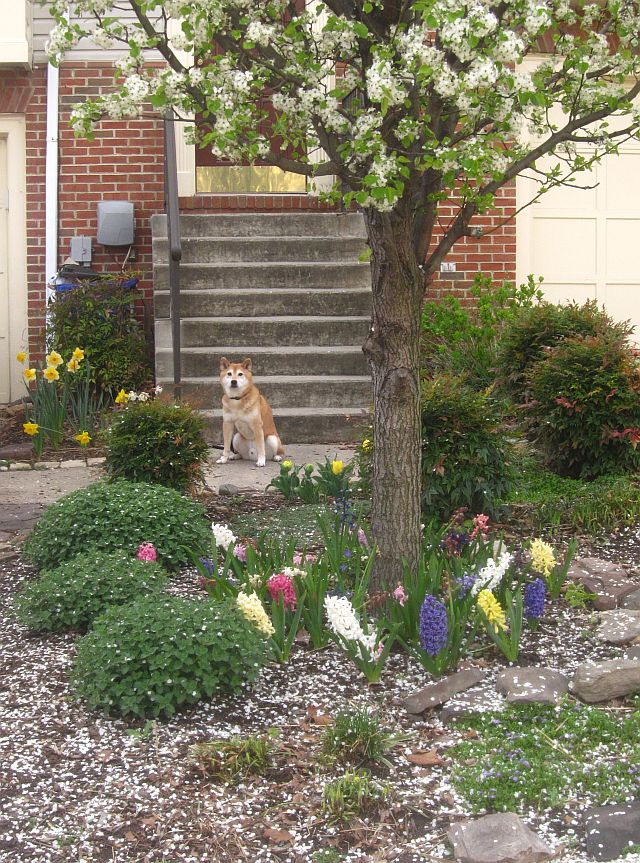 The Spring blossoms are early this year. Petals are sent into a flurry from a March breeze or a whack of my son’s walking stick. Our front yard is already sprinkled with white petals from the Bradford Pear tree blossoms.
The new bulbs we planted last fall are full bright flowers – Iris Bucharia – 6″ tall yellow and white blooms hide inside spiked green fanning leaves; Tulip Monte Carlo – 6″ tall fluffy yellow double blooms float near the rocks along the sidewalk in front of the steps; and Trumpet Daffodils – 18″ tall ruffled yellow and white blooms wave next to the stairs.
Our dog, CJ, welcomes any new flowers because they may bring bees. He has a passion for catching bees. With cat-like reflexes and strong jaws, he will pounce and snap at flitting bees, totally focused. Even the chance for a long awaited walk on the leash won’t break him away from his bee-catching obsession. Flowers bring joy to us all!
 Our Garden Plot