Nests

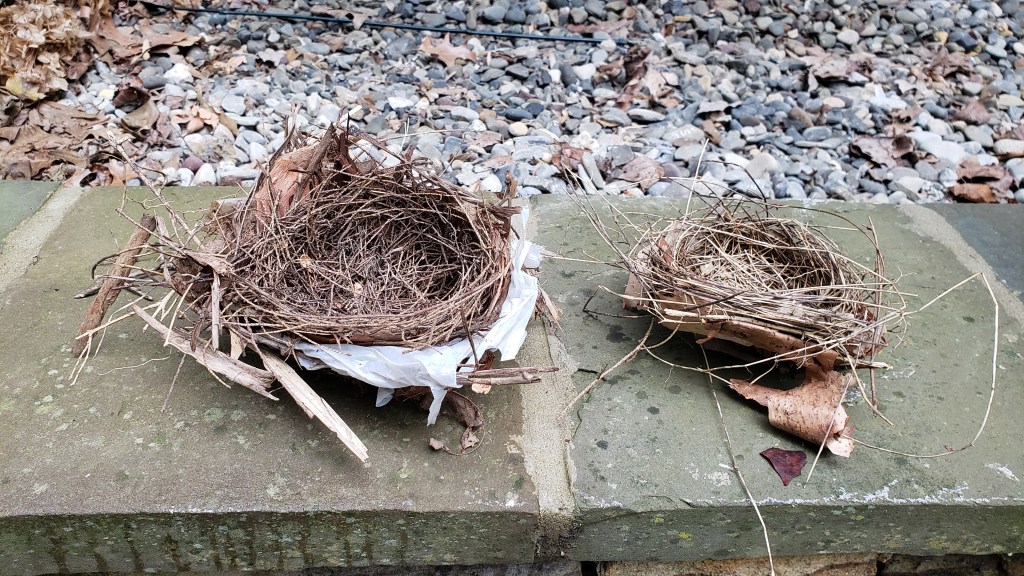
Two empty nests found in Viburnum bush this fall (notice the plastic weaved into the large one).

We pruned our overgrown Viburnum bush a few days ago and found two empty bird nests tucked in the tall branches less than two feet apart. I discovered why our dog, Ruby always stared up and barked at the Viburnum bush this spring and summer!

I took the nests out of the bush, then I wondered if that was the most environmentally friendly way to handle empty nests after breeding season. I consulted Cornell Lab of Ornithology and learned that birds will not return to nest next year. Birds make a new nest each year so it is okay to remove an old nest after breeding season. It is best to wear gloves when removing a nest. Nests can have parasites, bacteria, mold and other germs that can affect humans. An old nest may be discarded in a plastic bag or a compost bin.

I learned some other interesting facts, too. Birds will add human trash to their nests like the piece of plastic bag weaved into the larger nest that I found. Plastic can be dangerous in a nest. There have been reports of chicks that have been strangled by plastic. Some birds even put cigarette butts in their nests. The nicotine and other chemicals in discarded filters act as a natural pesticide that repels parasitic mites. Also, the cellulose butts provide useful nest insulation.

All bird watchers may be interested in a big event coming on October 17, 2020! EBird.org is having a global bird-watching event with the opportunity to win a great pair of Zeiss Binoculars!

Happy bird-watching!
Busy Bird

img_20180621_223716-1998415256.jpg

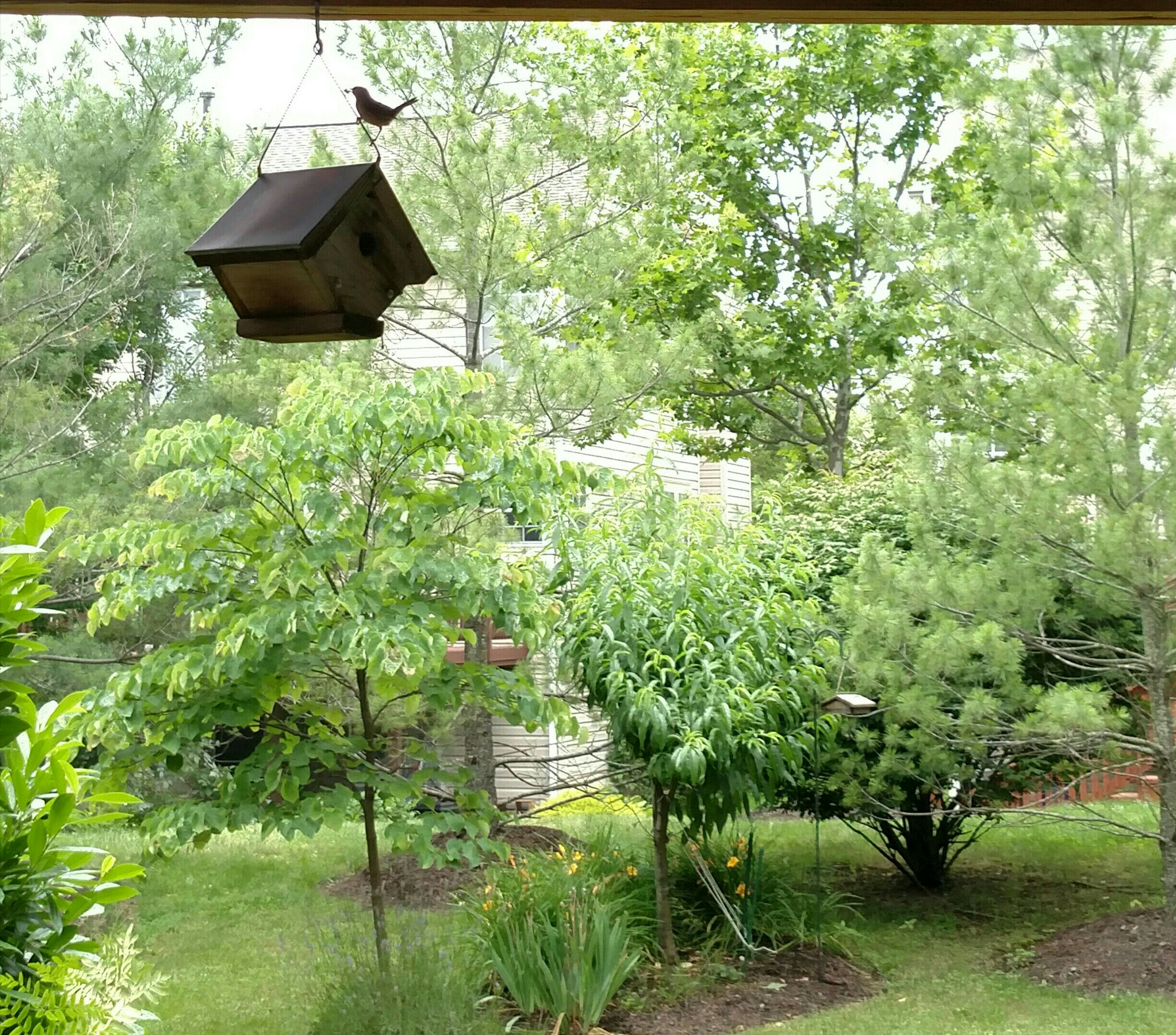
First day of Summer and our backyard garden is lush green from all the rainy days in Spring. The ground cover, Mazus Reptans feels like a cool moist sponge under my bare feet. My toes sink into the natural plush carpet until I hear vibrating gurgles and clicks inside and around our hanging bird house. I disturbed feeding time for the house wrens. Baby wrens and parent wren are sending secret messages to each other. I go back inside my townhouse, close the slider screen door and watch the nature show. The scene repeats many times. Parent wren carries one rice-sized morsel in tip of beak, slips into the bird house for a few seconds, peaks through round opening, dives out, flies away, disappears briefly and returns with another single morsel for the hungry babies.

It is amazing to watch the parent wren’s focus, perseverance and diligence. Each food speck is beak-carried and flown to the nest with urgency. I wish I had this wren’s energy and discipline when I prepare dinner for my family every night. I am usually unmotivated, disorganized, distracted and quick to take bites for myself when I am cooking. The wren and its single-morsel flights reminds me of the importance of being present in each step of the cooking process. Each moment is valuable. This is true for anytime I am serving others. Being mindful will result in peace that is as natural and comforting as the wren’s instinct to nurture its babies.

Galatians 6:9 And let us not grow weary of doing good, for in due season we will reap, if we do not give up.

The Nest

Robin's Nest

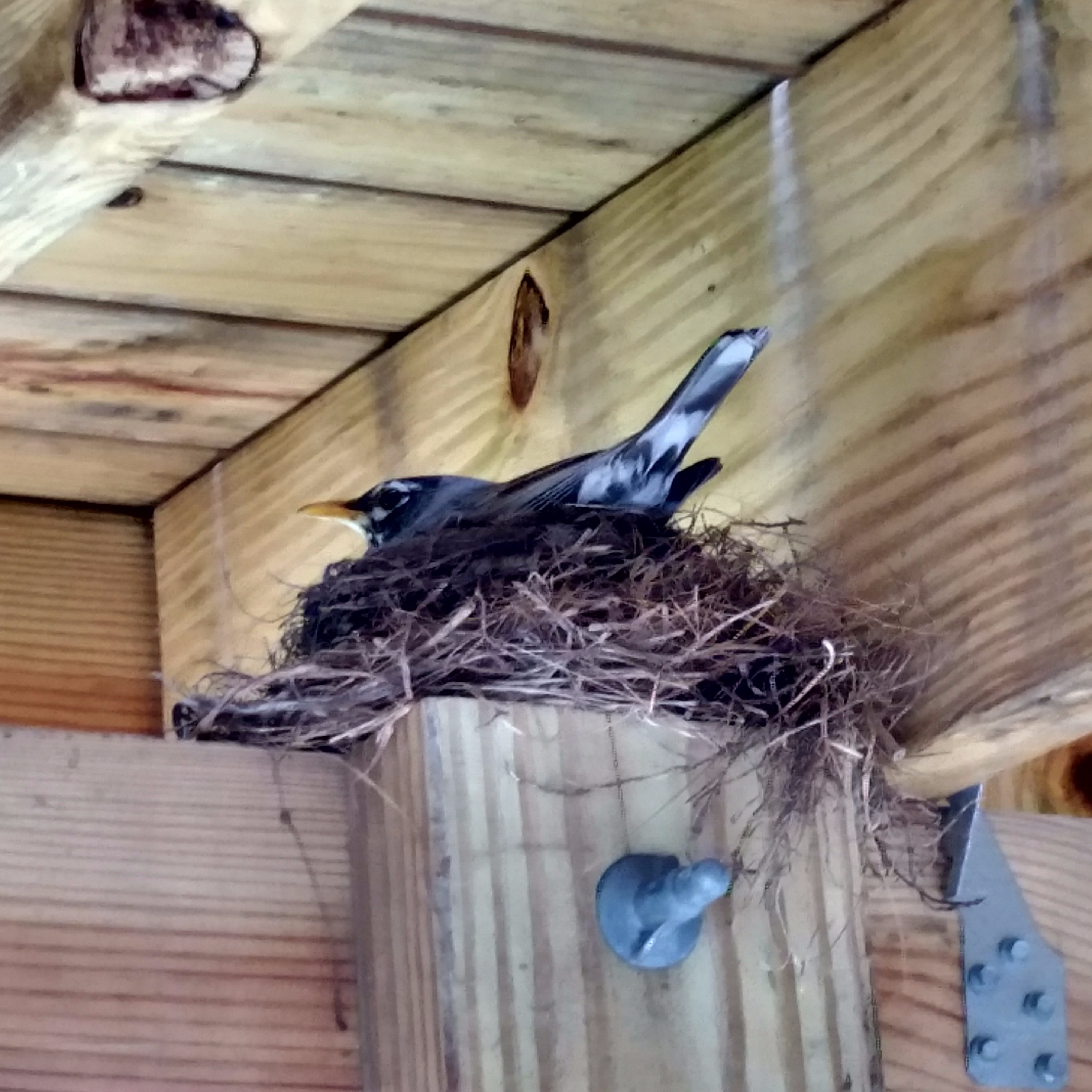
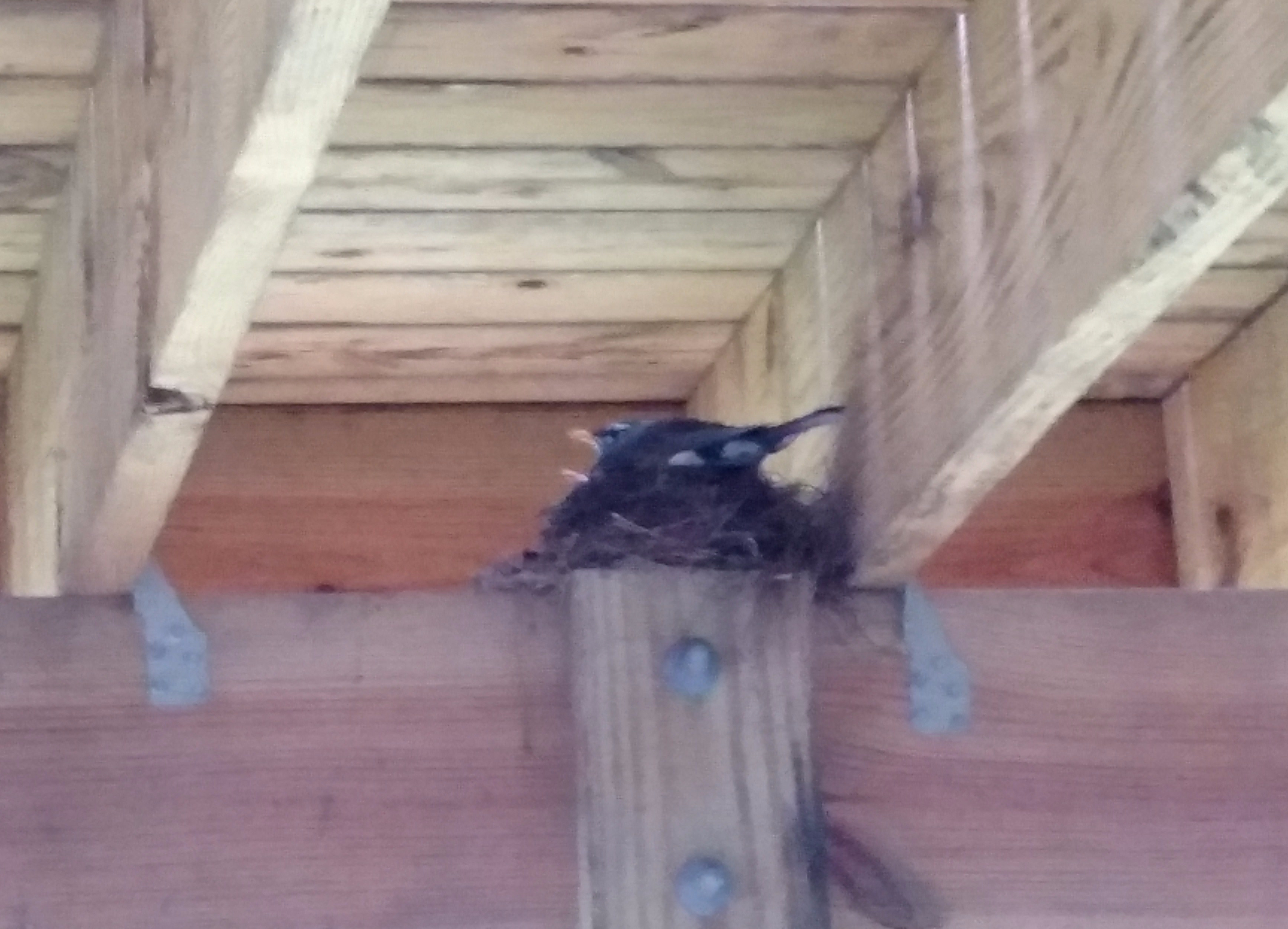
In mid April we found a new nest on the rafters under our deck. We felt like expectant parents the day our son announced he saw a Robin sitting in the nest.  We tried to limit our activity around the nest.    But one evening my husband and I assembled a shed on our patio while our Robin sat still in her nest the whole time.  The Robin even tolerated us standing on the deck and looking through the narrow space between deck boards into her nest. We glimpsed the transformation – three bright blue eggs to black and pink squiggles to feather balls.  From our basement slider window we watched the Robin fly to her nest with a worm hanging from her beak.  The chicks greeted her with wobbly bobbleheads and open funnel-like beaks.  Space is tight in the nest, now. See the two beaks?

Two beaks
Two beaks

Great Backyard Bird Count

woodpecker

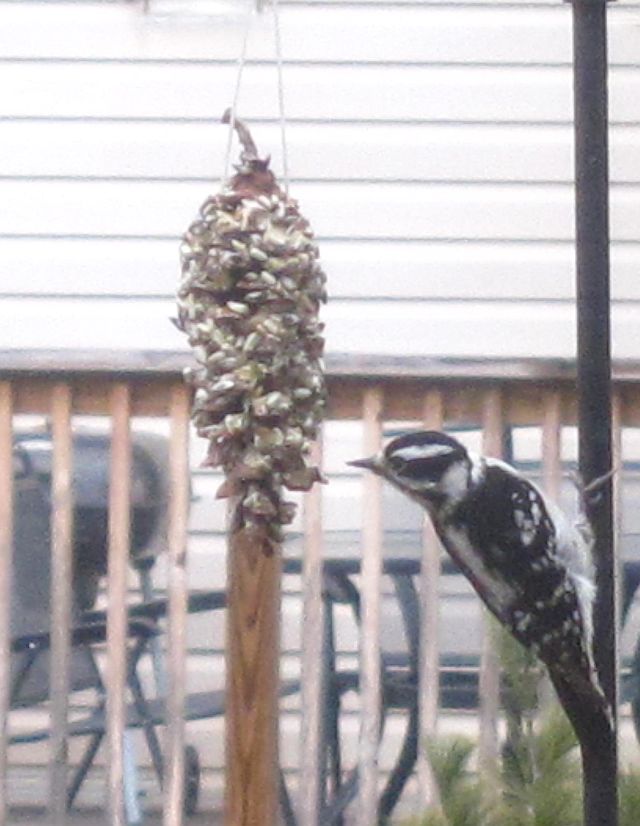
Chickadees and woodpeckers dine at our homemade pine cone bird feeders.  We look forward to counting them in the next Great Backyard Bird Count on February 17 to 20, 2012.

The Great Backyard Bird Count website has lots of information about birds and fun activities to help kids develop birdwatching skills.  The site explains why the count is important for scientists, has a video that describes how to participate in the bird count and generates a list of the birds you may find in your area.   Would you like to join the count? You could win a prize!

Sunflower and Gourd Seeds Planted

sunflower and gourd seeds planted

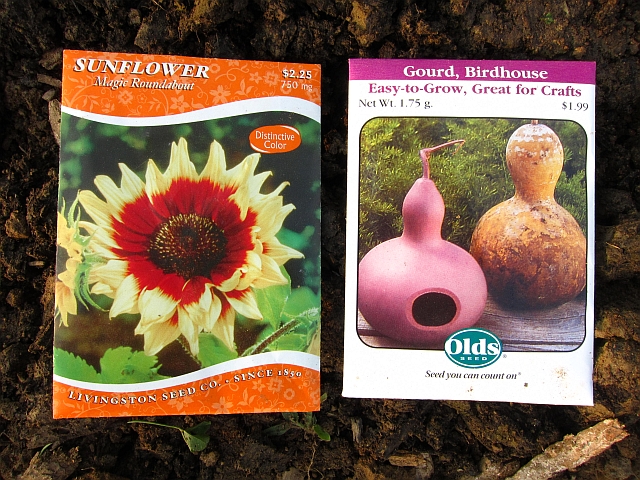
My son has his own garden bed in our community garden plot. For the last two years he has only planted Giant Sunflower seeds in his garden bed. This year he planted Bottle Gourd seeds along with a new variety of Sunflower seeds.  My son plans to make his own birdhouses and musical instruments from the gourds he grows (we will consult the Gourd Reserve when it comes time for harvesting and drying the gourds).   He planted Magic Roundabout Sunflower seeds,  a  hybrid sunflower that branches out and produces more than one flower per plant through summer into fall.   I plan to brighten our house with cut sunflowers this summer and fall!

Everything from our garden plot does not need to be edible to be useful!

Strawberries

strawberries under netting

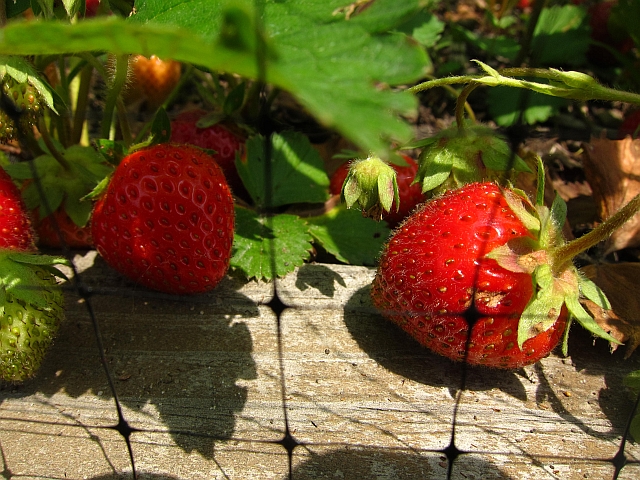
Strawberries are abundant and ripe now!  We have two supply sources for fresh picked strawberries..our backyard and at our community garden plot. The strawberries in our backyard have less damage this year because we covered them with netting.  Only the bugs have access to the fruit, not the birds so our yields are greater.  We already picked two and a half pounds from our backyard patch.   Last evening we picked another 2 and a half pounds from an abandoned plot in our community garden. A woman saw my son getting into mischief in our plot so she asked him if he wanted to pick the strawberries from the unclaimed plot next to her. The plants were rambling into her garden space and loaded with berries.  We picked and picked.  The strawberries in the community garden were not covered with netting and did not seem to have damage from hungry birds.   Could it be because the birds  have more natural food sources at the Howard County Conservancy than in our backyard?

What organic methods do you use to protect your strawberries?

Spinach Pesto

spinach picked from our plot

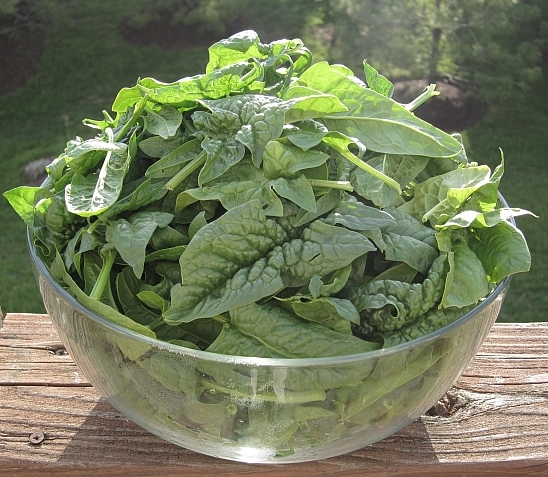
The spinach in our garden plot is starting to flower so I picked a grocery bag full of spinach this week.  Slugs like green leafy vegetables so I always clean greens by putting them into our kitchen sink filled with water.   If there are slugs hidden in the greens they will float to the water surface in several minutes.   Before I cleaned our huge batch of spinach, I soaked a batch of fresh picked green leaf lettuce and found two small slugs!  Spinach leaves are tough so I put them through a soak and rinse cycle three times.  We ate the squeaky clean spinach in salads all week!

Today I made spinach pesto, mixed it with ricotta cheese and created a white pizza topping. Yummy!

Spinach Pesto is easy to make by pulsing the following ingredients together in a food processor.
Ingredients:
2 cups fresh spinach leaves, well-washed and stemmed
1/2 cup walnuts
1/4 cup parmesan cheese, freshly grated, not canned
2 garlic cloves
2 tablespoons extra virgin olive oil
1/4 teaspoon sea salt
1/8 teaspoon fresh ground black pepper

Do you have any surprising spinach recipes?

Our Polite Mourning Doves

PLEASE, YOU eat first.
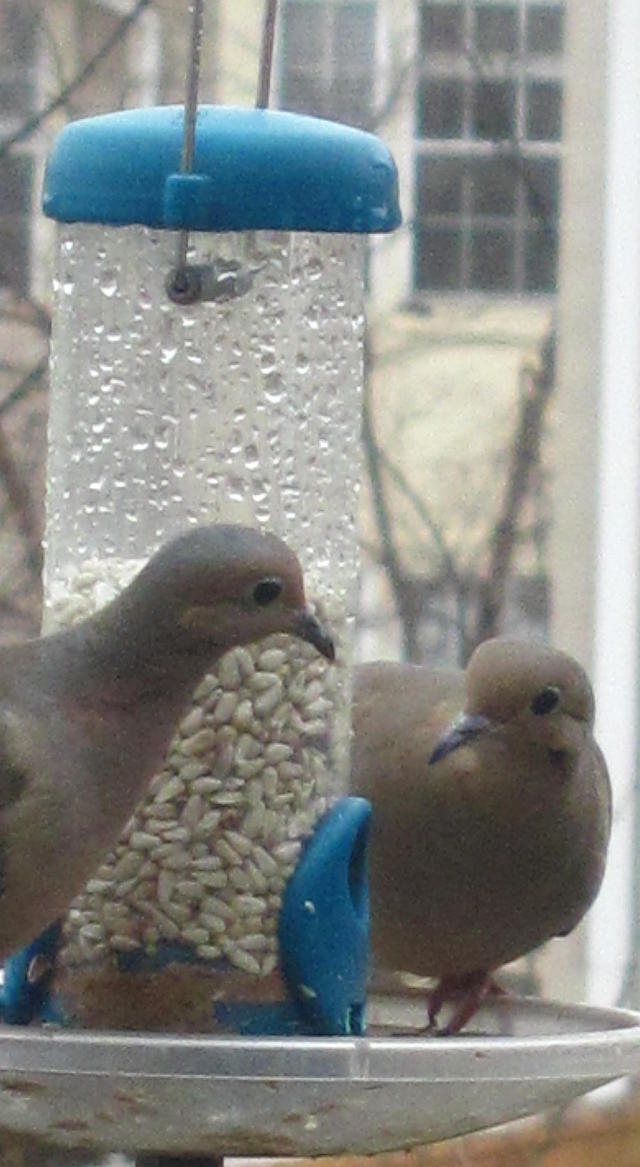
This pair of doves visit our feeder regularly early in the morning or afternoon. They are a gracious couple. They seem to wait their turn at the feeder. House and purple finches, chickadees, starlings, woodpeckers and tufted titmice come to our feeder for a frenzied quick nibble then they disappear. The mourning doves don’t eat and fly away, instead they hang out for awhile before and after they eat. Sometimes they will even sit on the feeder tray or on our deck railing, tuck their heads between their shoulders and take a nap. Their soft song of cooOOoo-woo-woo-woooo, reminds us to check if our feeder needs more safflower seeds. There are benefits to being present, patient and polite!

(Note: we use safflower seeds because squirrels do not like its bitter taste)

Bradford Pear Tree

Bradford Pear Tree Fruit

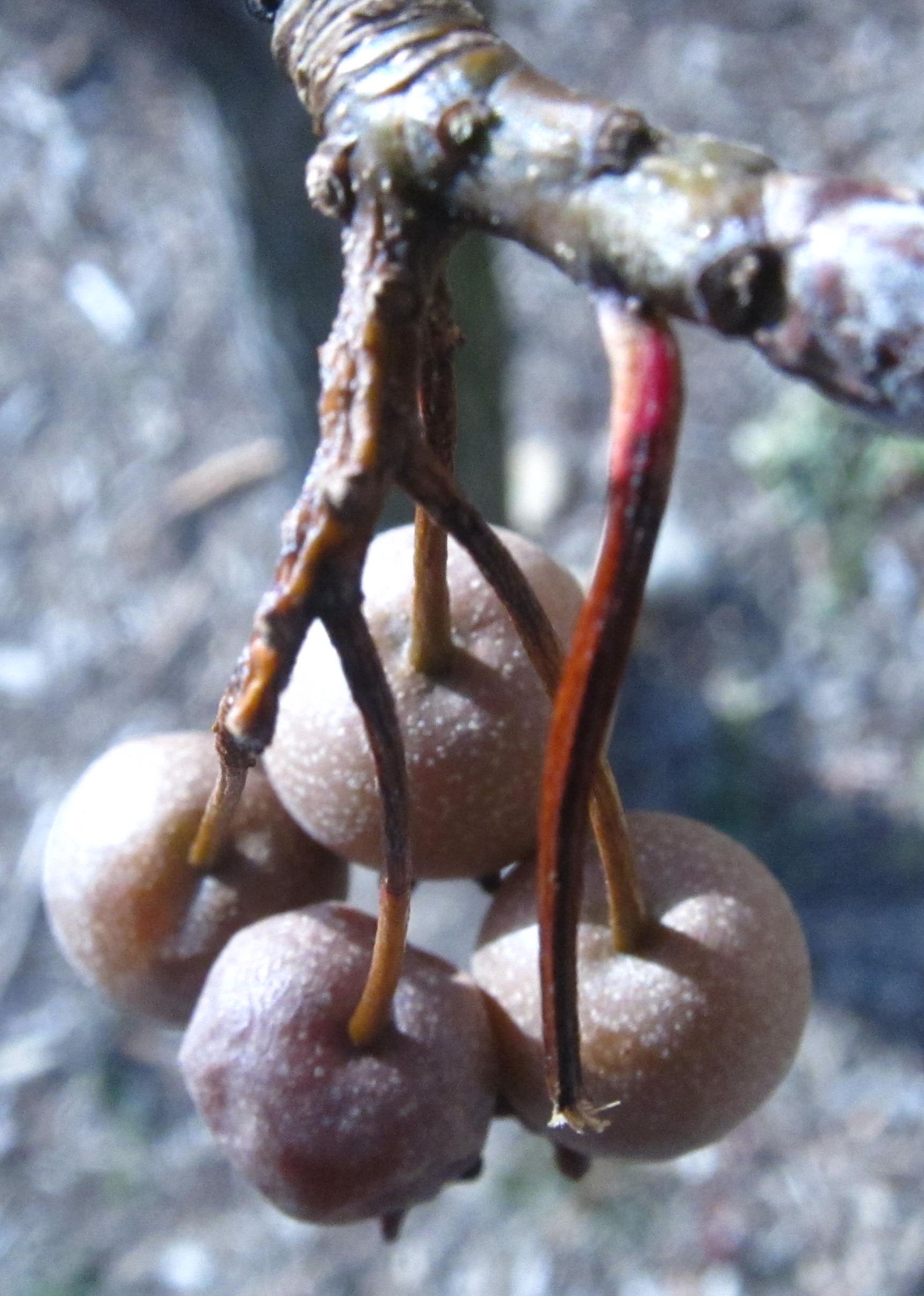
There is fruit growing in our garden despite the cold temperatures and one inch snowfall yesterday.  The Bradford Pear tree in our front yard finally dropped all its leaves and is now adorned with its own little ball ornaments.   The tiny pears are inedible to humans, but tasty to birds.  Last year,  huge flocks of Starlings swirled around the Bradford Pear tree like dark smoke then perched on the tree’s bare branches and pecked at its dangling pears.  We haven’t seen the Starlings descend on our tree yet this season.

One of the Nandina shrubs in our front yard has clusters of bright red winter berries.  I haven’t seen a bird munch on these nutritious red berries yet because they harvest the Nandina berries in late winter.  I am glad our garden has winter treats to attract hungry birds.  The fluttering brown, grey, red and blue feathers add life to the quiet  winter garden.

What kind of winter treats for birds or other critters do you have in your garden?