Our Christmas Tree

This week I brought home carrots and radishes from our garden plot. We still have carrots, spinach and turnips growing under row covers. Today we did not visit our garden plot, but searched for a Christmas tree.

Our son found our Christmas tree today at a local Christmas tree stand.  He insisted on bringing home a particular lopsided and thin fraser fir tree that  fell on him.  The unsteady tree gently fell as my son quickly weaved through the maze of Christmas trees standing at their posts.  Immediately after the tree toppled, my son figured the tree picked him and wanted to come home with us.  My husband and I continued to look for a fuller and more conical shaped tree. But our son did not give up.  He demanded we bring home the 6 foot tree that tried to catch and tickle him.  We could not find a better tree to fit in our home.   The lopsided tree now stands steady as it shines bright with white lights and cherished ornaments.

our tree holding my favorite ornament

A Peppery Thanksgiving Thought

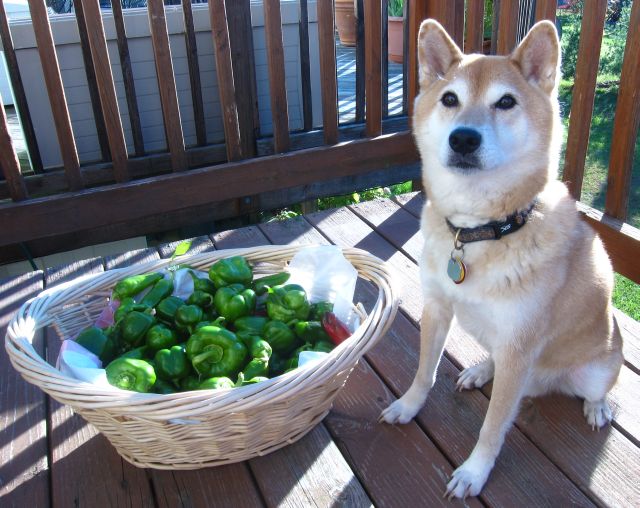
My Pepper Guard Dog

A couple week ago I pulled out the last of the pepper plants in our community garden plot.  I collected several pounds of small to medium-sized, but crisp and tasty bell, banana and cubanelle peppers.  It took a little creativity to use all these peppers.  I made pepper and cheese casserole,  Italian turkey sausage with sauted peppers and onions, tortilla chicken soup with peppers, and roasted peppers marinated in garlic and  extra virgin olive oil.  I blanched, then froze about eight cups of chopped peppers.  Finally, I took a grocery bagful of peppers to our local food bank.   I am happy to say that we did not waste our last crop of peppers!

Here is my peppery Thanksgiving Day thought….just like my peppers, I do not want to waste  the gifts, big or small that God gives to me.  In God’s economy a grateful heart grows and produces more fruit.

May we all give thanks and celebrate the blessings in our lives this Thanksgiving holiday.    Have a safe and joyful Thanksgiving Day!   (and enjoy the leftovers!)

Saving Fall Leaves for the Garden

The wind swirls and scoops up leaves from the neighborhood and dumps them into our tiny front yard.  The yard is covered with brown leaves when  the only tree in it,  a Bradford Pear, still has its green leaves.  Every fall we collect at least 4 tall bags of  these extra leaves.

We are grateful for the extra leaves because we save them for our garden plot.  We keep our compost healthy by adding the extra leaves to our compost bin. The brown carbon rich leaves balance the green nitrogen rich kitchen waste in our composter.  We add a dense layer of  minerals and nutrients to our garden plot by mulching the garden soil with the leaves.   We provide winter protection for tender plants in our garden by surrounding them with the leaves.  When our fig tree was smaller,  we protected it from the cold winter winds by covering it with  leaves and a  burlap blanket.

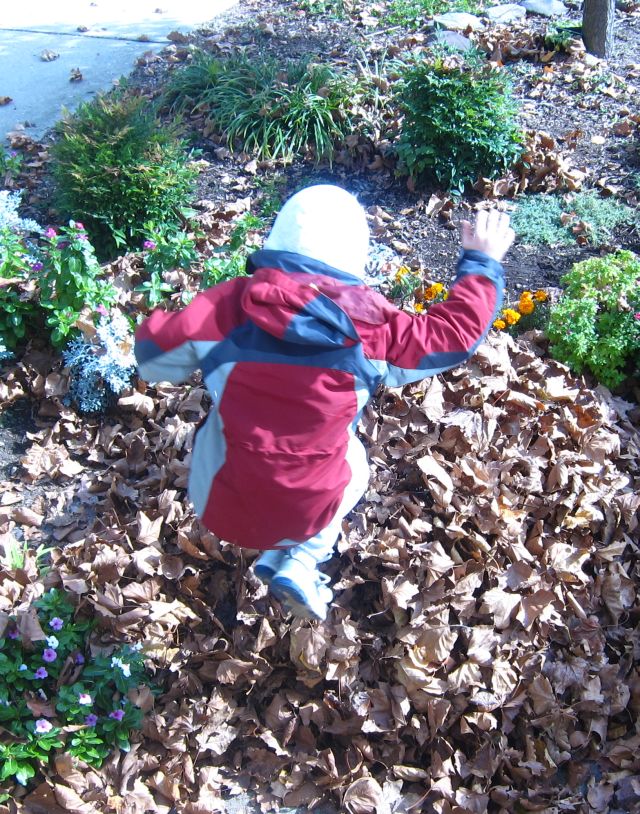
My son jumping into a pile of our extra leaves.

This fall, gathering and chopping our leaves became easier due to our new  electric leaf blowing-vacuum- mulchinator.  We do not have a grass lawn in our front yard, but perennials and bushes.  It is tedious to comb out the leaves from our Nandina, Hydrangea and Azalea bushes and flower beds.  Instead of raking the leaves into piles and chopping them with a lawn mower, we gently vacuumed up the leaves and created mulch at the same time.  Our new garden toy is gentle on our plants and saves time.  Fantastic!

We did not vacuum up all the leaves immediately.  We saved some for my son and dog.  My son likes jumping from our front door steps into a mound of leaves then pretending he is a bird sleeping  in a nest.    My dog likes to catch, in his mouth, bunches of leaves tossed up in the air.

How do you collect and use or play in your fall leaves ?

Garlic

Many of the recipes I cook begin with garlic.  I pound, peel, and crush garlic then let it sizzle in hot oil to start a soup, stew, tomato sauce, chili, and more. We grew garlic for the first time in our garden plot this summer. We planted the garlic last fall and harvested it in July. Now, in November we only have one garlic bulb left from that harvest.  According to the Grow It Eat It Network garlic harvested in the summer can last until December. One of my husband’s garden goals is to be self-sufficient in garlic production.   He purchased four California Select garlic bulbs and three Elephant garlic cloves for planting this fall. We hope next summer our garden plot will produce enough garlic to last until December with extra bulbs for next fall’s planting.  Oh, simple garden pleasures….never needing to buy garlic bulbs for fall planting again!

CJ helps in our garden

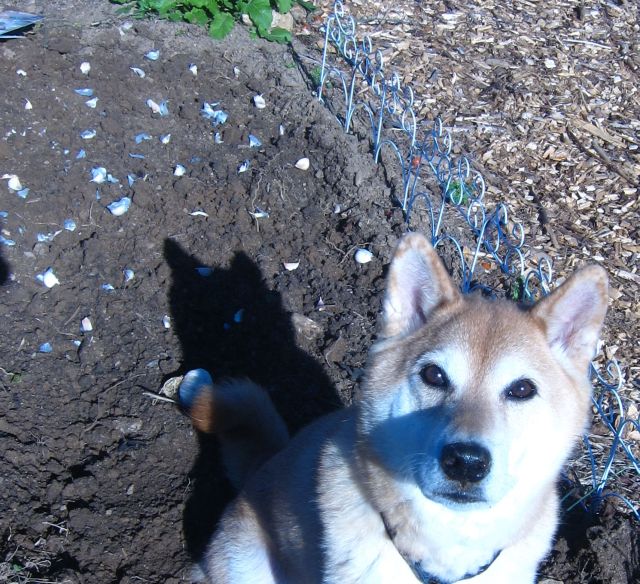
A few days ago our Shiba Inu dog, CJ and I planted the garlic cloves.   While I shoveled and raked the dirt to prepare it for planting, CJ dug in the dirt to follow a scent and a fuzzy brown caterpillar.  He helped loosen the dirt a tiny bit.  I planted 5 rows of 9 garlic cloves (3 inches apart and 1 inch deep) and 3 Elephant garlic cloves (6 inches apart and 6 inches deep) for a total of 48 garlic cloves.

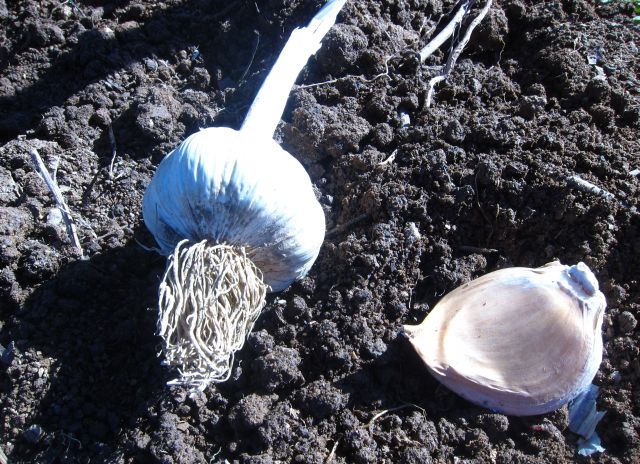
garlic bulb next to an elephant garlic clove

The Elephant garlic is huge.  It is almost the same size as a garlic bulb. We never planted this type of garlic before.  I wonder how large it will be as a garlic bulb! We may have lots of extra garlic for next fall’s planting.
Do you plant garlic cloves in the fall  from your garlic bulbs harvested in summer?

Goodbye October

The month of October ends with a photo-free post.   It is the start of a new tradition at Our Garden Plot.   A  Photo-Free Finish on the last day of each month.  It is a chance to practice creating vivid word pictures about our garden plot.

October garden highlights:

1.  We pulled out our last row of tired tomato plants.
2.  We pulled out big round radishes and long crunchy carrots from the ground.
3.  I made bean and noodle soups from fresh picked escarole and endive.
4.  We dug out football-size sweet potatoes from the soil below shriveled vines.
5.  Our glorious fig tree shed its leaves.
6.  Our turnip, lettuce, radish and spinach seeds sprouted leaves.
7.  We harvested a grocery bag of thick crisp string beans.
8.   We conquered the greedy Mexican bean beetles.
9.   We picked pounds and pounds of pungent, plump and pointed peppers.
10.  We roasted and froze our habanero peppers for the first time.
11.  We dumped a manure and compost mix onto our plot.
12.  We prepared the soil for next year’s garden.

What are your October garden highlights?

Habanero Peppers and Pumpkin Chili


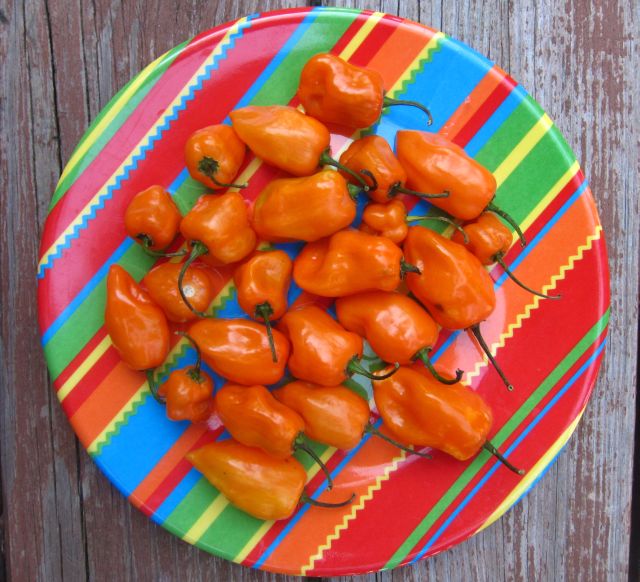
The one habanero pepper plant in our garden plot continues to supply us with more than enough hot peppers. I do not know what to do with all these small bright orange peppers. They are pretty, but so pungent! One tiny crumb size bite will burn your tongue. A week ago I roasted about 15 of the habaneros in our oven. As they roasted, the kitchen filled with a sweet smell that reminded me of a deli or a room filled with pepperoni sticks. Then the aroma became overpowering and grabbed my throat. I could not stop coughing and my eyes started watering. I opened our kitchen sliding glass door and stood outside on our deck until the coughing stopped. Those are powerful peppers!

Yesterday, while making chili for guests I wondered if my roasted habaneros had less heat than uncooked habaneros. I cut a speck of skin from a roasted habanero and placed it on my tongue. It gave a tingling burn, not a stabbing burn. The heat seemed reduced so I chopped one-fourth of a roasted habanero and added it to the sauting onions and garlic. My chili got a spice lift and tasted fabulous. It had a rich hot and sweet flavor.  My husband and guests devoured my chili as they told their own hot pepper stories.   Today, my friend, a creative cook, suggested that I add my leftover pumpkin soup to the leftover hot chili.  Our spicy pumpkin chili was delicious, mild and creamy.

Don’t be afraid to add habanero peppers to recipes.  They are hot and sweet.  The website,  Habanero Madness and  the book, Habanero has more than enough habanero pepper advice and recipes for all my habaneros.

What do you do with your habanero peppers?

Our Fig Tree

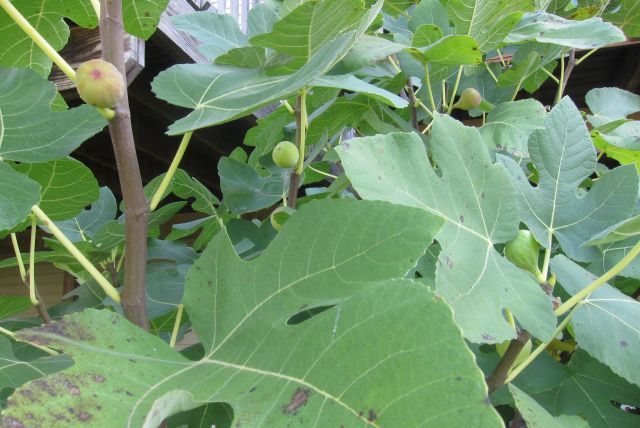
Can you find 6 green unripe figs? Figs develop on new growth at base of leaves, not at a flower because the blossom is inside the fig!

It is mid-October and our fig tree is still producing figs! Those green figs in the photo are now brownish purple and ready to eat. My son and I ate a couple today. Yummy! Our 6 year old fig tree had a growth explosion and produced over 5 pounds of figs this summer and fall. Normally, we wrap our fig tree with a leaf-stuffed burlap blanket to protect it in winter. But last winter we did not. Instead, God covered it in 80 inches of snow. We feared it would be damaged from the Blizzard of 2009, but instead it produced our biggest crop of figs.

Figs

Figs are sweet and delicious. I wonder why they are not as popular as strawberries, grapes or bananas? Here is a list of the fig fun my family and I had this summer and fall:
1.  Picking and eating figs while playing in the backyard.
2. Eating figs stuffed with gorgonzola cheese.
3. Eating sliced figs on top of cereal and oatmeal
4. Making and eating a fig, onion and gorgonzola cheese pizza
5. Baking and snacking on homemade fig newton cookies
6. Eating figs sliced in salads.
7. Making and snacking on  homemade blueberry and fig fruit roll-ups.
8.  Eating chicken breasts stuffed with figs and gorgonzola cheese
9.  Eating our homemade sugar-free fig jam on warm toast.
10. Dreaming about ways to eat figs after reading  Fig Heaven.

What did you do with your figs?

Our Little Garden Helper

Cutting String and Tomato Vines
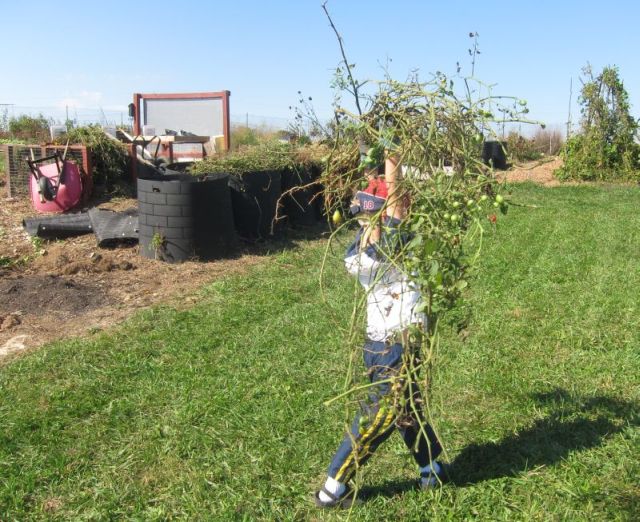
Tangled in Tomato Vines

My five year old son surprised us this past sunny Saturday when he eagerly followed our instructions and  helped us cut up and compost our tomato plants.  Often our son does not want to do the garden jobs we ask him to do.  He prefers to create his own jobs.  Here is a list of my son’s top 10 favorite garden jobs:

1.  Hold the hose and water the plants, dirt, fence and sky.

2.  Dig holes in the dirt and bury treasures or plant cut flowers.

3.  Throw the inedible fruit into the compost bin and stir it.

4.  Place or slam rocks around the garden beds.

5.  Plant sunflower seeds and sit under his tall sunflower umbrellas.

6.  Hit the sunflower  heads with sticks and watch the seeds fall.

7.  Create a web fence for the garden beds by twisting and weaving string through sticks he staked around the bed.

8.  Find bugs, worms and butterflies.

9.  Cut something!

10. Throw something!

What are your little helpers’ favorite garden jobs?

The Greens Mystery Solved

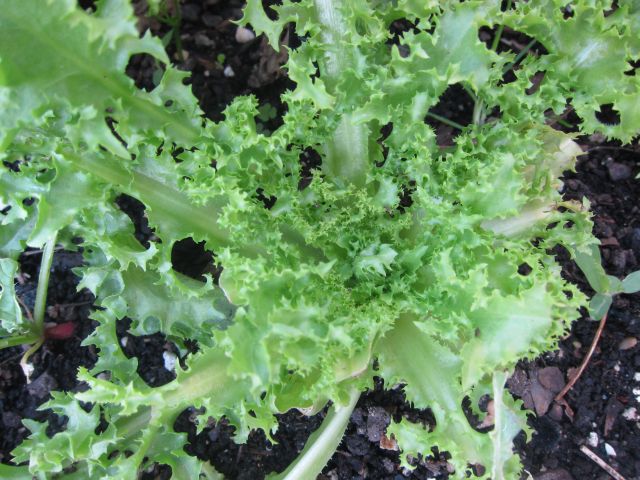
This summer, my husband brought home a surprise for me.   Not a bouquet of flowers, but some brown wilted plants in moist paper towels.  He knows I prefer plants over cut flowers.   The plants were starter greens from his co-worker.   I planted them in our salad table.  I assumed the plants were romaine and green leaf lettuce because one had smooth broad leaves and the other had curly thin leaves.   When the plants reached mound size, I questioned their identity.  The leaves felt tough and tasted bitter.   My husband told me it was endive.   A quick search through gardening books and the internet solved my greens mystery.   It was escarole and curly endive, something I never grew or cooked before.

Highlights of what I learned about endive:  1.  Curly endive has the frilly leaves and Batavian endive or escarole has broad leaves.  2.  Endive can grow in winter and is less bitter when grown in cooler weather.  3. Blanching endive can reduce bitterness. Curly endive is blanched by covering it with a porous pot.  Escarole  is blanched by wrapping it with string so the outer leaves will block light from inner leaves.  4.   Endive is  used in a lot in Italian cooking including soups and saute.  5.  Endive is high in vitamin A,B,C and contains Calcium and Iron .

I wrapped my escarole plants with string to blanch the inner leaves hoping they will be less bitter.  I plan to make Escarole Bean Soup and Curly Endive and Bean Soup with my hearty mystery greens.    Do you have any mysteries growing in your garden?