
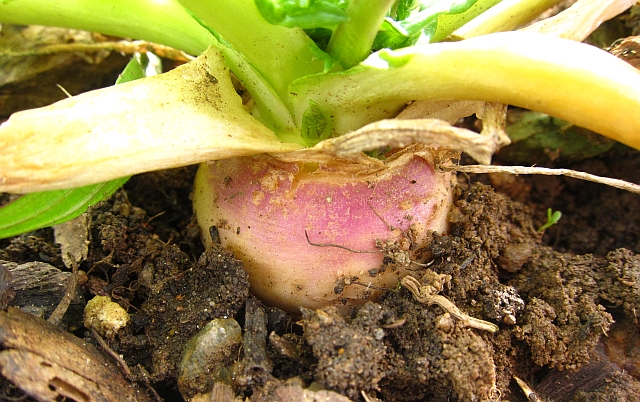
We visited our community garden plot at Howard County Conservancy yesterday. We found some treasures in the soft thawed soil. 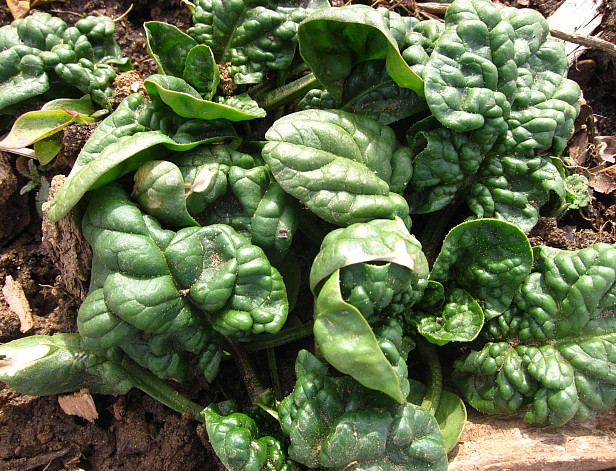
Author: McArtor
Wordless Wednesday
Frozen Peppers and Cherry Tomatoes
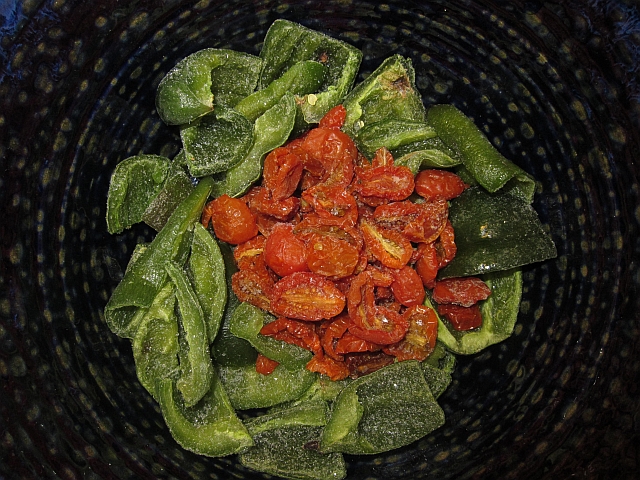
Only in winter can we enjoy last year’s harvest while starting this year’s garden. We still have about 2 bags each of frozen peppers and cherry tomatoes from our garden plot harvest 2010. We use the frozen cherry tomatoes and peppers on homemade pizza and in soups, chili and tomato sauce.
Last summer, we had an abundance of tomatoes and peppers in our garden plot. Along with canning, we tried freezing these veggies for the first time. The frozen veggies still taste sweet and fresh. I will use the same freezing method for this year’s harvest. To freeze the peppers… chop, blanch in boiling water for one minute, soak in ice cold water, drain, dry, freeze individual pieces on a cookie sheet then toss all the frozen pieces into a freezer bag. To freeze the cherry tomatoes…. cut in half, roast on cookie sheet for several hours in a 150 degree fahrenheit oven, cool, freeze on a cookie sheet then place in freezer bag.
While enjoying last year’s harvest, we started planting seeds for this year’s garden. This week we planted King Richard Leek, Genovese Basil, Italian Parsley, and Hybrid Shallot seeds in starter containers. In a few weeks we will plant our tomato, pepper, eggplant, swiss chard, escarole and lettuce seeds.
Trees in Winter
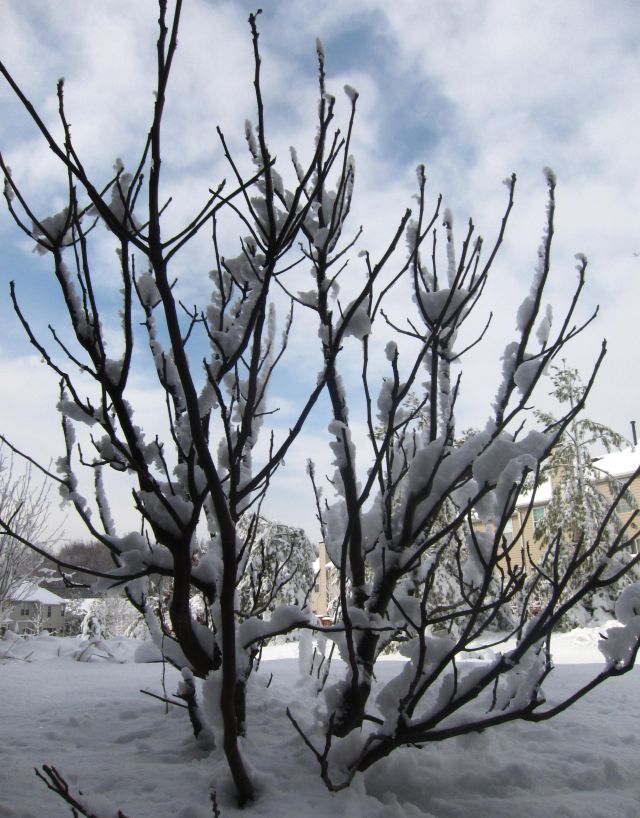
Trees in winter are beautiful!
The bare tree branches are like line drawings on the sky. The branches on our fig tree grew a lot longer this year. We used to cover them in burlap for the winter, but they are too big for that now (see our fig tree post for more information about our productive tree). Since figs grow only on the new branch growth, we plan to prune our fig tree towards the end of winter. This will be its first pruning. It is hard to do, but it must be done or we will need a ladder to reach the figs this summer!
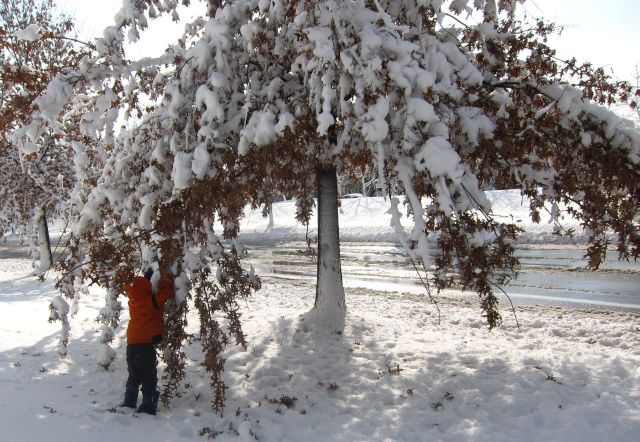
The evergreen trees and deciduous trees with remaining shriveled leaves are like welcoming shelters in the sparse winter landscape. My son likes to play “ding dong on the doorbell” underneath them. It is a game where I ring a tree bark doorbell to enter and visit him in his safe and cozy tree house.
The oak trees in our neighborhood do not drop all their leaves in winter. I learned that it is a natural condition called marescence. Some experts believe that this protects the overwintering buds on the trees.
Trees in winter are beautiful because they remind me that true strength is revealed in adversity and new growth requires pruning and protection.
Our Rosemary Bush
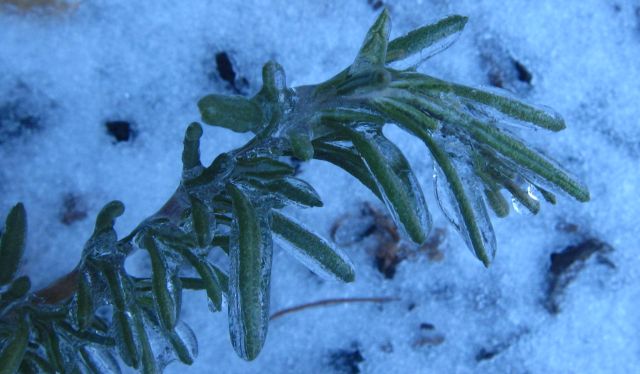
This morning everything outside was encased in ice from last night’s winter mix. I saw a wonderland of shimmering glass highlighting each branch, leaf, seed pod and stick in our garden. My son saw a huge glass playground to shatter with his walking stick. He whacked and watched as ice pieces slipped off branches and leaves then crashed to the ground. I reminded him to be gentle with the vulnerable plants. Although, I was not too concerned about our rosemary bush because it is tough enough to handle almost anything!
Our rosemary bush is the most hardy and helpful plant in the raised bed below our deck. Even covered in ice, I could smell our rosemary’s sweet fresh woody scent and see its deep green needle-like leaves. It flourishes in cold icy winters and hot dry summers. During the summer its pungent scent repels deer and mosquitoes. I am convinced that deer do not come to our garden and eat our figs and daylilies because our rosemary bush is planted at the edge of the raised bed.
Our rosemary bush helps in our home too. It gives me a fresh herb to cook with all year round. I sprinkle crushed rosemary leaves on my homemade focaccia bread and pork roasts and add rosemary sprigs to soups and stews. I read that simmering a couple of lemons and a rosemary sprig on the stove top will freshen the house. I’ll try it this winter.
Rosemary has many uses and is always available in my garden. No wonder it is considered the herb for remembrance and friendship!
Wordless Wednesday
Our Garden Plot Dreams for 2011

Who says you can't dream big?
My husband dreams of installing a drip system so we can work in the garden (and visit the goats and snowball stand) while the plants are being watered. He also wants to combine the garden beds, reduce the walking paths and cover more plants with row covers so the plot has intensive plantings thus more produce and less bug damage.
I dream of a longer growing season so I can cook from our garden harvest all year. I want to plant new types of veggies and make a cold frame. For additional crops in early summer and late fall I would like to try planting leeks, shallots and peas and Asian greens, broccoli and kohlrabi along with our regular crops of tomatoes, peppers, eggplants, zucchini, sweet potatoes, white potatoes, carrots, beans, spinach, turnips, greens and herbs. But, my biggest garden dream for 2011 is that our family has fun together with each other and other gardener friends in our community garden.
What are some of your garden dreams for 2011?
Happy New Gardening Year

A couple weeks ago, we covered our garden plot with one more blanket of mulched leaves and made our last harvest of 2010. We harvested spinach and carrots. The carrots still tasted fresh and crisp even though we had to pry them out of the slightly frozen earth. We loosened the ground with a garden fork and pulled out about 12 medium-sized carrots.
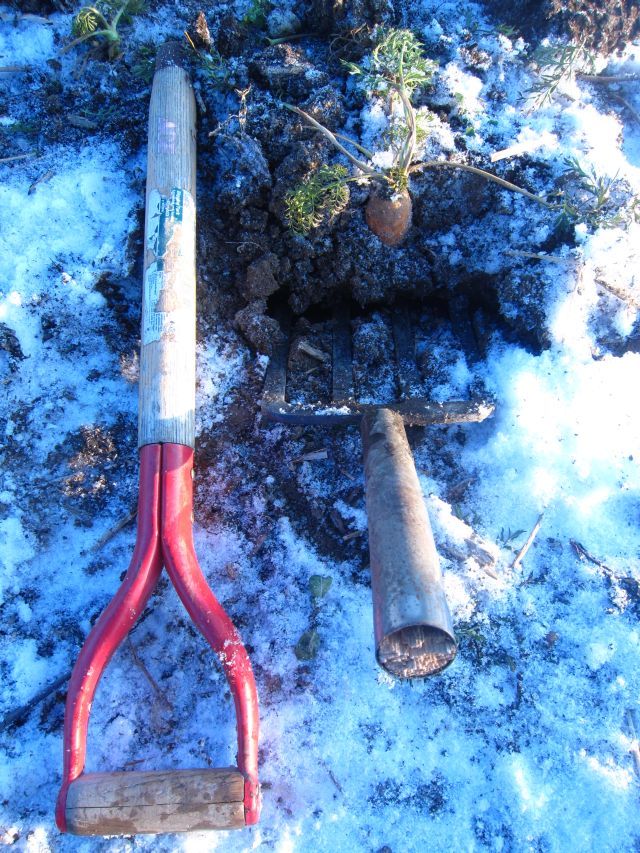
One stubborn carrot would not separate from its block of earth so my strong husband pressed down hard on the garden fork until its wooden shaft snapped in half. My husband sighed at the loss of his faithful garden tool. But he smiled after I announced, “we now have a dibber for the leeks we want to plant in early spring!” A broken off shovel or garden fork with an intact handle makes an effective hole digger for planting seedlings.
A garden blunder can be a gem to the gardener who dreams about next year’s garden.
Happy New Gardening Year, my gardening friends!
Christmas Cactus
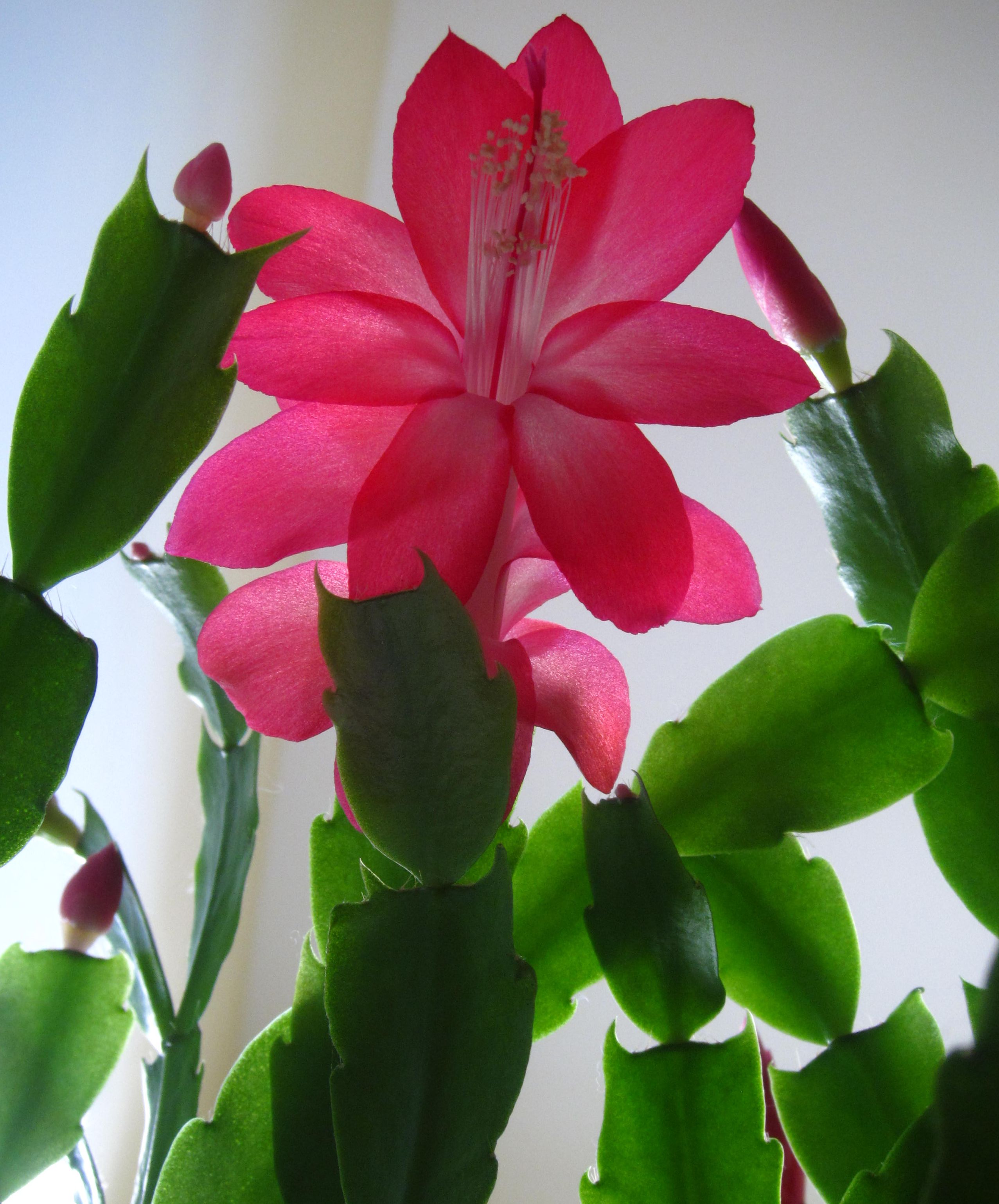
My Christmas Cactus has faithfully bloomed at Christmas for the past seven years. I don’t do anything special to insure that it blooms. It stays in the same spot in front of a window that brings in morning sunlight. It is in a clay pot that sits on a drain saucer filled with stones. I water it about twice a week.
Each year when the pink flowers burst out of their buds, I think about the family that gave me the Christmas Cactus. When I worked in an outpatient center at a Children’s Hospital, I helped a young boy with Spina Bifida. He could not walk and he had a severe pressure sore on his back. This boy had the brightest smile and cheerful attitude. He and his parents spoke only a few words of English. They came to the United States as refugees. Grateful for the care that their son received at the hospital, the parents gave some of the staff a small Christmas Cactus. My cactus has more than tripled in size. I wonder how the little boy has grown. Every year my cactus reminds me of that boy and how the greatest gifts have humble beginnings. Then I think about another humble beginning…. God’s greatest gift to mankind began in a baby. Merry Christmas!
Bradford Pear Tree
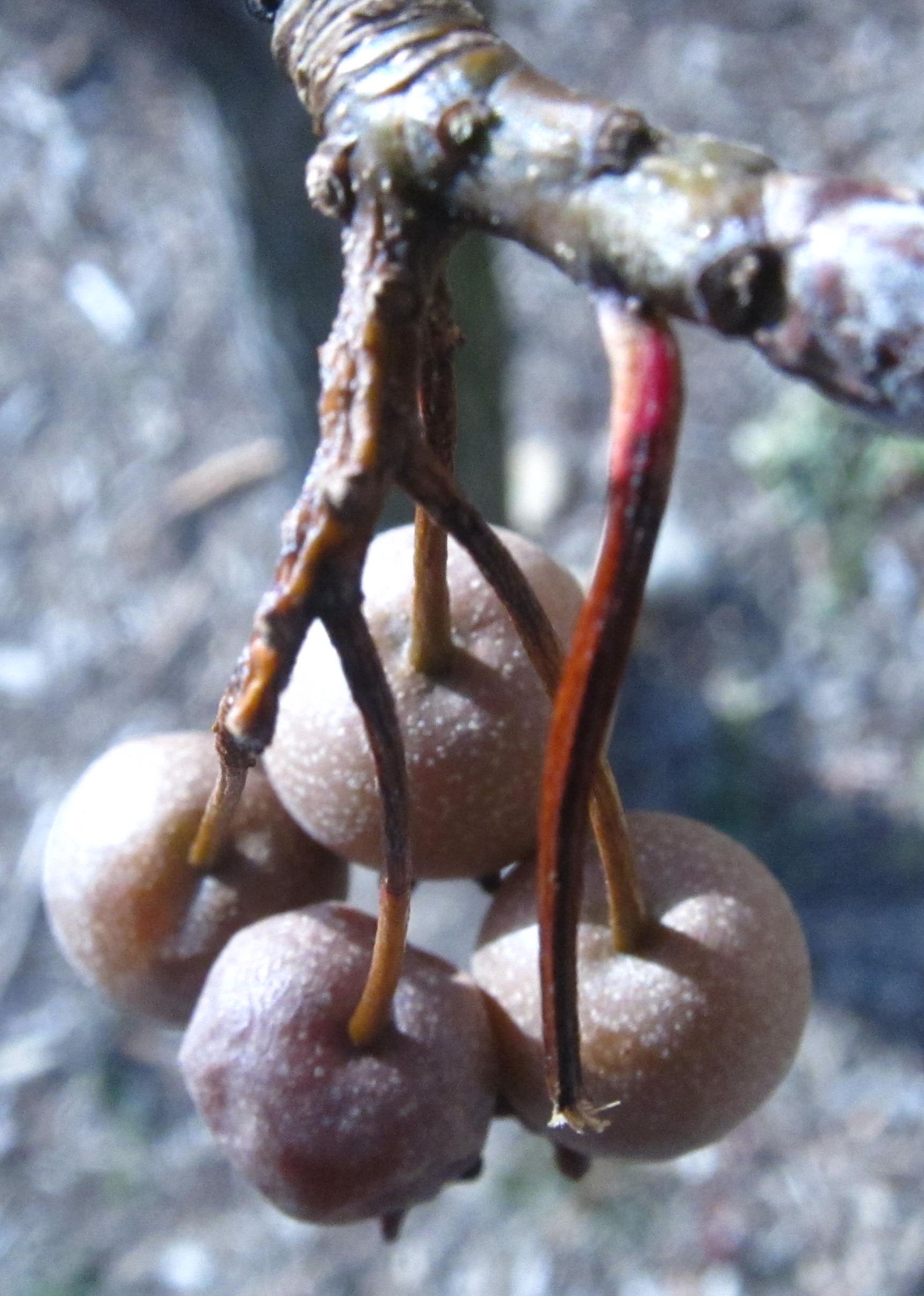
There is fruit growing in our garden despite the cold temperatures and one inch snowfall yesterday. The Bradford Pear tree in our front yard finally dropped all its leaves and is now adorned with its own little ball ornaments. The tiny pears are inedible to humans, but tasty to birds. Last year, huge flocks of Starlings swirled around the Bradford Pear tree like dark smoke then perched on the tree’s bare branches and pecked at its dangling pears. We haven’t seen the Starlings descend on our tree yet this season.
One of the Nandina shrubs in our front yard has clusters of bright red winter berries. I haven’t seen a bird munch on these nutritious red berries yet because they harvest the Nandina berries in late winter. I am glad our garden has winter treats to attract hungry birds. The fluttering brown, grey, red and blue feathers add life to the quiet winter garden.
What kind of winter treats for birds or other critters do you have in your garden?
 Our Garden Plot