
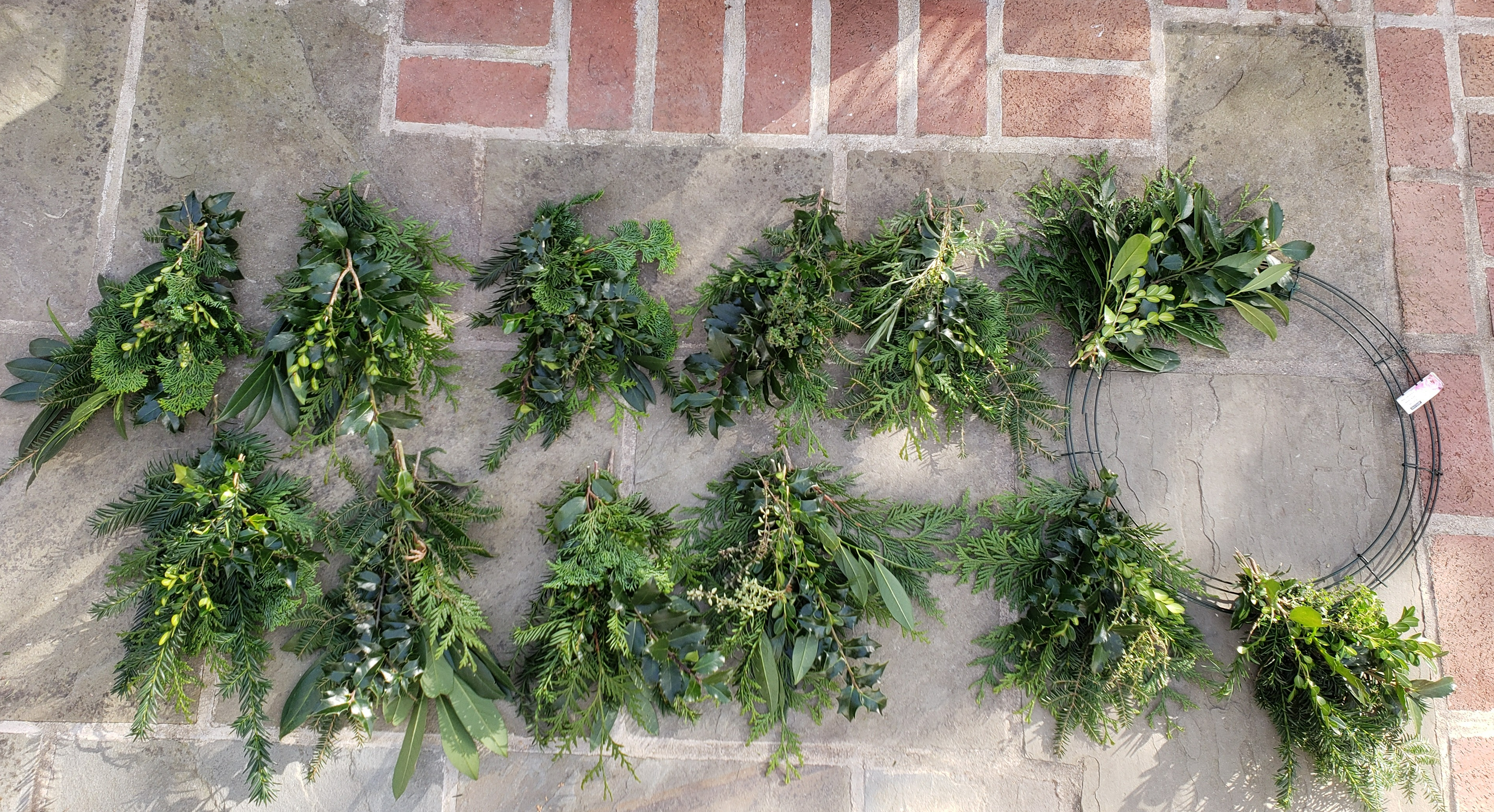
I made my own wreath this year from the shrubs and trees in our yard. The only additional supplies I used included: green floral wire, 18 inch metal frame, clippers and ribbon. The wreath took me less than two hours to make. I gathered about 10 to 20 stems from different varieties of shrubs and trees in our yard. The varieties are shown in photo below (clockwise): Arborvite, Holly, Laurel, Boxwood, Leland Cyprus, Thyme, Yew and Pieris (not in picture). I gathered about 5 to 6 stems into a bunch with the lighter foliage like boxwood, cyprus, thyme and pieris at top layer. I wrapped each bunch together with green floral wire at the stem.

I made 12 bunches (see photo below).
I secured each bunch onto the metal frame by wrapping the floral wire around stem of bunch and frame twice. I layered the full end of bunch over the previous stem until the metal frame was covered. I am happy with the result.
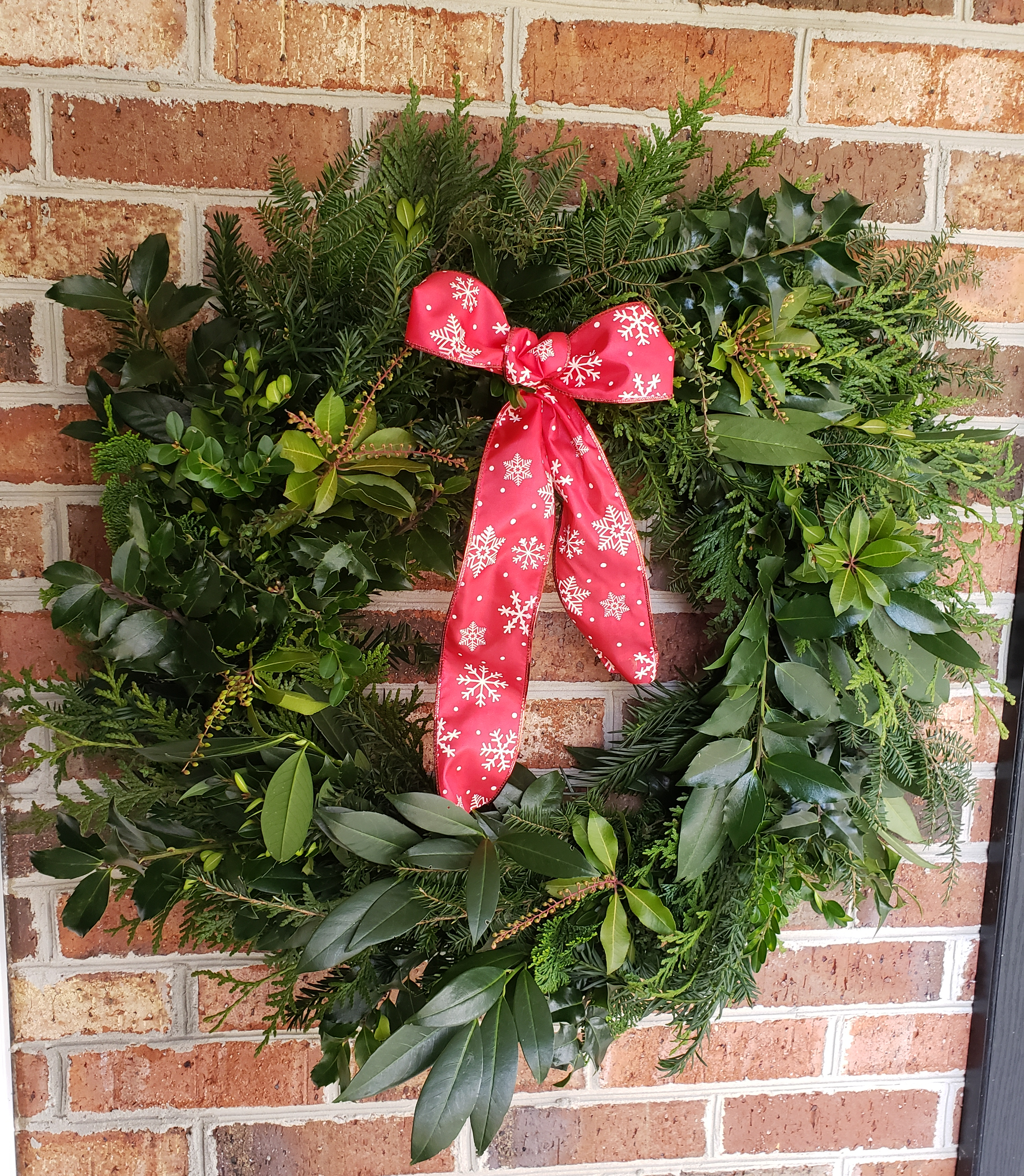
A free wreath from our yard. Next, I plan to make a smaller wreath for indoors with 12 inch metal frame. I plan to add pinecones and berries.
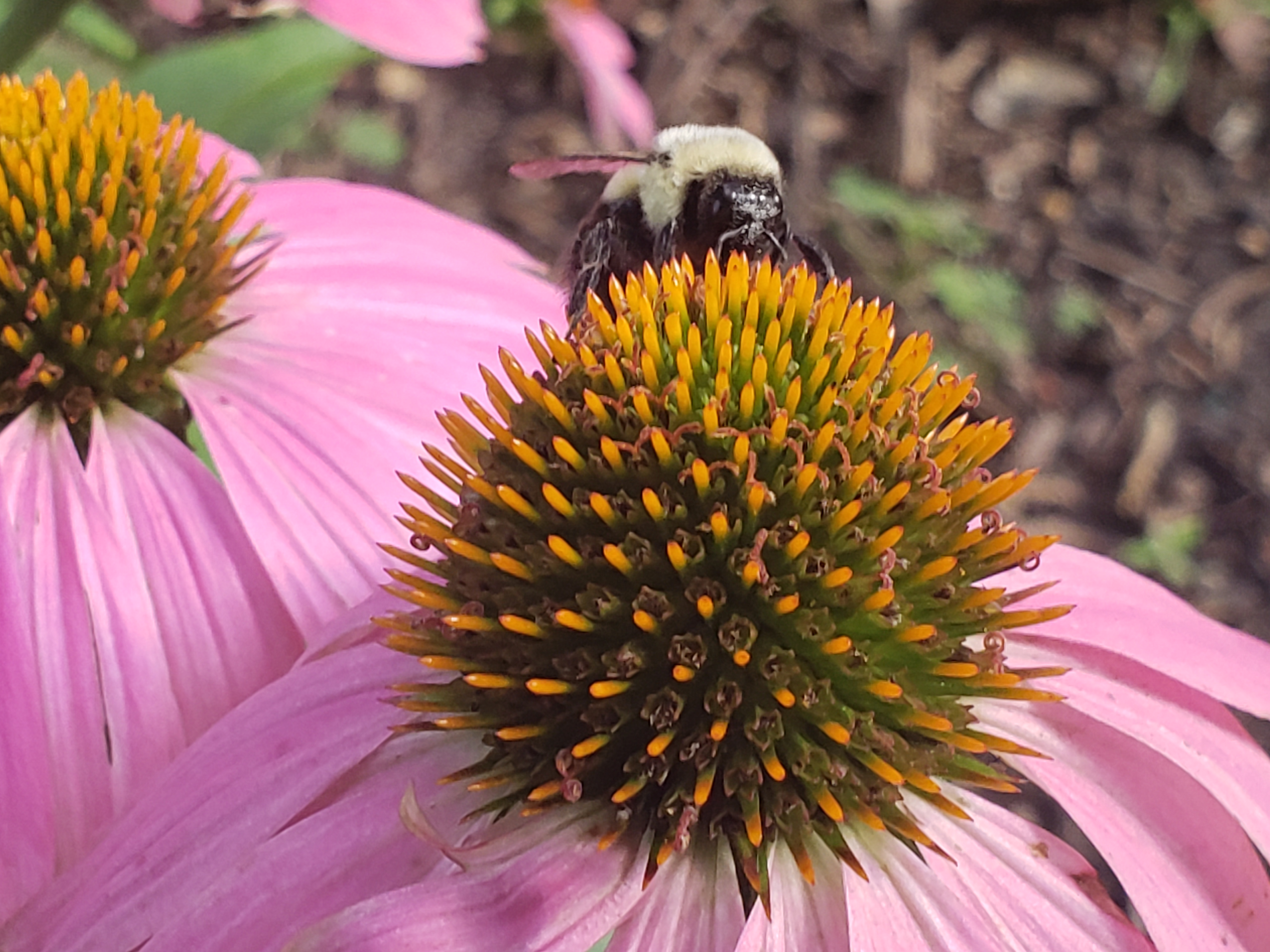
Happy to see bees, dragonflies and butterflies swirling around and settling on our flowers in our new small pollinator garden. The coneflowers are flourishing this summer.
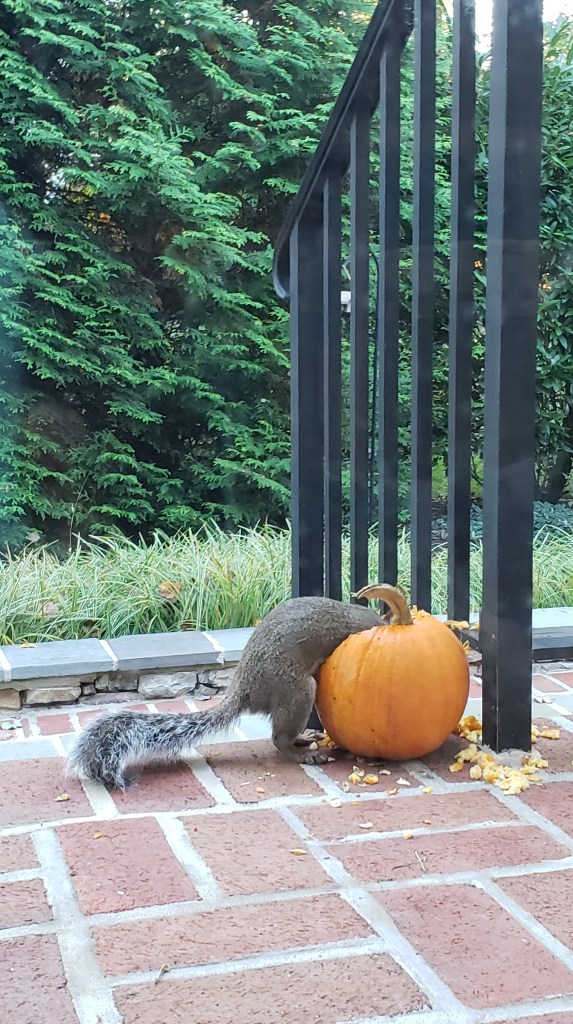
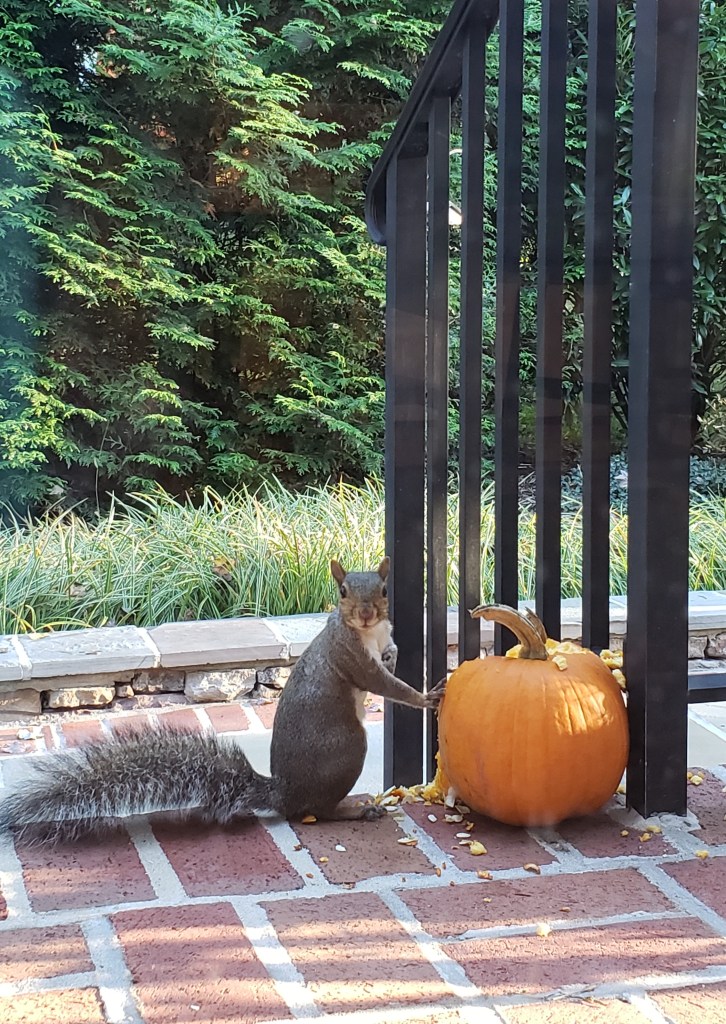
“Just watch and you will be cured,” said my son. “Cured of what?” I asked. “Thinking that squirrels are pests and annoying,” he replied. I watched the squirrel hop off the patio and run away. I looked at the mess of smeared pumpkin pulp and crushed seeds on the brick around the half-hollow pumpkin that my son planned to carve. He must have seen my expression as I thought of the clean up. He said, “it only took one minute for my mind to change and think squirrels are cute. Watch him! Your mind will change, too.”
I sat down on the kitchen floor and looked through the patio door. The squirrel returned. His frenzied feasting resumed despite my presence at the window. He worked fast using his whole body to scoop the pumpkin pulp. He sifted out seeds and held them with his small claws and nibbled while keeping a side glance at me. His body twitched, climbed and circled the pumpkin in seconds. I touched my phone blindly trying to capture his silly moves. Then he disappeared.
My son and I laughed at the squirrel photos I got. The photo of him touching the pumpkin had us imagine what he might say to us if he could speak. “Mine all mine!” and “Look, I am touching it!” We texted the photo to friends and family. We all laughed. My son was right. I was cured. The messy pest became Jack (as my son named him), our furry friend who gave us the gift of a good laugh and connection with each other and our friends.
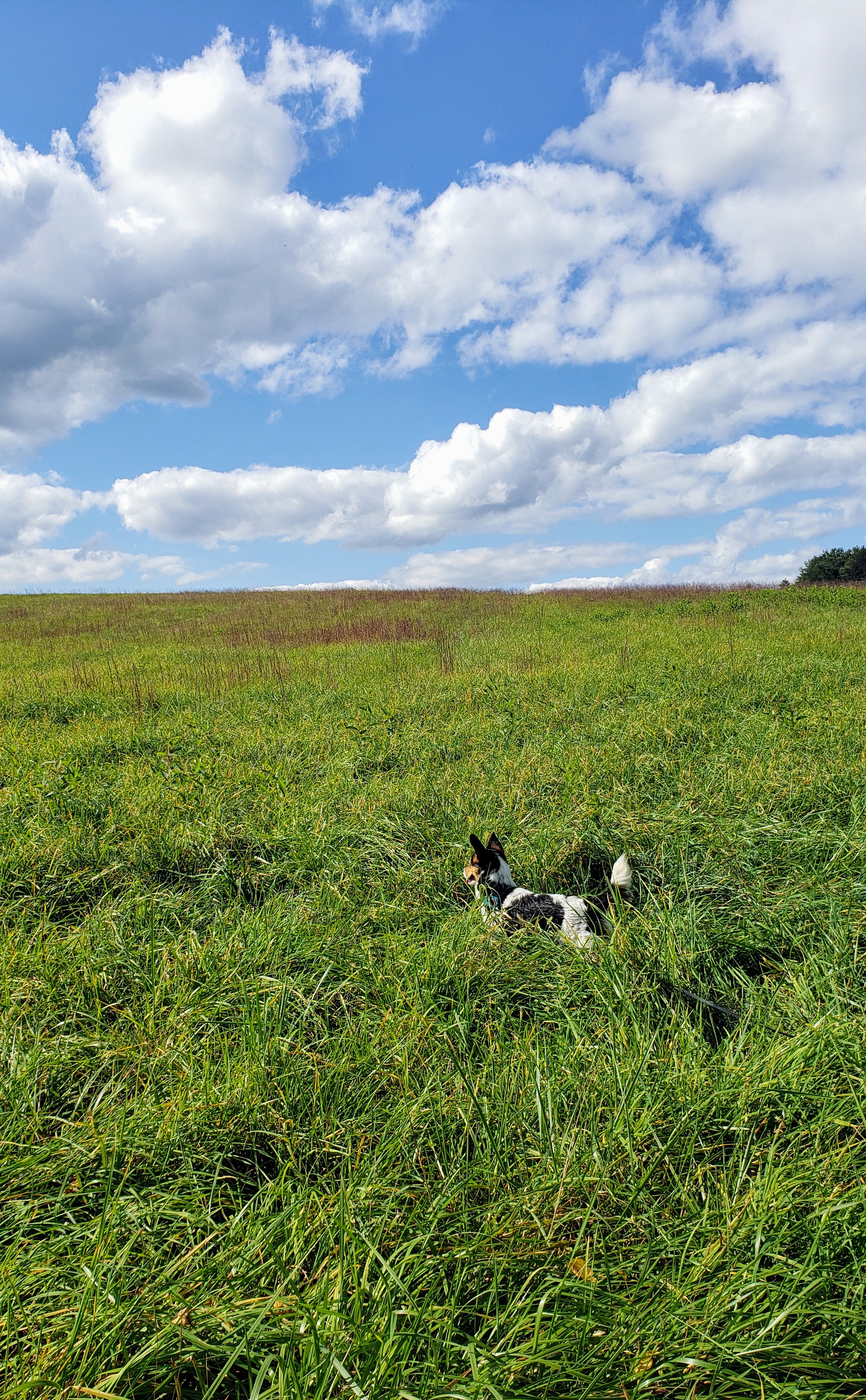
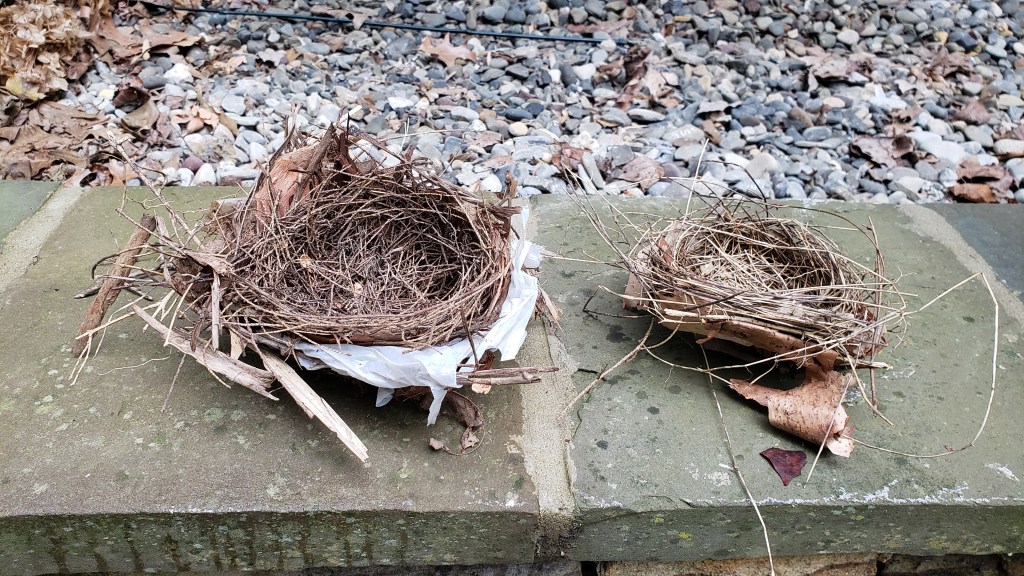
We pruned our overgrown Viburnum bush a few days ago and found two empty bird nests tucked in the tall branches less than two feet apart. I discovered why our dog, Ruby always stared up and barked at the Viburnum bush this spring and summer!
I took the nests out of the bush, then I wondered if that was the most environmentally friendly way to handle empty nests after breeding season. I consulted Cornell Lab of Ornithology and learned that birds will not return to nest next year. Birds make a new nest each year so it is okay to remove an old nest after breeding season. It is best to wear gloves when removing a nest. Nests can have parasites, bacteria, mold and other germs that can affect humans. An old nest may be discarded in a plastic bag or a compost bin.
I learned some other interesting facts, too. Birds will add human trash to their nests like the piece of plastic bag weaved into the larger nest that I found. Plastic can be dangerous in a nest. There have been reports of chicks that have been strangled by plastic. Some birds even put cigarette butts in their nests. The nicotine and other chemicals in discarded filters act as a natural pesticide that repels parasitic mites. Also, the cellulose butts provide useful nest insulation.
All bird watchers may be interested in a big event coming on October 17, 2020! EBird.org is having a global bird-watching event with the opportunity to win a great pair of Zeiss Binoculars!
Happy bird-watching!
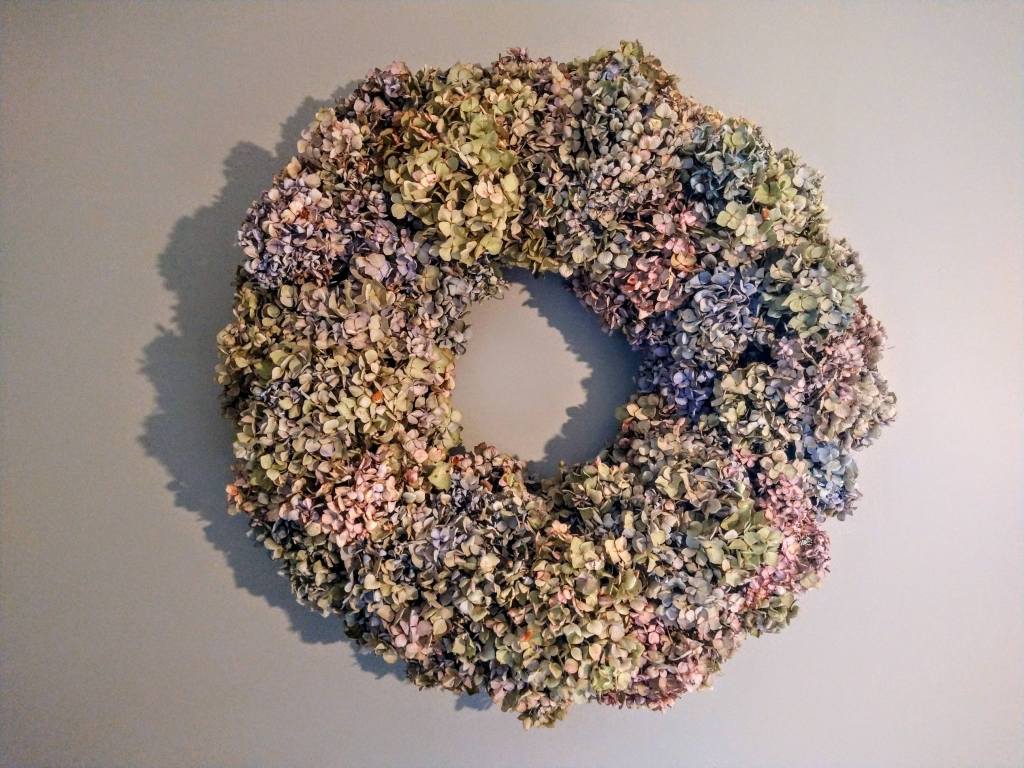
My mother had a thriving business making dried floral arrangements for over 15 years. Through trial and error she discovered the best techniques for drying flowers, collecting objects in nature and creating stunning arrangements, wreaths and topiaries, including a system for creating beautiful long lasting hydrangea wreaths. Our Garden Plot wants to give mom a space to show the techniques she perfected as owner of JoyAnne Wreaths. Our hope is that these tutorials will help others create their own decorative pieces or even their own small business from the beautiful gifts found in nature.
This summer my son’s video production company, Amberillian Productions worked with mom to create the first video in the JoyAnne Wreaths tutorial series.
Mom spent many years perfecting her craft. She is now 82 years young. She creates lovely floral arrangements for friends and family members but she no longer sells her work. There are more tutorials on the JoyAnne Wreaths tutorials page along with the opportunity to make a donation to support JoyAnne Wreaths and any future tutorials.
Please let us know if the tutorial was helpful or if you have any questions. We welcome your ideas for future dried flower arrangement tutorials, too. Thanks for watching and reading!
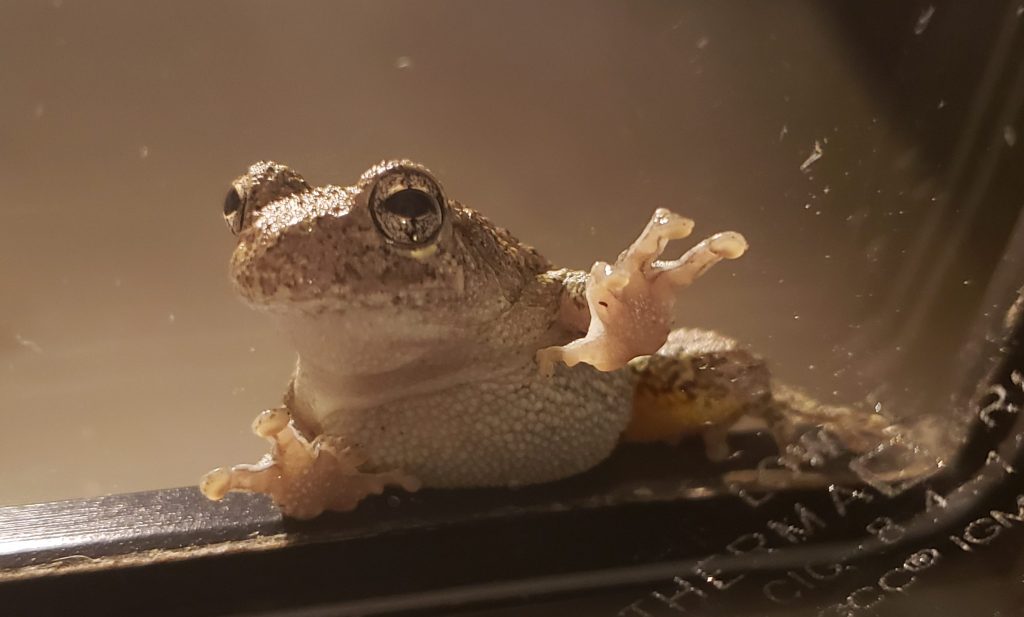
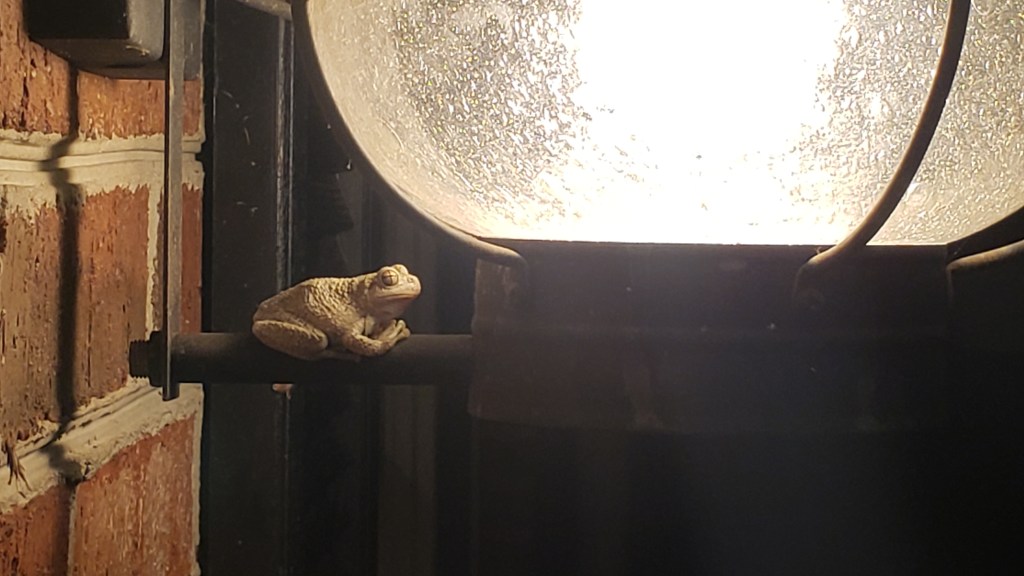
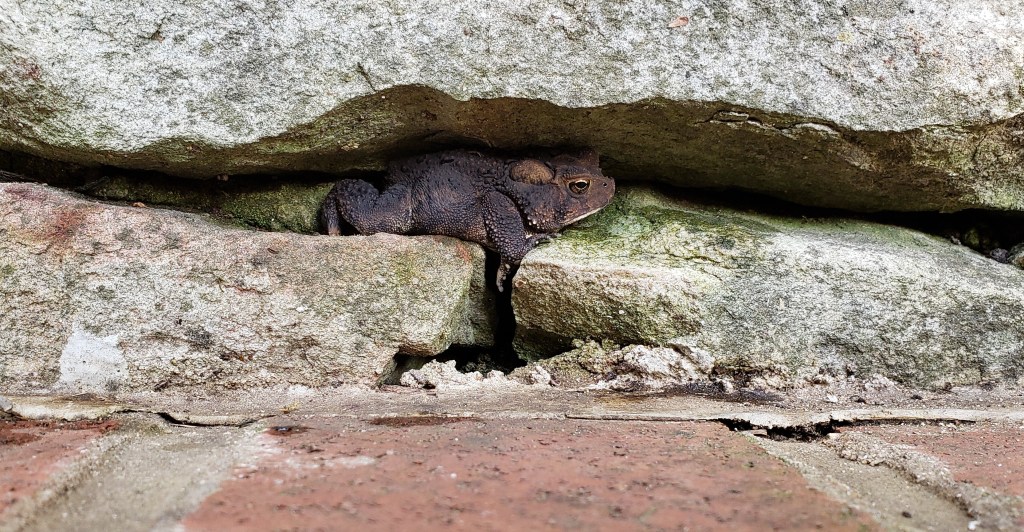
We miss our nightly visitors. Spring through summer frogs and toads of varying sizes came to our front porch light. We saw them balance on the light bracket with legs folded in a prayer pose or on the rounded light with legs sprawled in a grip hug. They clung to the light with an unbreakable stillness and cool stare despite the insects circling them. We checked the light every night and counted our frog and toad friends. Since the cool fall weather arrived, our front porch light is bare. Only a few bugs and moths flick around it. Where did our frogs and toads go?
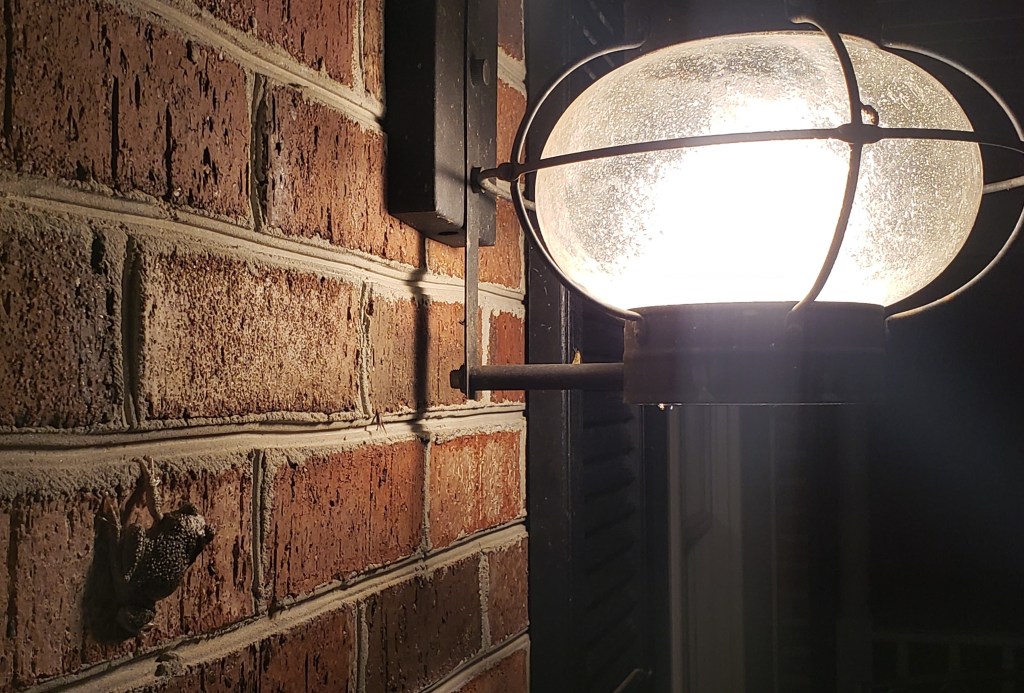
The Ecologist’s Notebook provides an in depth answer to this question. Frogs and toads are preparing warm habitats (a hibernaculum) in the ground under plants, leaves, and compost material. They are ectothermic creatures and depend on the heat of the environment to maintain their body temperature. The biologist in the Ecologist’s Notebook article describes the miraculous biochemical changes in frogs and toads as they prepare to hibernate in winter. A complex process that basically increases glucose and creates a sort of cellular antifreeze that keeps their frozen bodies alive.
How can we help our dear frogs and toads? Keep some piles of leaves in our yard, and maintain our compost pile. If we see a frozen frog or toad in our yard this winter, cover it with some dirt and leaves and let it be, it is hibernating.
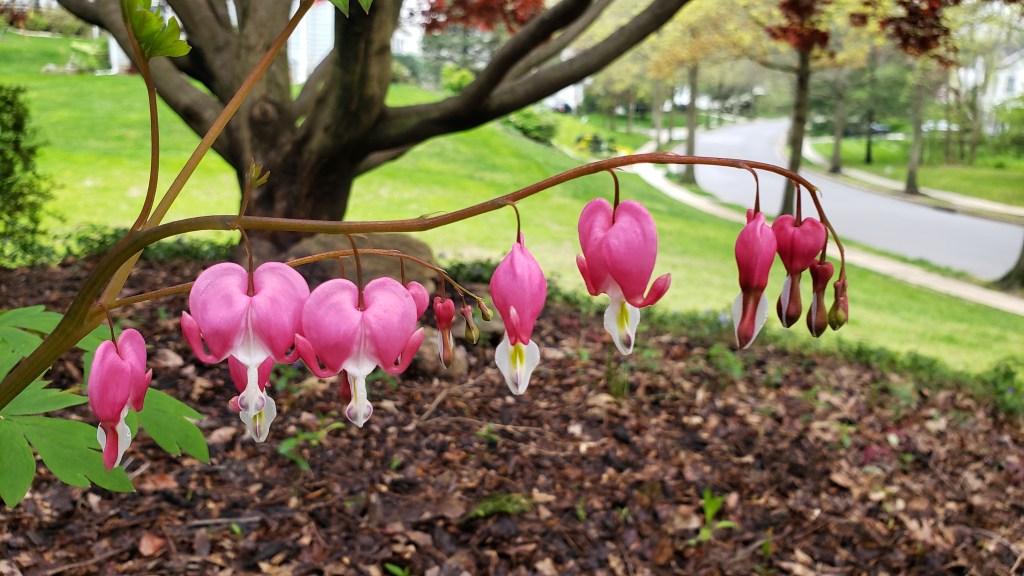
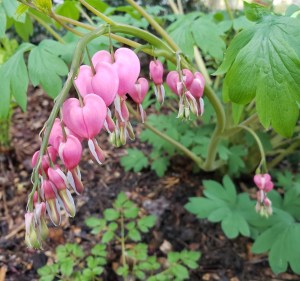
In early April, as the world sunk deep into the despair of the COVID pandemic shutdown, this bleeding heart (Dicentra spectabilis) appeared in the bare ground under our Japanese Maple tree. I never planted it and there were no signs that it grew there last spring. I am grateful for this unexpected plant. It gave me hope.
I struggled to celebrate the beauty of our first spring in our new house. It felt strange to watch my new garden come alive while the world around me became covered in fear and death. The stories of loss, grief, separation, and loneliness were everywhere. We were all in shock. Our lives changed in days. Suddenly, we had to stay home. We gathered only with our families. We feared a trip to the grocery store or contact with strangers. We made face masks and treasured disinfectant. Anything to keep us free from the virus while others walked into danger doing their daily job to care for the sick and help those suffering.
The unknown plant with fern-like leaves under our Japanese Maple grew a sturdy arching stem. An outstretched arm reaching for hope and wonder. I studied it each day. When pink buds appeared dangling from the stem, I recognized it was a bleeding heart plant. The exquisite flowers slowly emerged into open hearts dropping white tears. I cried. The flowers were delicate and strong. A symbol of all the compassionate hearts in this pandemic. People who cared and prayed for others and ultimately the Creator and Lord of all who weeps with us during this time of pandemic. There is beauty in the sorrow.
 Our Garden Plot